Ursa Ag finds demand for a new tractor farmers can fix themselves
Doug Wilson says more than 1,000 farmers from about 30 countries contacted Ursa Ag after its low-tech tractor hit farm-show circles.
By Ryan Merket ยท
Why it matters
Ursa Ag's early traction suggests right-to-repair is becoming a buying criterion, not just a policy fight, in markets where downtime has real economic costs.
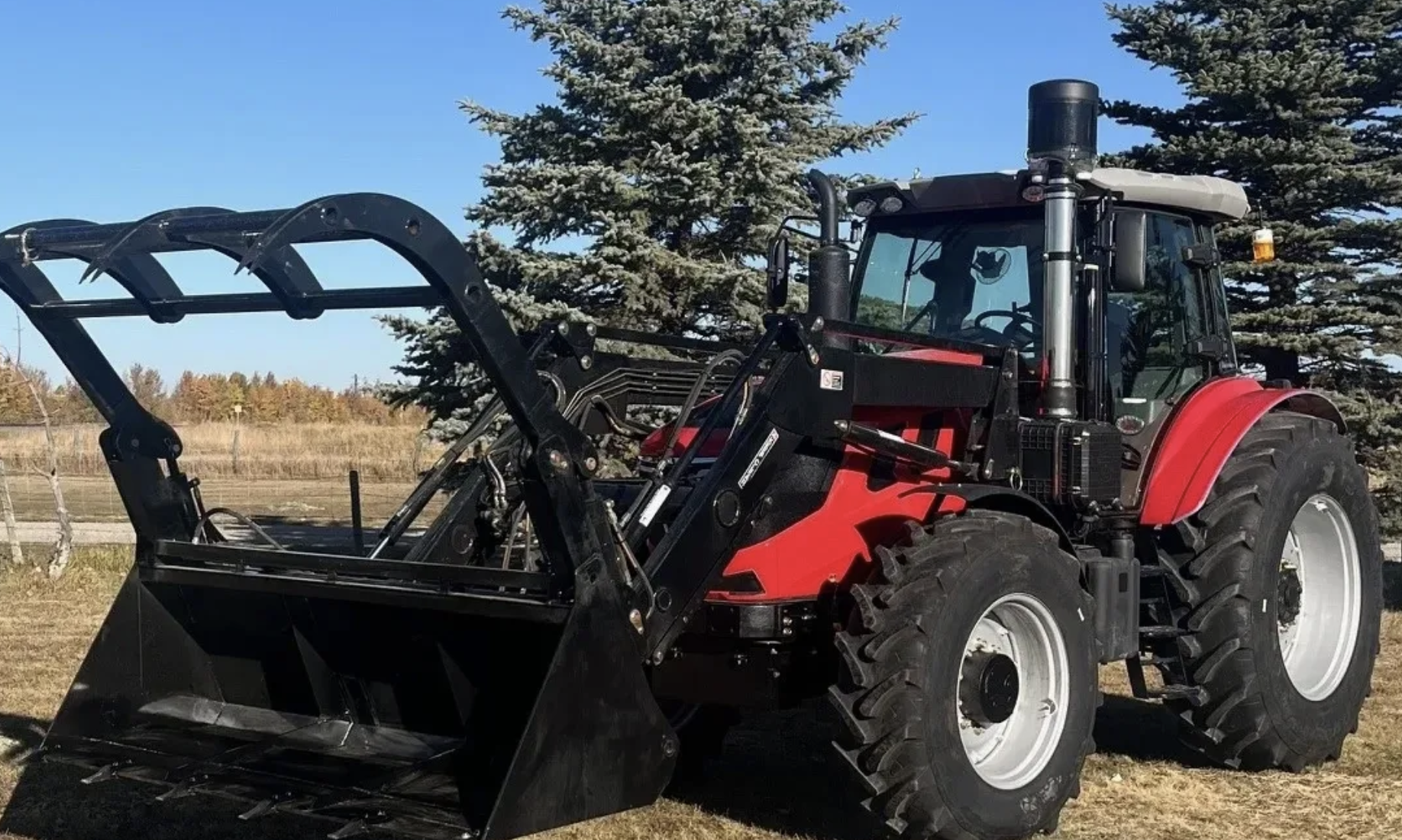
Doug Wilson and Alberta-based Ursa Ag are seeing a rush of interest for a new, repairable, low-tech tractor, with Wilson telling 404 Media that more than 1,000 farmers from roughly 30 countries contacted Ursa Ag after a Canadian farm show and coverage by Farms.com.
The pull is not a mystery. Ursa Ag is selling against one of the most persistent complaints in modern agriculture: machines that can be sidelined by software, sensors, diagnostics access, parts constraints, or the need for an authorized repair visit when the work window is measured in hours.
Wilson framed the product in deliberately plain terms. "All of this came from a simple discussion with a customer who wanted to be able to turn [the tractor] on at the start of the day, to use it, and shut it off at the end of the day," he told 404 Media. "It needed to work, so that's what we built."
The bet is that simpler can sell
Ursa Ag markets the tractor as "no frills" and "built to last," according to 404 Media. That positioning is a direct contrast to the precision-agriculture stack that has become standard in high-end farm machinery: connectivity, software controls, sensors, proprietary diagnostics, and equipment that may be highly capable but hard for a farmer to repair alone.
Wilson is not arguing that technology has no place on farms. He told 404 Media that "the million-dollar John Deere tractor has a place" and that some of the technology in those machines is "well worth the money." His narrower claim is that many farm jobs do not need it. "That technology is needed for 5 percent of what a farm does," Wilson said, a characterization from Ursa Ag rather than an independently measured figure.
That distinction matters. Ursa Ag is not trying to win the whole tractor market on features. Ursa Ag is trying to serve the jobs where uptime, fixability, and purchase price matter more than automation or software integration.
John Deere created the opening
404 Media places Ursa Ag's traction inside the broader right-to-repair backlash against John Deere and other equipment makers. Farmers have long complained that modern tractors can be immobilized by minor sensor failures or locked behind digital rights management, while repairs depend on authorized tools, parts channels, and service providers.
That dynamic has helped push demand for decades-old, pre-computer tractors that farmers can maintain themselves. Wilson told 404 Media that he hears from farmers who bought equipment from 1987 specifically because it did not have a computer on it.
Ursa Ag's wager is that some farmers would rather buy a new machine designed around that same repairability than keep chasing older equipment on the secondary market. 404 Media reported that Ursa Ag's tractor costs roughly half as much as a Deere, though the article did not specify the Deere model, configuration, horsepower class, or exact Ursa Ag price behind that comparison.
Demand is not the same as scale
The early signal is strong, but still self-reported. Wilson told 404 Media that Ursa Ag has built a couple fewer than 100 tractors so far and is working to triple production capacity. The baseline capacity, delivery timeline, warranty model, dealer network, financing, and margins were not disclosed in the source material.
That is the practical test for Ursa Ag. More than 1,000 inbound inquiries from about 30 countries shows that the pain point travels well beyond Alberta. It does not, by itself, show how many buyers will put down money, how fast Ursa Ag can manufacture, or whether Ursa Ag can support tractors across multiple markets without recreating the service bottlenecks Ursa Ag is trying to avoid.
The most telling detail may be the least digital one. Wilson said one inquiry came as a handwritten letter from a farmer in France who did not own a computer and wanted printed information mailed to him. For a product built on the idea that not every task needs more software, that is almost the whole market thesis in one envelope.