Alibaba's Qwen releases an eight-step image model with downloadable weights
The 7B checkpoint handles image generation and editing; Qwen's research license requires a separate license for commercial use.
By Ryan Merket · Published
Primary source: Qwen on X
Why it matters
Alibaba is pairing a downloadable image-model checkpoint with hosted APIs, but the research license requires separate permission for commercial use. Eight denoising steps are a technical promise; real deployment economics still depend on hardware, latency, quality and licensing.
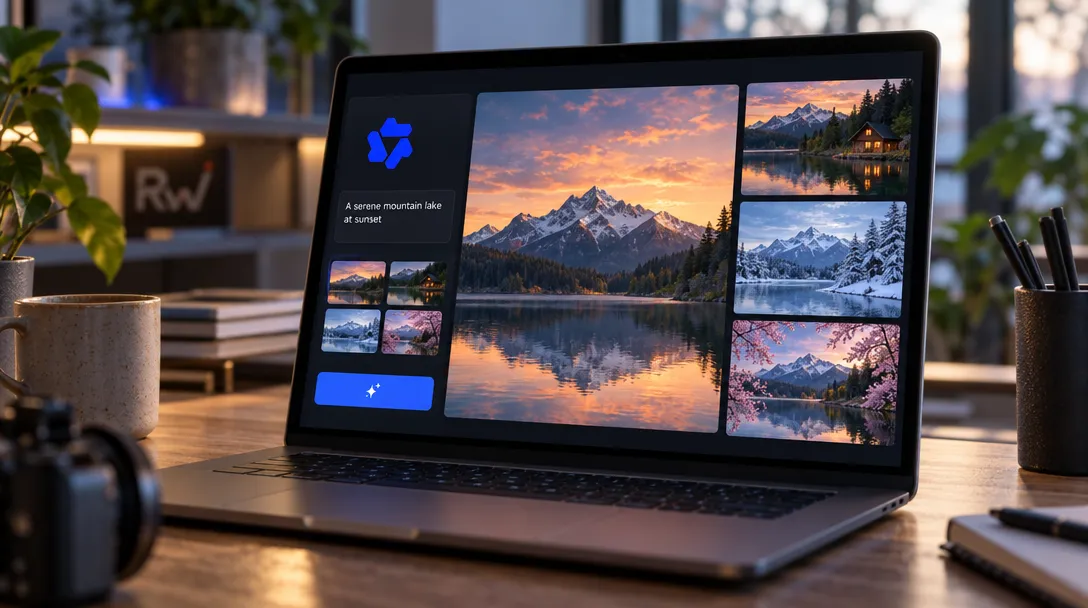
Alibaba's Qwen team released Qwen-Image-2.1-Turbo on October 9th, offering downloadable model weights for image generation and editing with a recommended eight-step sampling schedule. The announcement on X describes Turbo as an accelerated checkpoint built on the same 7-billion-parameter visual-generation architecture as Qwen-Image-2.1.
The release gives developers two routes to use the model: run the weights in their own environment or use Alibaba's hosted services. Qwen published the checkpoint on Hugging Face and ModelScope, and said its Pro and Turbo APIs are live through Alibaba Cloud Model Studio.
The eight-step schedule is the release's central technical claim. Image-generation systems commonly refine a noisy image through repeated denoising steps; reducing the number of steps can reduce the work required for each generation. Qwen says Turbo retains strong image quality while generating images at 2K resolution, and supports natural-language edits such as adding objects or changing a scene. Those quality descriptions are Qwen's claims. The release materials provide example images and usage instructions, but the step count alone does not establish generation speed, hardware requirements, cost per image or comparative quality under matched conditions.
Qwen's model card documents the practical setup: the checkpoint loads through Hugging Face Diffusers with the QwenImage21Pipeline, and its recommended eight-step schedule is saved with the model. The card says the schedule loads automatically and that prefix key-value caching reuses text and reference-image context across steps. Its examples include both text-to-image generation and editing an input image. It also lists multiple output shapes, including square 2048-by-2048 and landscape 2752-by-1536 presets, so the post's shorthand reference to 2K should not be read as a single fixed output size.
Local deployment still requires suitable compute and current software dependencies. The instructions call for a CUDA-compatible PyTorch setup and a recent Diffusers build, with the pipeline using BF16 weights. Teams considering a self-hosted workflow should note that downloadable weights provide control over deployment but do not establish that serving the model will be inexpensive or straightforward on existing hardware.
The term "open weights" also needs a licensing qualification. The model card links to Qwen's Research License Agreement, which permits use, reproduction and modification for noncommercial research or evaluation. Commercial use requires a separate license from Qwen. The weights are available for inspection and experimentation, while commercial deployment requires separate permission. Alibaba's hosted API is a distinct route offered in the same announcement.
Turbo follows Qwen-Image-2.1, which Qwen announced on September 20th. That base release combined text-to-image generation and image editing in a 7B visual-generation component, and described support for transparent images and up to 10 reference images. Turbo keeps the base architecture and targets fewer denoising steps.
For Alibaba, the paired weights-and-API release puts developer adoption and paid service use in the same launch. Developers can evaluate the checkpoint locally under the research license, while teams seeking hosted inference can try the Model Studio endpoints. The announcement does not provide an apples-to-apples latency or cost comparison between those routes, so the eight-step schedule is a technical specification, not by itself a business case. Deployment teams will need to test the model on their own prompts, image sizes and hardware, and determine whether a separate commercial license or hosted API fits their intended use.
Qwen-Image-2.1-Turbo is part of Alibaba's Qwen model program, not a separately funded startup. The release includes a checkpoint, implementation guidance and hosted endpoints. Commercial adoption will depend on model quality in real workflows, licensing terms and the economics of serving images at scale.