Apple and LG co-develop smart-home devices ahead of Apple's hub launch
The LG-branded lineup spans door locks, cameras and climate control; Apple is expected to introduce its new home hub on October 13th.
By Ryan Merket · Published
Primary source: bloomberg.com
Why it matters
Apple is extending its home platform into locks, cameras and climate control through a partner that will manufacture and support the devices. That could broaden Apple's offering without requiring it to build every accessory itself.
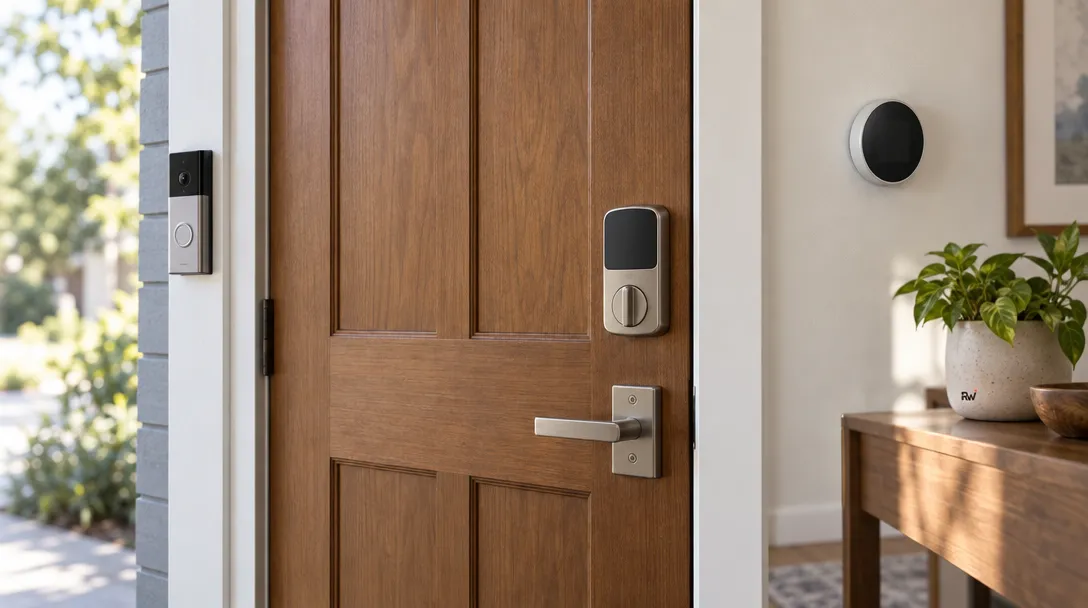
Apple and LG Electronics are developing a lineup of smart-home accessories to work with Apple's forthcoming home hub, giving Apple a route into door locks, cameras and climate control without taking on their manufacturing and customer support, Bloomberg reported on October 6th. The products will carry LG's brand, and LG will handle production and support, according to people familiar with the work cited by Bloomberg.
The reported lineup includes a wired video doorbell, smart deadbolt, thermostat, temperature sensor, indoor and outdoor cameras, and a floodlight camera. LG's regulatory filings list those product categories; the filings themselves do not name Apple. LG has asked regulators to keep product images and further details confidential until early next year, Bloomberg reported.
The arrangement leaves a clear division of work: Apple reportedly helped shape product design, features and engineering, while LG takes responsibility for making and supporting the devices. That lets Apple extend its home platform into products that require installation, ongoing support and, in the case of cameras and locks, sustained trust from customers. Apple has previously worked with outside manufacturers on accessories sold under partner brands, Bloomberg noted, including Belkin and Logitech.
The timing places the LG products alongside Apple's next hardware push, but they are not expected to ship with it. Bloomberg reported that Apple plans to introduce a smart-home hub, an updated HomePod mini and a new Apple TV on October 13th. The LG accessories are expected to reach consumers several months later. The October introduction is reported rather than formally announced by Apple, and no prices or shipment volumes were reported.
The accessories could make Apple's Home app and Siri more useful by giving customers more of the physical home to control. Apple already supports Matter, a cross-platform smart-home standard: its developer documentation says compatible devices can be managed through Apple Home, Siri and Control Center. The reported LG devices also use Thread and Matter alongside Wi-Fi and Bluetooth, potentially giving them connectivity beyond Apple's own platform. Their actual compatibility and feature set will depend on the finished products, rather than the filing labels alone.

The lock has a more specific technical feature. The Federal Communications Commission's March 9th notice on LG's UWB smart lock describes a system that uses Bluetooth Low Energy to authenticate a phone, then ultra-wideband ranging to locate the user relative to the door. That supports proximity-based unlocking. The notice concerns a regulatory waiver request; it does not establish a release date or confirm Apple's role in the product.
Apple is trying to broaden a home platform that Bloomberg describes as having gained less traction than Amazon's and Google's offerings since HomeKit launched in 2014. The rival products are already established in categories such as doorbells, cameras and thermostats. Apple can bring its software, devices and account relationships to that competition, while an LG-branded accessory line gives shoppers a different label on the hardware itself.
LG has its own reason to build out the category. In 2024, the company acquired an 80% stake in smart-home platform maker Athom, whose Homey hub connects third-party devices. The reported Apple collaboration therefore adds a new hardware lineup to a business LG has been expanding through both its own platform and external partnerships.
The regulatory record and the reported timetable point to an ecosystem arriving in stages: Apple introduces its hub and related devices first, while LG-branded sensors and home-security products follow later. The strategy gives Apple a faster way to fill out its home offering while keeping manufacturing and product support with LG. Whether that division works for customers will turn on details still to be established in the products themselves, including how they pair with Apple Home and which functions work across Matter-compatible systems.