Broadcom is arranging more than $50B to finance OpenAI's custom chips
Bloomberg, citing the Wall Street Journal, says Apollo and Blackstone are among lenders in talks; the proposed financing is separate from OpenAI's equity fundraising.
By RuntimeWire Staff · Published
Primary source: Bloomberg Technology
Why it matters
The reported financing would put a lender-backed structure behind OpenAI's custom-chip ambitions, but the amount, borrower and terms remain unconfirmed. Those details will show who carries the risk of turning Jalapeno from a development program into deployed infrastructure.
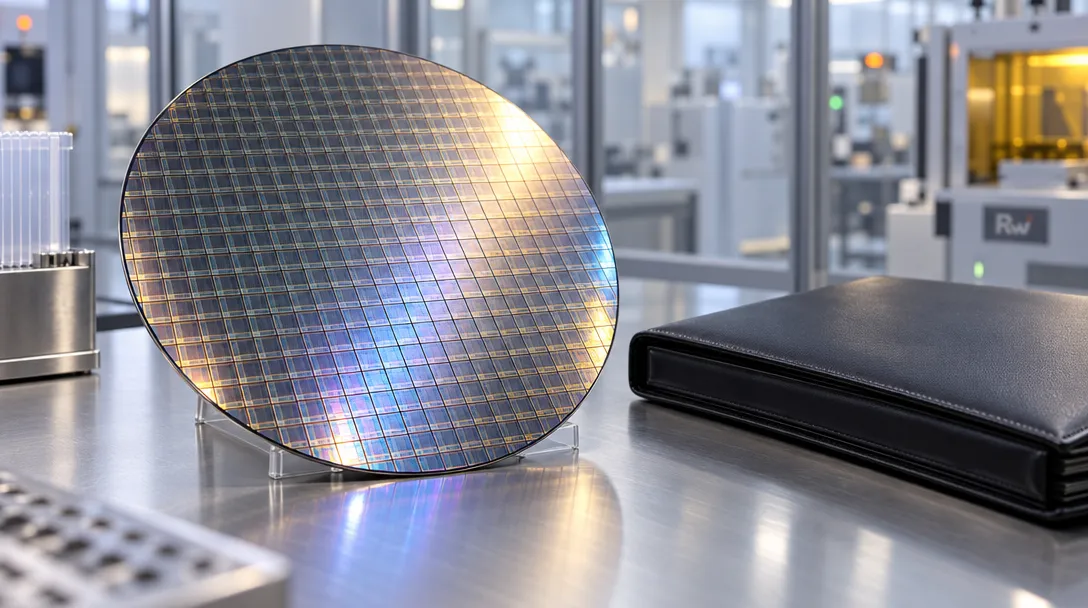
Broadcom is arranging more than $50 billion in financing for a custom AI chip it is developing with OpenAI, according to Bloomberg's October 7th report, which attributes the news to The Wall Street Journal and people familiar with the discussions. Apollo Global Management and Blackstone are among lenders said to be considering participation. The report describes a financing under discussion, not a closed deal, and does not specify the borrower or terms.
For Sam Altman, OpenAI's co-founder and CEO, building custom accelerators is part of OpenAI's plan to shape more of the infrastructure behind its products. In the 2025 partnership announcement, Altman said developing OpenAI's own accelerators adds to the broader effort to build capacity. Jalapeno gives that strategy a capital-intensive form: designing silicon for the workloads OpenAI's AI systems need.
A financing story, not an equity round
The reported $50 billion-plus is tied to the chip effort and related infrastructure. It should not be read as a new equity investment in OpenAI. Bloomberg's account leaves key financial mechanics unstated: who would borrow the money, what assets or contracts might secure it, and how long the financing would run. The report also does not establish that Apollo or Blackstone have committed funds.
The proposed financing comes amid a broader shift: building compute capacity increasingly involves lenders as well as venture investors. In June, Broadcom said it had launched a separate AI infrastructure platform with Apollo and Blackstone, with an initial $35 billion tranche led by Apollo in partnership with Blackstone. Broadcom said that tranche would support an Anthropic capacity expansion; the broader platform was designed to finance more than 20 gigawatts of capacity for AI labs including OpenAI and Anthropic. The earlier transaction shows the parties have worked together on AI infrastructure financing, but it does not confirm the newly reported OpenAI chip financing. (Broadcom's announcement)
OpenAI is designing for inference
OpenAI and Broadcom announced their chip collaboration in October 2025 as part of a plan to deploy 10 gigawatts of custom accelerators. In June 2026, OpenAI named its first chip Jalapeno and said it was designed for inference: the computing work that happens when a model responds to a request. OpenAI said it designed the chip around its models, kernels, serving systems and product requirements, while Broadcom contributes chip implementation, networking and systems expertise. Those are company descriptions, not independent performance results. (OpenAI's chip announcement; Broadcom's partnership announcement)
The technical choice links the financing to OpenAI's operating costs. Inference consumes computing capacity each time users interact with a model; a purpose-built accelerator could give OpenAI more control over how that capacity is supplied and used. OpenAI has said Jalapeno is intended for deployment at gigawatt scale and designed to work with large language models beyond OpenAI's own. Its June announcement also said engineering samples were running workloads in a lab. Those milestones describe development progress, not commercial shipments or demonstrated cost savings.
Altman's path from Loopt to OpenAI helps explain the appeal of owning more of the stack: he has moved from building a consumer software product to running a company that now designs models, products and, with Broadcom, hardware. At this scale, the vision depends on whether custom silicon can be manufactured, deployed and used efficiently enough to justify its cost.
The financing would connect Broadcom's chip and networking work to the infrastructure required to deploy it. It would support OpenAI's long-term hardware program while adding a major financing question to an already large compute buildout. Until the transaction's structure and commitments are clear, the headline figure describes the scale of discussions, not the amount already raised.