Casa brings its $199 home-care service to Austin with free donation pickups
Casa's Austin launch pairs its $199 monthly membership, which includes 1.5 handyman hours, with a free October 9th pickup drive for Austin Pets Alive! Thrift.
By RuntimeWire Staff · Published
Primary source: PR Newswire
Why it matters
Casa is expanding a home-care model that combines software, a persistent home inventory and paid physical labor. The Austin promotion gives residents a look at the logistics, while the $199 monthly price puts the test on whether homeowners will subscribe for the ongoing work.
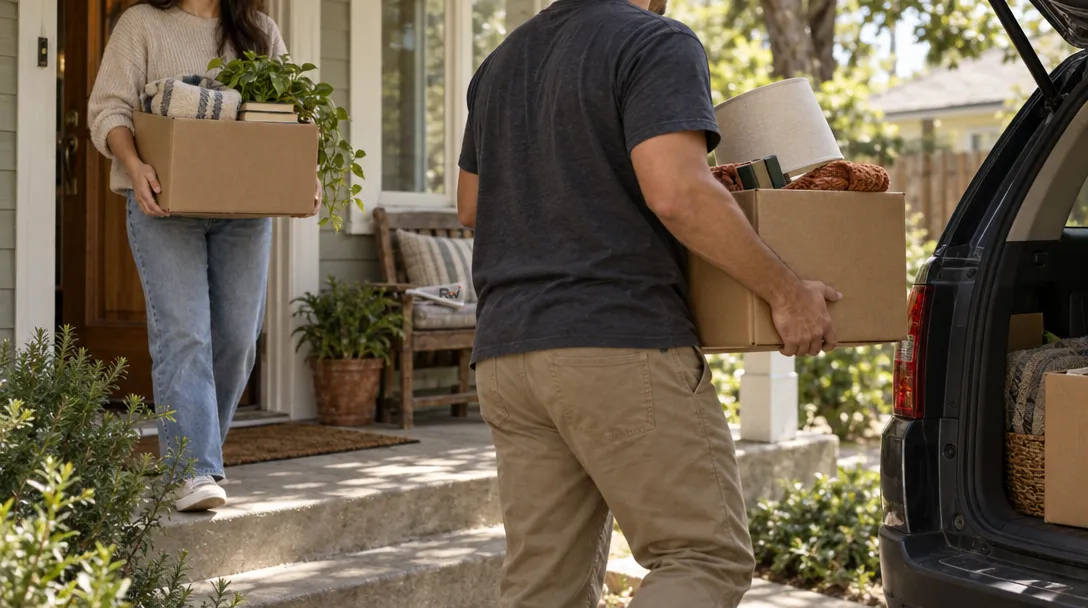
Casa is offering Austin residents free doorstep donation pickups on October 9th, a one-day demonstration of the service its co-founder and CEO Michael York (@michaelyork) wants homeowners to pay $199 a month to use. Casa says its Austin service is available now, after Axios reported the market launch on September 29th; the pickup offer is the newer hook, not the city's first chance to sign up.
For the promotion, Casa says its team will collect eligible goods from residents' doorsteps and deliver them to Austin Pets Alive! Thrift. Residents do not need a Casa membership. Signups close at 5 p.m. Central on October 8th, and pickups are scheduled to begin at 8 a.m. the next day within Austin city limits, according to Casa's October 5th announcement.
The event lets York show how Casa takes household tasks off someone's hands, including the errand of getting a donation bag out the door. The larger product tackles a more involved version of the same job: learning a home's details, arranging maintenance and repairs, and coordinating the people who do the work.
From a home inventory to a human service
York and co-founder Michael Mizrahi came to Casa after working together at Uber and CloudKitchens. Their experience, as described by lead investor Forerunner Ventures, was in applying software to real-world operations. Casa applies that approach to a problem York has described as making homeownership feel like a second job: researching repairs, finding contractors, collecting quotes and coordinating schedules.
Mizrahi's own career also ran through operational businesses. His work history lists Uber, CloudKitchens, health technology company Levels and First Round before Casa. The founders' bet is that a homeowner's task list can be managed more effectively when a service knows the home itself, rather than treating every repair as a fresh search for a contractor.
Casa says each membership starts with a detailed home scan and inventory, documenting items such as appliances, paint colors and serial numbers. Its AI and Concierge use that record to answer home-specific questions and help anticipate maintenance. In-house handymen handle everyday projects; for larger work, the Concierge vets local specialists, gathers bids and manages the job. Casa's website lists the membership at $199 per month and includes 1.5 hours of handyman time each month, with unused time rolling over.

The package combines software with paid labor. Casa has to recruit and coordinate handymen, understand each home's particulars and get the work completed. In Axios' September account, Austin handyman Nic Arnold said Casa had sent him jobs including drywall and door repairs. He told the outlet the scheduling and customer-finding support could make the work worthwhile even if independent jobs sometimes paid more.
The donation run is a small, bounded version of that operating challenge. Casa says its team will cover the city, collect qualifying items and deliver them to the thrift operation. Austin Pets Alive! says revenue from its thrift stores supports its animal-welfare work; its Director of Retail Operations, Derrick Ernst, said in Casa's announcement that pickup logistics can be a barrier to donating.
A service model with city-by-city costs
The public offer lets people experience Casa's logistics before the company asks them to subscribe. The promotion alone does not establish that Austin homeowners will convert to a recurring membership or that the service can be delivered profitably across neighborhoods. Casa has not released Austin customer or revenue figures in the announcement.
Casa says it has raised approximately $27 million. Inc reported in April that the $20 million Series A was led by Forerunner Ventures, with investors including Sandberg Bernthal Venture Partners and Travis Kalanick. The funding gives the founders room to build the home inventory and local service capacity. Each new city also requires staffing, vendor coverage and consistent delivery.
York has said Austin's single-family homes and tech-oriented population make it a natural market, and Casa has told Axios it plans to expand to other major Texas cities without giving a timeline. Expansion will depend on Casa's ability to make the physical handoff reliable, alongside its software's ability to handle tasks such as recognizing a filter change or scheduling a gutter cleaning. Homeowners will need to keep paying after the novelty of a free pickup wears off.
The October 9th drive turns Casa's pitch into a concrete transaction: leave an eligible donation at the door and let someone else carry it away. Casa says it wants to organize chores like this into a service homeowners can trust with the rest of the house.