Cyera signs $1 billion LOI to buy Oasis Security for agent identity controls

The proposed cash-and-stock acquisition would add Danny Brickman and Amit Zimerman's non-human identity controls to Cyera's data-security platform.

By · Published

Why it matters

AI agents blur the line between identity and data security. Cyera is spending about $1 billion to own both layers before enterprise buying patterns harden.
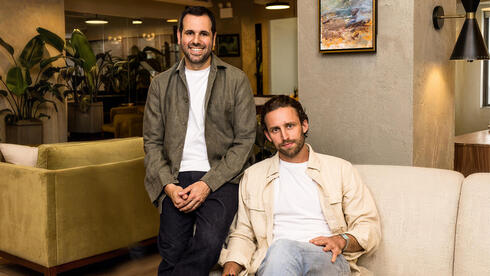
Cyera signs $1 billion LOI to buy Oasis Security for agent identity controls

Cyera, founded by Yotam Segev, Tamar Bar-Ilan and Yonatan Itai, has signed a letter of intent to acquire Oasis Security for about $1 billion, CTech reported on July 28, pairing Cyera's enterprise data controls with the machine-identity security system built by Danny Brickman and Amit Zimerman. About $700 million of the proposed consideration is expected to be cash, with Cyera shares covering the balance. An LOI is a preliminary transaction step, so the deal should not be treated as a completed acquisition.

The transaction would bring together two groups of Israeli military intelligence veterans who approached the same security problem from opposite directions. Segev and Bar-Ilan built Cyera around finding sensitive data and controlling access to it. Brickman and Zimerman built Oasis Security around discovering and governing service accounts, API keys, tokens, software processes and AI agents that request that access.

That boundary is disappearing as enterprises give AI agents permission to retrieve records, call software tools and take actions across internal systems. Cyera would be paying for the identity controls needed to follow those agents from the credential they use through the data they reach.

Cyera turns its latest funding round into acquisition currency

Cyera announced a $600 million financing at a $12 billion valuation on June 10, bringing total funding to about $2.3 billion. Evolution Equity Partners led the round, joined by Cyberstarts, Temasek and existing investors including Accel, AT&T Ventures, Blackstone, Coatue and Spark Capital. Cyera said at the time that it had more than 1,500 employees across 18 countries and had tripled annual recurring revenue for three consecutive years. Those growth figures are company-reported, and Cyera does not disclose its ARR.

The estimated $700 million cash component of the Oasis Security proposal is $100 million larger than Cyera's latest financing. That makes the June round central to the timing: it gave Cyera the balance-sheet capacity to pursue a billion-dollar target while still leaving shares as part of the consideration.

Cyera has already used acquisitions to assemble parts of its broader platform. It bought Trail Security and later acquired Otterize, Shape AI, Ryft and Genie Security. Cyera's April purchase of Ryft added infrastructure for governing data used by AI agents, while Otterize brought controls for cloud-native identities and data flows.

Oasis Security would be Cyera's most ambitious purchase to date. It also turns Cyera's acquisition strategy into an integration test: Segev and Bar-Ilan are assembling data discovery, data-loss prevention, access analysis and identity controls at a pace that requires the acquired products to become one coherent system.

Brickman built Oasis around identities without employees

Brickman traced Oasis Security's origin to a small room in Tel Aviv, where former colleagues from Israeli military cyber operations began working on the growth of identities that do not belong to people. In a 2024 account of Oasis Security's founding, he described seeing service accounts, API keys, secrets and tokens multiply faster than the human identities that conventional access systems were designed to manage.

That observation shaped the product. Oasis Security discovers non-human identities across hybrid cloud systems, identifies their owners, assesses risk and manages remediation, policy and compliance. Oasis Security has pushed beyond credential inventories toward "agentic access management," where permissions can be assigned according to what a system is trying to do instead of leaving broad access permanently attached to an account.

"Every organization deploying AI agents is taking on access risks they can't yet see," Brickman told CTech in March. He said Cyera and Oasis Security shared a view of where cybersecurity was heading and could pursue it faster together.

Oasis Security raised a $120 million Series B in March, led by Craft Ventures with Cyberstarts, Sequoia Capital and Accel participating. The round brought total funding to about $195 million. Oasis Security said new ARR had grown fivefold over the preceding year and that most customers were Fortune 500 businesses, although Oasis Security did not provide ARR or customer totals.

At $1 billion, the proposed acquisition would value Oasis Security at more than five times its disclosed capital raised since founding. Oasis Security's investors also overlap with Cyera's backers, including Accel, Cyberstarts and Sequoia, giving some investors exposure on both sides of the proposed transaction.

AI agents pull identity security closer to the data layer

Cyera's existing platform maps and classifies enterprise data, identifies who or what can access it, and applies controls across stored data, data in motion and data being used. Oasis Security would extend that system to the credentials and software identities that initiate access.

The strategic logic follows the way AI agents operate. An agent may authenticate through a token, access a database, call an API and transmit an output within one automated task. Security products divided into separate data, identity and application layers can leave gaps between those actions. Combining Cyera and Oasis Security would give Cyera a chance to trace the full path, from an agent's identity and permissions to the sensitive information it touches.

Large security vendors are making the same category bet. Cisco announced its intent to acquire Astrix Security, whose software discovers and governs AI agents and non-human identities. SailPoint completed its acquisition of Entro Security in June, adding machine-identity and credential controls to its identity governance products. The transactions show buyers moving before AI-agent access patterns and enterprise purchasing budgets settle around a small group of vendors.

Cyera enters that consolidation push with a $12 billion private valuation and enough capital to buy a scaled specialist rather than build every identity function internally. Oasis Security gives Segev, Bar-Ilan and Itai a product, an enterprise customer base and a founding group that has spent four years on the machine-identity problem.

The purchase price assumes Cyera can preserve that specialist depth while folding Oasis Security into a much larger platform. Brickman and Zimerman built Oasis Security around the idea that software identities require their own security model. Cyera's bet is that enterprises will increasingly buy those controls alongside the systems governing the data those identities were created to reach.

Reader comments

Conversation for this story loads after sign-in.