Decart founders weigh $6 billion-$7 billion sale after Nvidia talks
CTech reports that Decart's founders could sell less than three months after the company raised $300 million at a $4 billion valuation, although no buyer is confirmed.
By Ryan Merket · Published
Primary source: CTech
Why it matters
The reported bidding would test whether a frontier AI team should trade independence for a strategic buyer's compute and distribution less than three months after investors valued the company at $4 billion.
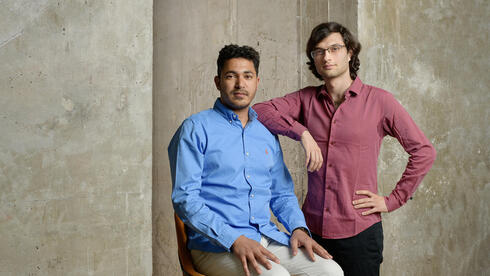
Decart co-founders Dean Leitersdorf and Moshe Shalev are in advanced talks to sell their AI lab for roughly $6 billion to $7 billion after a bidder topped an offer from Nvidia, CTech reported on August 10th. Drafts are advanced enough that an agreement could be signed within a week, according to the report. No buyer has been confirmed, Decart declined to comment to CTech, and the proposed transaction has not been independently verified.
The report puts SpaceX, Amazon and Nebius among the possible buyers. SpaceX's involvement remains speculation attributed to CTech's sources. Nvidia is the only prospective acquirer identified as having held direct negotiations, and CTech reported that Decart's founders moved toward the higher offer when another bidder entered the process.
That leaves Leitersdorf and Shalev with a decision that cuts against the scale of their stated plan. The founders previously described a goal of pursuing a technical problem large enough to produce a major technological shift rather than building a conventional startup around a short development cycle, according to CTech.
Two founders who arrived by different routes
Leitersdorf and Shalev met while serving in Israel's Unit 8200, CTech reported. Their common ground was technical ambition rather than matching resumes.
Leitersdorf began studying computer science at 17 and earned his doctorate at 23. His research covered distributed computing, and his dissertation led to a postdoctoral fellowship at the National University of Singapore. TechCrunch reported in 2024 that he completed bachelor's, master's and doctoral degrees at the Technion in about five years while overlapping his studies with military service.
Shalev grew up in a Haredi household in Bnei Brak. He married at 21 and later studied accounting through a program designed for Israel's ultra-Orthodox community, according to a profile published by Madan. At 23, he joined an integration program that placed Haredi recruits in military technology units. Shalev spent the next 13 years in Unit 8200, where TechCrunch reported that he helped establish and run its AI operations.
The pair initially had a broad thesis: generative AI was important enough to justify pursuing a large technical problem before settling on a narrow product. Decart eventually built both the infrastructure required to run low-latency models and the models themselves. That combination is the central asset any buyer would acquire.
The infrastructure underneath the demos
Decart first drew broad attention with Oasis, an interactive, Minecraft-like environment generated continuously by an AI model. Decart says the original release reached one million users in 72 hours. The early experience was unstable, yet it showed that generated video could respond to user actions quickly enough to resemble a playable world instead of a sequence of offline clips.
On its website, Decart describes DOS as an optimized inference and training stack, Lucy as a real-time video and world-editing model, and Oasis as a real-time world model for physical AI and robotics. The company says Oasis generates action-conditioned environments and is available through an API.
The infrastructure layer explains why several different buyers could value the same asset. Nvidia would gain software designed to increase the useful work produced by its hardware, alongside models that create demand for accelerated computing. SpaceX, if it is bidding, would be buying low-latency model infrastructure and world-simulation technology. Amazon is also named as a possible buyer, though CTech does not establish that it has made an offer.
World models have also become a direct contest among heavily financed AI labs. Google DeepMind's Genie 3 is another real-time interactive world-model system. Decart presents Oasis around physical AI and robotics simulation. A buyer would be betting that world simulation becomes a core training layer for autonomous machines, while the inference software could retain value as individual models change.
A $4 billion financing becomes a potential exit
The reported offers arrived less than three months after Decart raised $300 million at an estimated $4 billion valuation on May 18th. Radical Ventures led that round. Nvidia, eBay Ventures, Adobe Ventures, Toyota Ventures, Atreides Management and Valor Equity Partners participated with existing backers Sequoia Capital, Zeev Ventures and Benchmark. Decart's total funding passed $450 million.
Decart's reported valuation rose from above $500 million in December 2024 to $4 billion in May 2026, with a possible sale now discussed at $6 billion to $7 billion. TechCrunch reported that Benchmark led the December 2024 Series A and that the company's post-money valuation exceeded $500 million. The May valuation and current sale range come from CTech's reporting.
A $6 billion to $7 billion transaction would price Decart 50% to 75% above its May valuation. CTech reported on August 7th, 2025 that Decart had grown to more than 60 employees; its current headcount has not been established. Leitersdorf told CTech that Decart's GPU-acceleration business had generated tens of millions of dollars in revenue, but company-wide annual revenue has not been independently established. At the reported price, prospective buyers would be valuing the technical stack, founders and strategic position far beyond the revenue disclosed for that operation.
Nvidia invested in Decart, worked closely with the company and reportedly moved close to an acquisition before a larger bid appeared. Amazon is named as a possible buyer, but its interest and any offer have not been independently verified. A competitive process gives Leitersdorf and Shalev a chance to secure a price far above Decart's reported December 2024 valuation.
The unresolved issue is control of the project the founders set out to build. Selling would give Decart's technology access to a buyer's compute, customers and distribution while ending Decart's run as an independent AI lab. Remaining independent preserves the founders' larger ambition and requires the company to compete with prospective buyers that already control chips, clouds, capital and distribution. The reported bidding has forced that decision earlier than the long buildout implied by the founders' stated plan.