Brett Adcock's $39B Figure valuation still outruns its robot deployments
A Forbes profile traces how Adcock has financed ambitious businesses before their products reached broad use. Figure's factory work and home-robot research remain early against a $39 billion valuation.
By RuntimeWire Staff · Published
Primary source: Forbes
Why it matters
Adcock has secured substantial backing for businesses well before their intended markets reached scale. Figure's valuation makes the gap between that financing record and the evidence of repeatable robot deployments a central question for investors and operators.
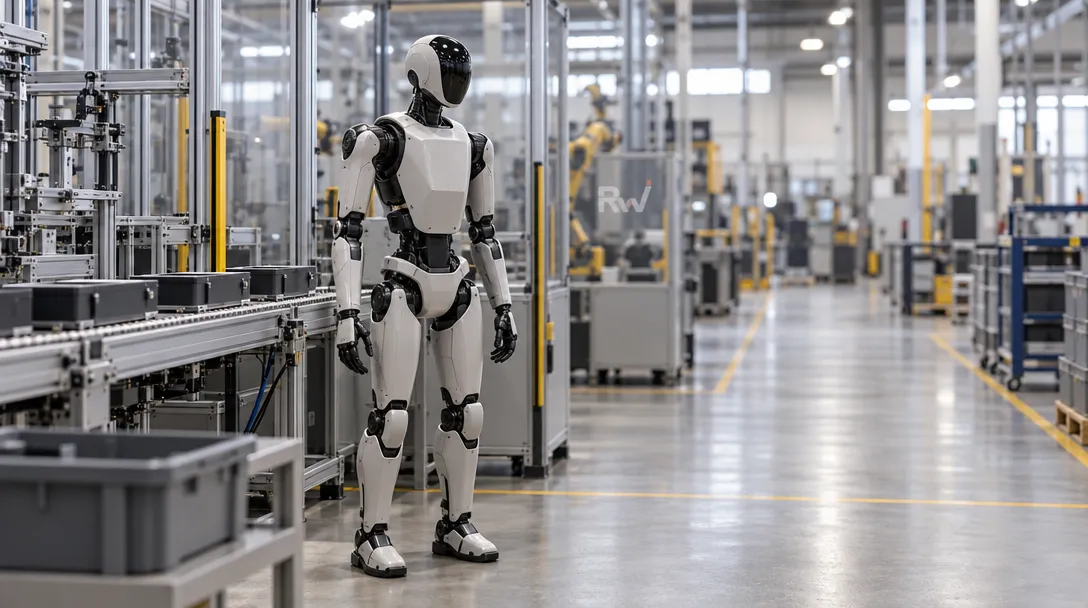
Brett Adcock has repeatedly raised capital for businesses whose largest markets were still ahead of them. A new Forbes profile follows that pattern from recruiting marketplace Vettery to electric aircraft maker Archer Aviation, humanoid robotics company Figure and AI assistant startup Hark. Figure's $39 billion valuation makes the pattern unusually visible: its robots have done documented factory work, while the broad household market Adcock describes remains a forecast.
Adcock's first substantial exit came with Vettery, which he co-founded with Adam Goldstein. Forbes reports Adecco bought the recruiting marketplace for $110 million in 2018, giving Adcock his first $30 million. Adecco's acquisition announcement said Vettery connected more than 4,000 employers with candidates across seven U.S. metro areas; Adecco did not disclose the purchase price.
Archer was a larger, longer-horizon bet. Adcock co-founded the electric aircraft company and took it public through a SPAC transaction in 2021. Forbes reports the deal raised $858 million at a $1.7 billion valuation before Archer had flown commercial flights. Figure followed with a $2.6 billion valuation in 2024, then reached $39 billion in 19 months, according to Forbes. Figure announced more than $1 billion in Series C commitments at that $39 billion post-money valuation on September 16th, 2025.
The details of how that round came together add context to the valuation. Forbes reports Figure sought $1.5 billion at a $38 billion pre-money valuation, with a term sheet reserving as much as $1.2 billion for Parkway Venture Capital and Align Ventures. The firms filled their allocations through special-purpose vehicles, and Align took checks as small as $100,000. Figure's financing announcement named Parkway as lead investor and listed Brookfield, NVIDIA, Macquarie Capital, Intel Capital, Salesforce, T-Mobile Ventures and Qualcomm Ventures among the participants.
Hark, Adcock's AI assistant company, extended the pattern. In May 2026, it raised $700 million at a $6 billion post-money valuation, according to TechCrunch. Forbes reported Hark had nothing on the market at the time and that Adcock put $100 million of his own money into the company before the round. The fundraising history helps explain why the profile centers on his ability to sell investors on long-term outcomes. Adcock told Forbes that humanoids could eventually number "ten or 20 billion" and run supply chains and build homes.
That ambition remains far ahead of the public evidence for Figure. Forbes reports BMW said one Figure robot worked at a time during the company's 2025 factory pilot, with a second robot onsite to rotate in during recharging. The work was a real deployment, but it was narrower than Adcock's description of a fleet operating end to end.
Two later Figure milestones point to what the company is trying to build next. In its October 9th, 2025 Figure 03 announcement, Figure described a robot redesigned for Helix, home use and mass manufacturing. It said its BotQ facility had initial capacity for up to 12,000 robots a year and set a four-year goal of 100,000. Those figures describe planned capacity and a target, not the number of robots produced or deployed.
On September 17th, 2026, Figure introduced Helix 2.5, reporting that one pretrained model performed three household behaviors across 30 previously unseen Bay Area homes without environment-specific data collection or fine-tuning. Figure said the Index-pretrained policy completed selected tasks successfully in 56% of trials, compared with 9% for a model trained without that pretraining. The test involved tidying rooms, folding towels and making beds. It is company-reported research on those tasks, not evidence of reliable commercial household service.

The financing case depends on what comes after those milestones. Figure has disclosed a factory pilot, a manufacturing plan and early results from tests in unfamiliar homes. It has not disclosed robot revenue, unit economics or total shipments in the supplied reporting. Adcock's pitch extends to a humanoid in every home, potentially leased for $500 to $600 a month, as Forbes reported. Investors have valued Figure against that possibility while Figure continues to work toward repeatable deployments.