Fortastra raises $30M to build maneuverable satellite-protection spacecraft
Founder Mike Smayda brings a SpaceX and Hermeus engineering background to a business aimed at protecting civilian and defense satellites in orbit.
By RuntimeWire Staff · Published
Primary source: Bloomberg Technology
Why it matters
Fortastra is raising the cost of entry for orbital security: its spacecraft must maneuver safely near other satellites, and the business depends on making that capability affordable enough for government and commercial customers to buy.
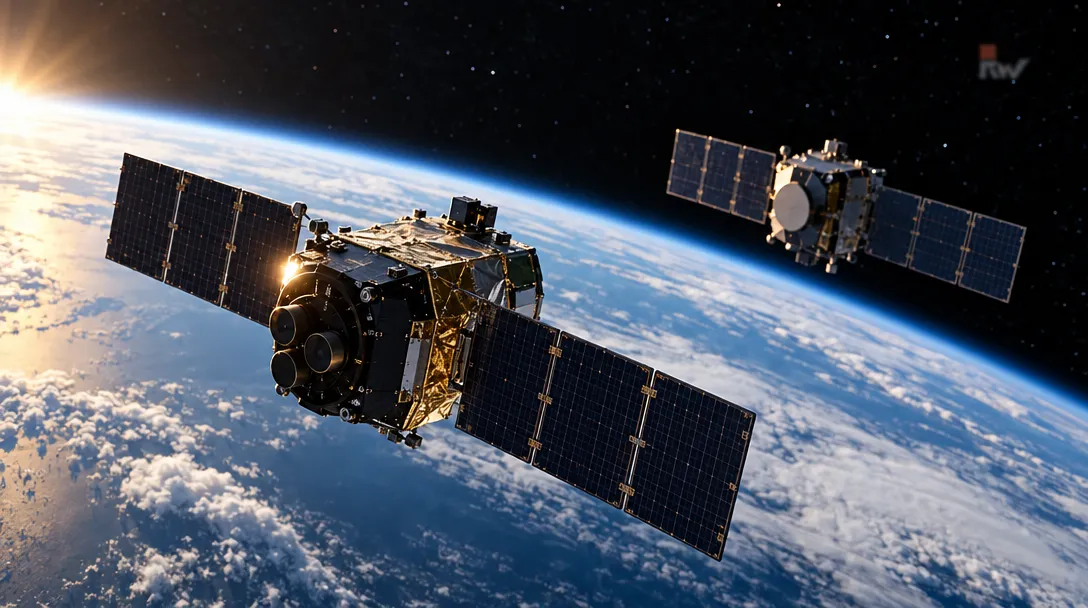
Fortastra has closed a $30 million round to develop maneuverable spacecraft designed to protect civilian and defense satellites, Bloomberg Technology reported on October 8th. Fortastra, based in Torrance, California, is led by Mike Smayda (@mike_smayda), an aerospace engineer whose work has taken him from SpaceX's Falcon rockets to co-founding hypersonic aircraft maker Hermeus. Now he is applying that experience to a less familiar problem: what happens when a satellite needs help close by, rather than another image of a possible threat from far away.
Fortastra describes its spacecraft as an active security layer for satellites. The concept is to maneuver near a protected asset, inspect or monitor a potential threat and, if needed, respond. The company's website describes autonomous navigation, sensing and response as core capabilities. Those remain development goals; available sources do not show a Fortastra vehicle has performed a protective mission in orbit.
From hypersonic flight to orbital security
Smayda's background is unusually close to the engineering demands of the new venture. After earning a mechanical and aerospace engineering degree at Cornell, he completed a doctorate at the University of Virginia focused on hypersonic propulsion and flight testing, according to a UVA Engineering profile. He worked as a senior aerodynamics engineer at SpaceX, then joined Generation Orbit Launch Services, where he worked on the X-60A hypersonic research aircraft. In 2018, he co-founded Hermeus, where he helped develop the company's hypersonic-aircraft program.
The common thread is systems engineering: turning ambitious flight concepts into hardware, then testing the parts that must work together. Fortastra's challenge is different. Smayda told Payload that close-proximity operations are difficult because few objects have operated close to other objects in space, and said those operations need to become the company's core competency. Fortastra is betting that autonomy and maneuverability can make those close approaches practical.
Fortastra's December 2025 seed announcement described a plan to validate sensor hardware and build integrated software and autonomy for protective maneuvers. The seed round was reported at about $8 million, led by Upfront Ventures, with Generational Partners, Forward Deployed Venture Capital, Bloomberg Beta and Wave Function Ventures also participating. Fortastra says it will use the new capital to expand its engineering team, accelerate development of autonomy and rendezvous and proximity operations capabilities, and scale manufacturing, according to its funding announcement on X. The new $30 million financing is a sizable follow-on to that early development capital.
A defense buyer, and a harder commercial case
The strategic case for orbital security is straightforward: satellites support communications, navigation, weather services and military operations, while Fortastra's proposed product is intended to protect them from interference or hostile approaches. Bloomberg places the financing against rising concern about space-based systems being exposed to attack, including the disclosure of a U.S. weapon in space the previous month.
Fortastra is also trying to build for a market beyond government contracts. In its seed-round interview with Payload, Smayda described commercial security services as an emerging opportunity alongside defense demand. That would broaden the potential customer base, while making the commercial case depend on satellite operators deciding that paying for a dedicated protective service is worth the cost. The round supports development of the capability; it does not by itself establish that demand.
Manufacturing is part of the bet. In July, Fortastra and manufacturing company Hadrian announced a collaboration intended to bring automated production methods into spacecraft development. The arrangement is aimed at shortening build timelines and improving production economics, according to the partnership announcement. That work addresses a practical constraint for any protection service meant to cover more than a few high-value satellites: the spacecraft must be affordable and producible at a scale that matches the assets they are meant to guard.
Fortastra's $30 million round gives Smayda more room to move from engineering plans toward spacecraft hardware and repeatable production. Fortastra's premise is that as more critical infrastructure moves into orbit, security will need to move with it. The harder test is whether it can demonstrate reliable close-proximity operations and turn that capability into a service customers will buy. Smayda's record is built around getting complex aerospace systems from design to flight; Fortastra's next proof point is whether that discipline can make an orbital bodyguard more than a compelling metaphor.