Gallatin AI raises $50M to expand military logistics software already in use
Gallatin AI CEO Woody Glier says Navigator is deployed with U.S. military units. The company says the round will fund engineering, product development and broader sustainment capabilities.
By RuntimeWire Staff · Published
Primary source: PR Newswire
Why it matters
Gallatin is financing a push from military deployments toward wider adoption of logistics software, where success depends on proving measurable improvements in planning and readiness, not just showing the tool can be deployed.
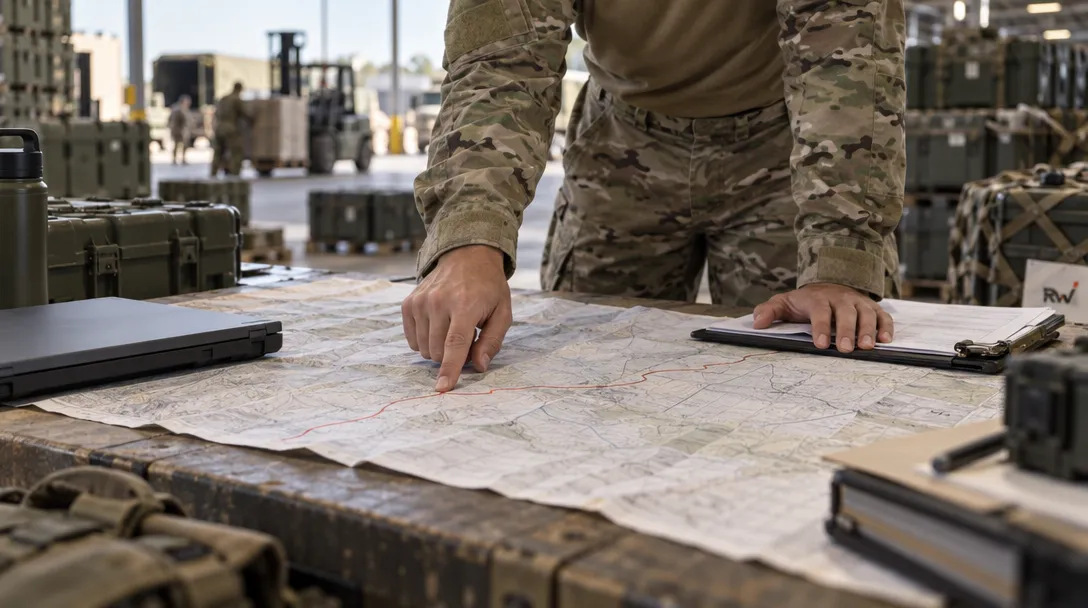
Gallatin AI raised $50 million in Series A financing on October 8th, 2026, to expand its military logistics software. The funding gives CEO Woody Glier capital to push a product already in use with U.S. military units further into sustainment planning. Gallatin named 8VC and Silent Ventures among the backers in its announcement on PR Newswire; Axios also reported that the two firms participated.
Glier has spent much of his career building software for large institutions. Gallatin's founder biography says he spent seven years in product and delivery roles at Palantir, then two years building Scale AI's federal team. Earlier, he helped incubate cloud-services company Virtustream and became its first employee; EMC acquired Virtustream in 2015.
"A lot of the logistics data that is generated today is very manual," Glier told Axios. "It's very messy - literally like clipboard and pen and paper."
Software for the supply chain behind the force
Gallatin's flagship product, Navigator, combines logistics data and workflows to help planners assess readiness and coordinate resupply. Gallatin says it is used by Army and Air Force customers across tactical, operational and strategic planning, including work involving fuel, medical supplies and munitions. Gallatin also says Navigator has supported U.S. military exercises in Japan, Alaska and Europe. Those are deployment claims; Gallatin has not published measured results such as reduced stockouts, shorter planning times or improved readiness.
The product's approach reflects Glier's previous experience at Palantir. Gallatin says Navigator can run inside Palantir environments, using existing data and security infrastructure. In a company post, Gallatin described building on Palantir Foundry to move faster through government security and integration requirements. That gives Gallatin a route into military workflows already built around established software, while leaving it dependent on those platforms for part of its delivery model.

Glier's co-founders bring related operating experience. Chief Product Officer Brian Ballard spent about a decade working on defense data fusion and logistics, according to Gallatin, and previously founded industrial software company Upskill, which TeamViewer acquired. Chief Technology Officer Daniel Buchmueller began his career as a software engineer at Microsoft, co-founded Amazon Prime Air and later held leadership roles at Airbus, according to Gallatin's team page. Ballard said in the financing announcement that members of Gallatin's team had experienced sustainment challenges firsthand in uniform.
The capital and the proof still ahead
Gallatin says the Series A brings its total funding to $70 million. The publicly announced rounds add up to $65 million: a $15 million seed round announced on April 8th, 2025, and this $50 million Series A. The difference implies $5 million in other financing not itemized in those round announcements.

The 2025 seed was led by 8VC, with Silent Ventures, Moonshots Capital, Timeless Partners and Banter Capital participating, according to Gallatin's seed announcement. The current release names 8VC and Silent Ventures, along with other new and existing investors. It does not give a valuation. Gallatin says it will use the new capital to expand engineering, develop products and broaden its sustainment capabilities.
The competitive field is also moving beyond pilots. Rune Technologies, whose TyrOS platform addresses military logistics, announced a five-year, $99 million IDIQ contract with the U.S. Army on June 18th, 2026, according to the company's contract announcement. A federal contract listing dates the award to June 16th. That is a procurement vehicle, not a funding round, but it illustrates the kind of government buying pathway that can turn operational trials into broader deployments. Gallatin announced in March that it had won an Army PORTAL Direct to Phase II small-business contract to develop Navigator; Gallatin described that effort as an 18-month prototype program. The Army PORTAL announcement says the work is intended to test demand forecasting and logistics planning with operational Army units.
Gallatin has named military users, exercises and programs, but has not published customer counts, revenue or quantified outcomes. Glier's bet is that software can make military logistics decisions faster even when the underlying data remains inconsistent and manual. The next test is whether that capability can move from selected units and exercises into repeatable adoption across a sprawling military enterprise.