Gardens Interactive raises $35M for a fantasy game built on cooperation and betrayal
Founders Stephen Bell, Chris Bell and Lexie Dostal bring credits from Journey, Sky and Dustforce; Bloomberg names Sequoia, Innovation Endeavors and Moritz Baier-Lentz among the backers.
By RuntimeWire Staff · Published
Primary source: Bloomberg Technology
Why it matters
Gardens has raised about $71 million across three reported rounds before naming its debut game or setting a release date. The founders' design thesis now has to prove that social encounters can sustain an online world over time.
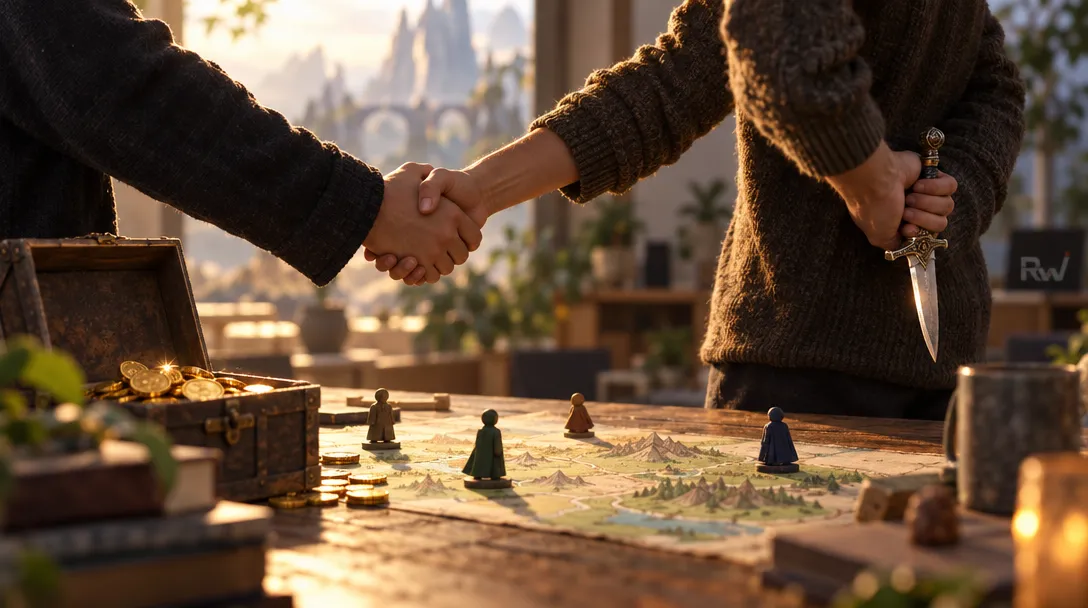
Gardens Interactive, led by cofounders Stephen Bell, Chris Bell (@GardensChris) and Lexie Dostal, raised $35 million in a Series B announced October 7th, according to Bloomberg. The round backs an unannounced shared fantasy adventure designed around the kind of online encounters the founders have spent years trying to make memorable: strangers helping each other, then deciding what to do when cooperation gives way to conflict.
Bloomberg names Sequoia Capital, Innovation Endeavors and venture capitalist Moritz Baier-Lentz among the investors. The report does not identify a lead investor or a valuation. The round gives Gardens capital to keep building a large-scale online game before it has disclosed a title, release date or business model.
The founders' bet
The three founders bring different parts of that design problem. Chris Bell worked as a designer on Journey, What Remains of Edith Finch and Sky: Children of the Light, and led the cooperative student game Way. Stephen Bell, the studio's CEO and narrative director, worked on What Remains of Edith Finch and the browser-based game Blaseball. Dostal, Gardens' tech-art director and co-design lead, co-created the precision platformer Dustforce.
Those credits trace a creative lineage, not a sequel plan. Gardens describes its upcoming game as a shared fantasy adventure in a shifting wilderness, where players cross paths with strangers and navigate a world of mystery and magic. In its 2023 financing announcement, Chris Bell described the core tension as cooperation with betrayal still possible. The studio's earlier prototype examples included carrying a player to reach an objective, catching a stranger across a chasm and joining forces to strip armor from a monster.
That design carries a commercial risk as well as a creative one. Social games depend on players creating their own reasons to return and on a world that continues to work as a group grows, changes or disappears. Gardens' challenge is to turn the emotional spark of an unexpected encounter into a repeatable game people will keep playing. The funding announcement supplies no player, revenue or release figures with which to measure that progress.
A bet on the studio as well as the game
Gardens has framed its workplace as part of the product strategy. The Bell brothers and Dostal said they wanted to make ambitious online games in a healthier, more sustainable environment. In a 2022 interview, Chris Bell said the founders had experienced burnout and rejected the idea that good games require grinding people down. That principle is an operating choice; the studio still has to show it can support the long development cycle and ongoing upkeep that an online world demands.
The new Series B follows a $31.3 million Series A announced in July 2023. Gardens said at the time that Lightspeed Venture Partners and Krafton co-led that round, with Dreamhaven, TIRTA, Rendered VC and other investors participating. Bloomberg's $35 million figure brings the reported funding across the Series A, the earlier $4.5 million seed and this Series B to about $70.8 million, or roughly $71 million. That total is calculated from the reported round figures; the Series B's full investor list remains unspecified.

Gardens' own 2025 year-in-review offers a useful view of what the capital is meant to support. The studio said it was running regular external playtests before production, using player feedback to test its assumptions about social interactions and game mechanics. It also described Project Gardens as a working title and said it was seeking investment, publishing support and outside partners for services such as localization and moderation.
That makes this financing a bet on development and the operating infrastructure around an online game. Player testing can expose whether the intended moments of cooperation actually happen; publishers and service partners can help carry the game toward launch and keep it running afterward. Gardens has not publicly named the game or disclosed when players will be able to try it.
Bloomberg described Gardens as aiming to upend the viral "friendslop" category. That label belongs to the article's framing; Gardens' own public description centers on social roleplay and a shared fantasy adventure. The distinction is useful: the studio is asking investors to back an authored world with a particular multiplayer design, while the market will ultimately judge whether that design sustains a community.
For Bell, Bell and Dostal, the new capital extends a career-long interest in games that make encounters between players feel consequential. Their prior credits give the pitch a recognizable lineage. The next test is a new game of their own, built to make cooperation, conflict and the strangers in between compelling enough to bring players back.