Anderon gets $2B in IBM and federal backing for quantum foundry
CEO Mukesh Khare brings IBM chipmaking and quantum experience to a foundry designed to serve IBM and outside customers.
By Ryan Merket · Published
Primary source: Forbes
Why it matters
Anderon is testing whether quantum hardware can adopt the fabless model that lets semiconductor designers outsource manufacturing. Its IBM backing and Albany infrastructure give it a starting point; outside customers and repeatable production will determine whether the foundry can serve the industry beyond its parent.
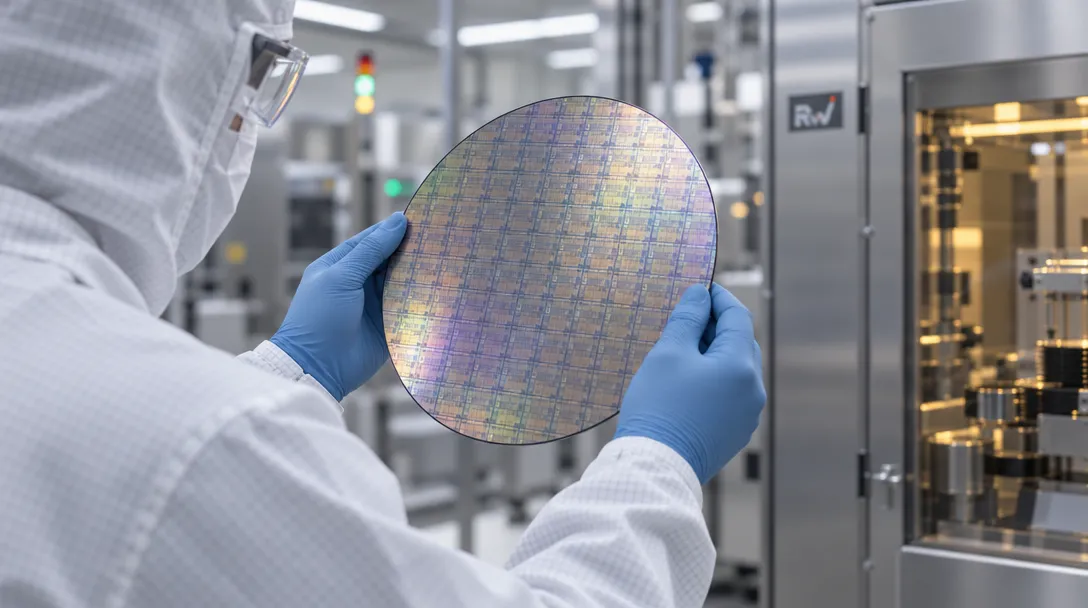
Anderon, the IBM subsidiary led by former semiconductor executive Mukesh Khare, secured a finalized $1 billion CHIPS award on September 16th, alongside IBM's $1 billion investment, to develop a quantum-wafer foundry in Albany, New York. The combined $2 billion backs a bet that quantum hardware companies can outsource fabrication instead of building their own specialized manufacturing operations. Forbes published an analysis of the plan on October 9th; the funding agreement itself was finalized three weeks earlier.

Khare connects the project to IBM's chipmaking past. Before taking the CEO role at Anderon, he was IBM's general manager and vice president of semiconductors, leading a global team of more than 1,000 researchers, according to Anderon's leadership announcement. His work included IBM's research alliances on 7-nanometer and 2-nanometer technologies and quantum-processor fabrication at Albany NanoTech. He holds degrees from IIT Bombay and Yale.
IBM retained its semiconductor research and process expertise after leaving chip manufacturing. Anderon is organizing some of that capability as a separate service business. The agreement announcement says Anderon will make wafers for customers across the quantum industry, while IBM's investment also includes intellectual property, manufacturing assets and personnel. Anderon's leaders have described the goal as helping quantum companies move from research designs toward repeatable wafer production.
A foundry model with an IBM customer
Anderon plans to use 300-millimeter facilities and equipment at the Albany NanoTech Complex, instead of building an entirely new site. Anderon's initial offerings center on superconducting-qubit arrays, quantum input/output signaling and components for reading quantum signals. Anderon says its first quantum wafers are already moving through manufacturing equipment.
The milestone shows equipment is in use, but does not establish commercial-scale output. Anderon has not named external customers or reported wafer volumes or yields. A foundry needs outside designs moving through its processes at reliable yields to show that its economics work beyond its parent company's needs.
IBM has a direct interest in that first customer base. IBM's quantum roadmap can use the manufacturing capacity, and IBM said in May that Anderon would serve other quantum developers as well. Khare's challenge is to turn IBM's internal manufacturing expertise into a service that potential customers trust. Anderon says it will not compete with customers' products. IBM's ownership and its own quantum-computing business make that promise central to the commercial pitch.
The competition is already building
Anderon is entering a market where other manufacturers are positioning themselves to sell quantum-related fabrication services. GlobalFoundries launched its Quantum Technology Solutions business on May 21st and said it had customer engagements at launch. GlobalFoundries announced a separate $375 million letter of intent with the Commerce Department. Anderon's and GlobalFoundries' different funding structures and technical approaches reflect a broader competition: manufacturers are seeking to become production partners for different qubit designs and supporting electronics.
The $1 billion federal award to Anderon is an R&D commitment under the CHIPS and Science Act, not a venture round or a disclosed valuation. IBM is the named corporate backer, and the public announcements do not describe a priced equity financing. The award puts public and corporate capital behind Anderon's effort; future customer work will show its commercial traction.
Khare's team includes CTO Jason Orcutt, whose IBM work covered silicon photonics and superconducting qubits, and foundry-business head Dan Dechene, who held semiconductor technology roles at IBM and GlobalFoundries. Their backgrounds align with Anderon's task of combining quantum-device know-how with the process control and manufacturing routines developed for semiconductors.
The test is whether companies building quantum systems will put their wafer designs through an IBM-owned operation, and whether Anderon can manufacture those wafers consistently enough to keep them there. For Khare, the $2 billion package supplies a start and access to an existing 300mm site.