Ishay Yaari and Nati Shalom raise $10M for Kubernetes remediation agents
The Cloudify veterans are putting agents inside customer environments to restore service before root-cause analysis, with lower telemetry costs as part of the pitch.
By RuntimeWire Staff · Published
Primary source: CTech
Why it matters
DataAgent is testing whether AI infrastructure software can graduate from diagnosis to action. Safe in-cluster repairs would pressure observability vendors on both workflow and data-ingest economics.
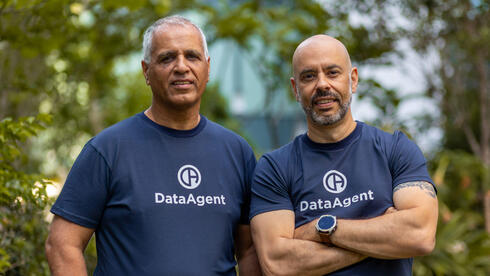
DataAgent came out of stealth on September 1 with a $10 million pre-seed round for software that attempts to repair Kubernetes failures inside a customer's production environment. Co-founders Ishay Yaari and Nati Shalom are carrying a lesson from their years at Cloudify into the new business: infrastructure automation should keep working after an application has been deployed.
MizMaa Ventures and Alicorn Venture Partners led the round, according to CTech's announcement. DataAgent plans to use the money to bring the product to market and expand customer adoption in North America. CTech reported that DataAgent has 15 employees and is recruiting go-to-market staff in the United States and Israel. The valuation was not disclosed.
Yaari previously served as chief revenue officer at Cloudify before spending roughly two years at Alicorn, where his work covered financing, acquisitions and portfolio operations. In a LinkedIn post introducing DataAgent, Yaari described the move as his return to company building after seeing startups from the investment side.
Yaari's thesis is that infrastructure teams spend too much time responding to alerts, inspecting dashboards and following manual runbooks. DataAgent is his attempt to turn those runbooks into software that can act.
Shalom brings a longer infrastructure record. He founded GigaSpaces and later Cloudify, the cloud-orchestration business where he served as founder and chief technology officer. Dell acquired Cloudify in 2023, according to Dell's subsequent account of the transaction. Shalom later held a senior role at Dell Edge.
The pair's shared history explains why DataAgent is starting deep inside the infrastructure stack. Cloudify automated how applications and infrastructure were deployed across cloud environments. DataAgent is focused on what happens after deployment, when configuration drift, capacity constraints or a failed rollout wakes an engineer in the middle of the night.
Fix first, investigate after
Most incident-response systems collect logs, metrics, traces and events, correlate the signals, and send an alert to an engineer. The engineer still has to decide what to change. DataAgent wants its agent to perform approved corrective actions before a full investigation is complete.
DataAgent's software runs inside the customer's environment and reads live system state, including logs, metrics, events, deployments, configurations and topology. When DataAgent identifies a recognized failure, it can propose or apply a verified response. A deeper root-cause analysis continues after service has been stabilized.
That sequence is the core of DataAgent's pitch. During an outage, restoring service often matters before establishing every link in the causal chain. Engineers can investigate the underlying defect once traffic is flowing again, provided the immediate action is reversible and does not create a larger failure.
DataAgent says customers can begin with recommendations and dry runs, then authorize increasing levels of autonomy for failure classes where the agent has demonstrated reliable behavior. Unknown or unapproved cases remain with human operators. The product is designed to run alongside existing monitoring and incident-management systems, with listed integrations including AWS, GitHub, PagerDuty, Grafana, Prometheus, Datadog and Slack.
Running inside the cluster also supports DataAgent's second argument: customers should not need to export every piece of operational telemetry to another vendor's cloud. DataAgent says local analysis can lower observability costs while retaining the tools customers already use. That economic pitch puts DataAgent near observability vendors even though DataAgent is positioning itself as an action layer rather than a replacement dashboard.
Autonomy brings a production trust problem
Diagnosis is comparatively safe. An incorrect incident summary wastes an engineer's time. An incorrect automated command can take down another service, erase state or obscure the evidence needed to understand the original failure.
DataAgent's adoption will therefore depend on controls around permissions, approvals, dry runs, audit trails and rollback behavior. The agents also need enough context to distinguish a familiar symptom from a new failure that happens to look similar. Infrastructure teams will judge the product by false actions and recovery outcomes, rather than the quality of its generated explanations.
DataAgent claims that as many as 80% of common errors could eventually be solved autonomously. That figure is a target supplied by DataAgent, not an independently verified production result. DataAgent has not attached public customer-level evidence to the claim, making the staged-authorization model central to the sales case. Buyers do not need to believe in full autonomy on day one. They need proof that a narrow group of repetitive incidents can be handled safely.
A well-funded race beyond alerting
DataAgent is entering a crowded infrastructure category. Komodor, Robusta and Shoreline have built products around Kubernetes troubleshooting, reliability or remediation, while newer AI systems such as Resolve AI are pushing toward agents that can investigate incidents and execute operational changes.
Resolve AI raised a $125 million Series A in July 2026 and says its agents can support rollback decisions, capacity adjustments and configuration changes. The financing gap gives Resolve substantially more capital, though it says little by itself about product safety or deployment depth.
DataAgent's distinction is architectural and procedural. The agent sits inside the customer's environment, prioritizes service restoration and leaves extended analysis until after the immediate incident. The product boundary will become clearer as DataAgent shows which failures it can resolve without human intervention and how often its safeguards stop an unsafe action.
For Yaari and Shalom, the $10 million round buys time to establish that evidence and build a North American sales operation. Alicorn's participation also creates an unusual continuity: Yaari moved from helping operate the investment firm's portfolio to building a business backed by his former employer.
The founders are betting that infrastructure teams have reached the limit of paying for better descriptions of broken systems. DataAgent now has to show that software can make production changes safely enough for engineers to let it try.