Nir Zuk's Cylake raises $245M to put security back in the building

Lightspeed led the convertible note for Cylake, which has raised $290M before its sovereign security platform reaches beta.

By · Published

Primary source: Ctech

Why it matters

Cylake has raised $290M before beta because investors are underwriting Nir Zuk's record and a costly full-stack build. The product still has to prove that sovereign customers will replace fragmented security tools with one locally installed platform.
Nir Zuk's Cylake raises $245M to put security back in the building

Nir Zuk's Cylake announced a $245 million convertible-note financing on September 8, 2026, giving the Palo Alto Networks founder an unusually large pool of capital to rebuild enterprise security around hardware, private infrastructure and data that stays inside the customer's walls.

The round was led by Lightspeed Venture Partners, with Picture Capital and Redpoint Ventures participating, according to the investors and Ctech. It brings Cylake's total funding to $290 million, six months after Greylock led a $45 million seed round. The valuation, conversion price and ownership implications of the note were not disclosed.

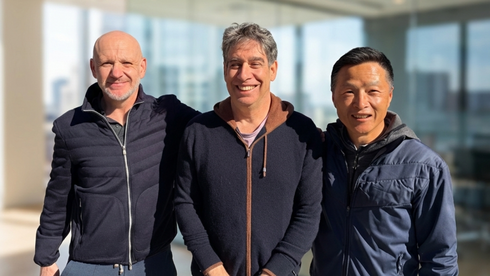
Zuk founded Cylake in Sunnyvale with Wilson Xu, who previously led engineering at Palo Alto Networks, and Ehud "Udi" Shamir, a SentinelOne co-founder who later worked at Palo Alto Networks. Their pitch is a reversal of the software industry's cloud migration: Cylake plans to install its AI security platform on premises, in private clouds and in fully disconnected networks.

A founder reversing his own architecture

Zuk has spent his career replacing security architectures that he considered obsolete. He worked on firewall technology at Check Point, co-founded OneSecure, served as CTO of NetScreen and founded Palo Alto Networks in 2005. Palo Alto Networks announced his retirement in August 2025 after two decades as its technology chief.

His path into security started earlier. In a 2010 Computerworld interview, Zuk described teaching himself to program on a Dragon 64 as a teenager, writing early computer viruses and spending five years working with computers in an Israeli military unit. He studied mathematics while serving, then left before completing the degree to join Check Point.

That history explains the size and shape of the Cylake bet. Zuk previously built Palo Alto Networks by consolidating single-purpose network-security appliances into a broader platform. At Cylake, he is applying the platform argument to organizations that cannot send security telemetry to a public cloud.

"I started Palo Alto Networks twenty years ago by moving security to the cloud," Zuk wrote in a letter on Cylake's website. "I'm starting Cylake by moving it back."

Cylake is aimed at governments, defense organizations, banks and critical-infrastructure operators. These buyers have regulatory, sovereignty or operational requirements that can prevent sensitive information from leaving controlled environments. Zuk argues that those restrictions have left important networks dependent on fragmented products designed before current AI systems became practical.

$290M raised before customers can buy it

The financing gives Cylake substantial room to hire and manufacture infrastructure before commercial availability. Cylake says it has over 40 employees, is working with unnamed design partners and expects a beta near the end of 2026. General availability and the first production systems are planned for 2027.

That timetable puts the funding several steps ahead of commercial proof. Cylake has not attached customer names, deployments or performance measurements to the financing announcement. The next test is whether Zuk's record and the founding team's relationships can turn design partnerships into installations inside organizations with long procurement, testing and certification cycles.

The structure of the round also matters. A convertible note postpones the final pricing of Cylake's equity, leaving the conversion terms to determine how much ownership the $245 million ultimately buys. It lets Cylake fund an expensive build without publicly setting a valuation before the beta arrives.

The money will support product development and hiring across engineering, product and other functions, according to Cylake. Lightspeed partner Ravi Mhatre is joining the board, while Picture Capital partner Rakesh Loonkar will become an observer. Cylake's existing board includes Greylock partner Asheem Chandna, former Palo Alto Networks CEO Mark McLaughlin, investor Jim Goetz and Zuk. In April, Cylake also signed an investment agreement with In-Q-Tel, the strategic investor connected to the US national-security community.

The server rack is part of the product

Cylake's planned platform combines compute, storage and security software in appliances installed in a customer's data center. Security information flows into a unified data lake, where detection systems and language models are meant to investigate activity, explain incidents and help construct a response.

The physical deployment is central to Cylake's pitch. The customer owns the appliances and keeps the telemetry locally. Additional units can be added as data and compute requirements grow, creating a private security cloud without requiring a persistent connection to Cylake.

That architecture carries a heavy execution burden. Cylake must build hardware, data infrastructure, detection software, policy controls and AI workflows while matching specialized products that customers already use. It must also persuade cautious institutions to consolidate security functions with a vendor whose platform is still approaching beta.

Zuk has assembled people who have done pieces of that work before. Xu spent over a decade helping build Palo Alto Networks' engineering organization. Shamir helped start SentinelOne in 2013. Cylake's broader leadership roster includes former Palo Alto Networks marketing chief Rene Bonvanie and veterans across product, engineering, finance and operations.

Investors are financing the team's ability to repeat its earlier work at a larger starting scale. Greylock backed Palo Alto Networks at its formation and returned for Cylake's seed. Lightspeed framed its new investment as a chance to back Zuk on his next architectural reset.

Cylake now has enough capital to make that reset tangible. Its late-2026 beta will show whether the company has built a working sovereign security system, rather than an experienced founding team and a well-funded argument against the public cloud.

Reader comments

Conversation for this story loads after sign-in.