Nvidia board opens foreign-espionage probe after Jensen Huang admits affair to staff
Huang told employees, "I was unfaithful to my wife," as the board said it has no reason to believe NVIDIA secrets were compromised and Congress seeks a closed-door briefing on November 18th.
By Ryan Merket · Published · Updated
Primary source: nvidianews.nvidia.com
Why it matters
Huang's admission confirms the infidelity at the center of the reporting, while the espionage claims remain unproven. For NVIDIA, the inquiry now tests both executive conduct and the safeguards around the founder who controls the company's AI-chip strategy, at a company whose products sit inside U.S. export controls on China.
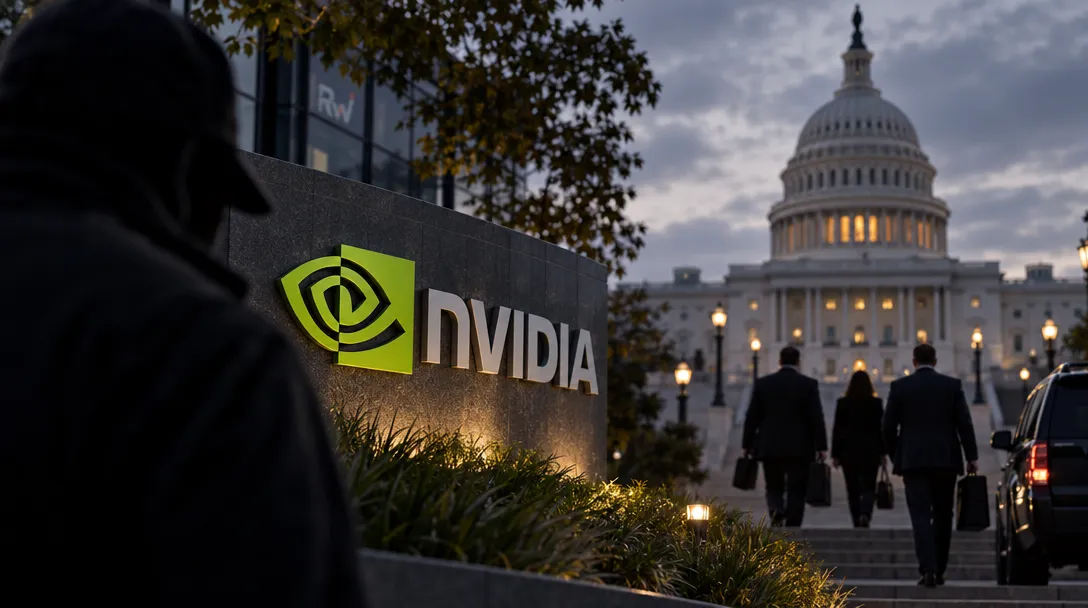
NVIDIA founder and chief executive Jensen Huang admitted to employees that he was unfaithful to his wife, and NVIDIA's board then opened an independent investigation into reporting that he was the target of a foreign intelligence effort. Bloomberg reported that the board launched the inquiry after the admission, and that Huang told staff in a memo he was "deeply sorry" for the affair. "I was unfaithful to my wife," he said. "My actions hurt her and our children. There is no excuse for what I did."
The statement from NVIDIA's board of directors dated November 8th says the board is initiating the investigation "in light of recent reporting that founder and CEO Jensen Huang has been the target of a foreign intelligence effort". A committee of independent directors, assisted by outside independent counsel, will oversee the inquiry.
The board framed the review as a precaution. "While the Board has no reason to believe that either national security or NVIDIA secrets were compromised, the Board's inquiry will examine all available information," the statement said. It added that Huang "fully supports the review and has committed to cooperating with it" and that "the Board has confidence in Jensen and his leadership team".
The board gave no timetable, named no committee members and identified no outside counsel in the statement. Its stated scope is limited to examining available information about the reported targeting. The statement did not present evidence that company secrets were taken or that national security was harmed.
Huang's admission confirms infidelity. The Bloomberg account does not say the memo named the other person, confirmed the reported relationship with Alice Huang, or conceded that any information passed to a foreign service. Those questions remain part of the board and congressional inquiries.
The reporting behind the board action
The board decision followed a sequence of reports about Huang and Alice Huang, also known as Huang Le, a former executive at Singapore-based Megaspeed International. A Financial Times report cited by other outlets said a U.S. government memo written earlier this year described a romantic relationship between Jensen Huang and Alice Huang. The same reporting said U.S. officials believed Alice Huang had been recruited by China's Ministry of State Security to gather information about Jensen Huang.
Those espionage claims remain reported allegations, not findings announced by NVIDIA or its board. The board statement uses narrower language: Huang was reportedly the target of a foreign intelligence effort. It does not name Alice Huang, Megaspeed, China or the Ministry of State Security, and it does not state that Huang transferred information.
NVIDIA had previously pushed back on suggestions that its commercial dealings were improper. On October 29th, Huang defended NVIDIA's business with Megaspeed, calling it "normal and not unusual," according to Reuters reporting on Bloomberg's account. Megaspeed is a Singapore-based NVIDIA customer. Reuters described Huang's comment as a defense of the company's business with the firm during scrutiny of a reported U.S. spy probe.
Congress had already moved
The board acted after three Republican House committee chairs sought a private briefing from Huang. Foreign Affairs Committee Chairman Brian Mast, Select Committee on China Chairman John Moolenaar and Intelligence Committee Chairman Rick Crawford asked Huang to attend a joint closed-door briefing on November 18th and to respond by November 11th. Their letter was dated November 4th and released November 5th.
The request asked about Huang's interactions with Alice Huang and NVIDIA's procedures for guarding against foreign espionage. Lawmakers sought details of those interactions and the company's security protocols, according to reporting on the letter. The briefing request did not by itself establish wrongdoing. It placed Huang in the position of explaining both a customer relationship and NVIDIA's internal controls to the committees with jurisdiction over foreign affairs, competition with China and intelligence.
That congressional interest is directly tied to NVIDIA's role in advanced computing. The underlying dispute concerns access to advanced AI chips and alleged attempts to influence their availability to China, a market where export controls determine which NVIDIA products can be sold and through which customers. NVIDIA's position in that supply chain means questions about access to its chief executive carry regulatory weight beyond a personal-conduct inquiry.
The founder at the center of the inquiry
Huang co-founded NVIDIA in 1993 with Chris Malachowsky and Curtis Priem, and he has led the company since its founding. He previously worked as a director at LSI Logic and as a microprocessor designer at Advanced Micro Devices, while Malachowsky came from Sun Microsystems and Priem from IBM and Sun Microsystems.
That tenure is central to the governance problem now facing the board. Huang is the founder, the public face of NVIDIA and the executive most closely associated with its AI-chip strategy. A finding that a foreign service targeted him would not automatically imply misconduct by Huang, and the board has explicitly said it has no reason to believe secrets were compromised. The investigation still has to establish who had access to Huang, what information was discussed, whether NVIDIA's controls were followed and whether any contact crossed from ordinary customer business into a security risk.
The board has left the immediate leadership structure unchanged. It expressed confidence in Huang and his leadership team while the independent directors conduct the review. That combination gives NVIDIA a formal record for shareholders and regulators, but it does not resolve the factual dispute created by the intelligence reporting.
The next fixed date is November 11th, the response deadline in the House chairs' request, followed by the proposed November 18th closed-door briefing. The board said it "will provide further updates as appropriate". Until the independent committee reports, the public record supports a narrower set of conclusions: Huang has admitted he was unfaithful to his wife, NVIDIA says it has no reason to believe a compromise occurred, and both the board and Congress are demanding a fuller account of the reported foreign-intelligence targeting.
When you purchase through links in our articles, we may earn a small commission. This doesn’t affect our editorial independence.