PhyPal revives its patient platform with AI and a California workers' comp pilot
Founder Ranjeet Randhawa is pairing large language models with structured clinical workflows, starting with a California workers' compensation practice.
By RuntimeWire Staff · Published
Primary source: PR Newswire
Why it matters
PhyPal's bet is that conversational AI becomes useful in care when it feeds structured workflows, not when it merely chats. Its earlier app has a randomized trial behind it, but the newly relaunched AI system still needs to prove its value in provider operations.
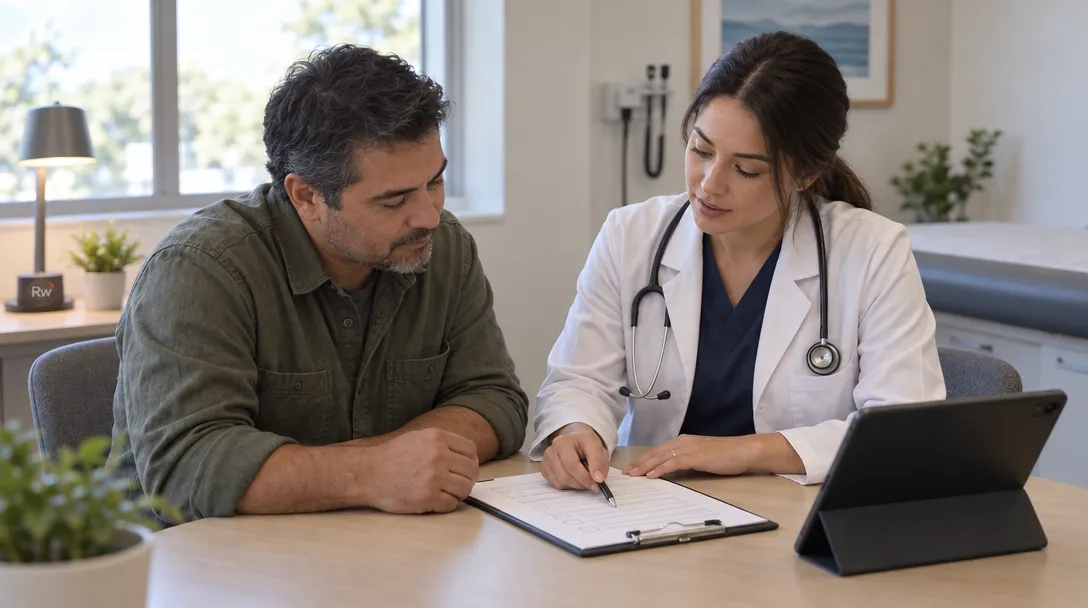
PhyPal founder Ranjeet Randhawa is relaunching PhyPal's patient-engagement platform with conversational AI and a pilot at a California workers' compensation practice, linking patient intake to treatment authorizations and follow-up. In an October 9th announcement on PR Newswire, PhyPal says the updated system combines large language models with deterministic clinical workflows.
Randhawa has spent 25 years working across healthcare technology, including electronic medical records, revenue-cycle operations, utilization review, peer review and provider-side authorizations, according to PhyPal's current materials. That operating history shapes the product's premise: clinical AI should help gather and organize information, while physicians retain clinical judgment.
PhyPal began in 2018 with Randhawa and the late Dr. Michael Brown. Its predecessor, Snapcare, used structured patient engagement and outcomes tracking, but Randhawa says the earlier rules-based technology could not keep up with unpredictable patient conversations. Brown described those conversations as "peeling an onion," Randhawa said in the announcement. The new system is intended to let patients describe what is happening naturally while keeping information collection and downstream steps structured.
A clinical result with a clear boundary
PhyPal's strongest evidence predates this relaunch. A 2018 randomized controlled trial studied Snapcare in 93 people with chronic low back pain. The researchers reported that participants using the app alongside conventional care had a significantly greater reduction in disability over 12 weeks than the conventional-care group, with p < 0.001.
That finding belongs to the earlier app and its specific study population. It does not evaluate the relaunch's large-language-model conversations, authorization preparation or current workflow software. The 2018 result offers clinical history, while providers still need to test the relaunched AI system in practice.
PhyPal says more than 1,200 patients have completed pre-visit intakes through its technology. That is a company-reported usage figure, not a measure of paid adoption or evidence that the new AI workflow improves outcomes. The announcement also quotes Richard Jimenez, a rheumatologist at Seattle Arthritis Clinic, saying that the platform makes patient-data collection faster and gives him more time to analyze problems and communicate with patients.
The workflow after the conversation
The relaunch reaches beyond intake. PhyPal says the system can support clinical documentation, after-visit summaries, longitudinal outcomes tracking and treatment-authorization coordination. Its California pilot will evaluate whether the tools can reduce administrative work and improve coordination at a workers' compensation practice.

PhyPal's workers' compensation offering focuses on California treatment requests, known as DWC Forms RFA, and preparation of medical records for QME, AME and IME evaluations. PhyPal describes software that can validate request information, assemble supporting records, submit and track requests, and return status to a provider's workflow. For medical-legal records, it says its tools organize evidence and link extracted information back to source pages for physician review. PhyPal says physicians make the clinical judgments and medical-legal opinions.
That focus gives Randhawa a specific first market for a broader workflow idea. A patient conversation can produce useful clinical information; a provider still has to turn it into documentation, treatment requests, records and follow-up. PhyPal is betting that connecting those steps will be more valuable to practices than offering another stand-alone chatbot. The California pilot puts that operational claim in front of a real provider workflow, though the announcement does not describe its results.
For Randhawa, the shift is a second attempt to make PhyPal's original clinical approach usable at scale. "We didn't need AI to invent our clinical foundation," he said. "We needed AI to make that foundation accessible through natural conversation." The promise is continuity from what a patient says to what a provider needs to do next; whether that reduces administrative effort without compromising the quality and traceability of clinical information is the practical test ahead.