Reflection prepares its first open-weight model for enterprise AI
Reflection AI CEO Misha Laskin is preparing its first open-weight model for customer-controlled AI systems, backed by compute agreements with SpaceX and Nebius and a planned South Korean data center.
By Ryan Merket · Published
Primary source: Axios
Why it matters
Reflection has secured large Nvidia-compute agreements and announced an AI factory project before releasing its first public model. That makes the model's usefulness and the company's ability to package deployment into a product the next tests for its enterprise strategy.
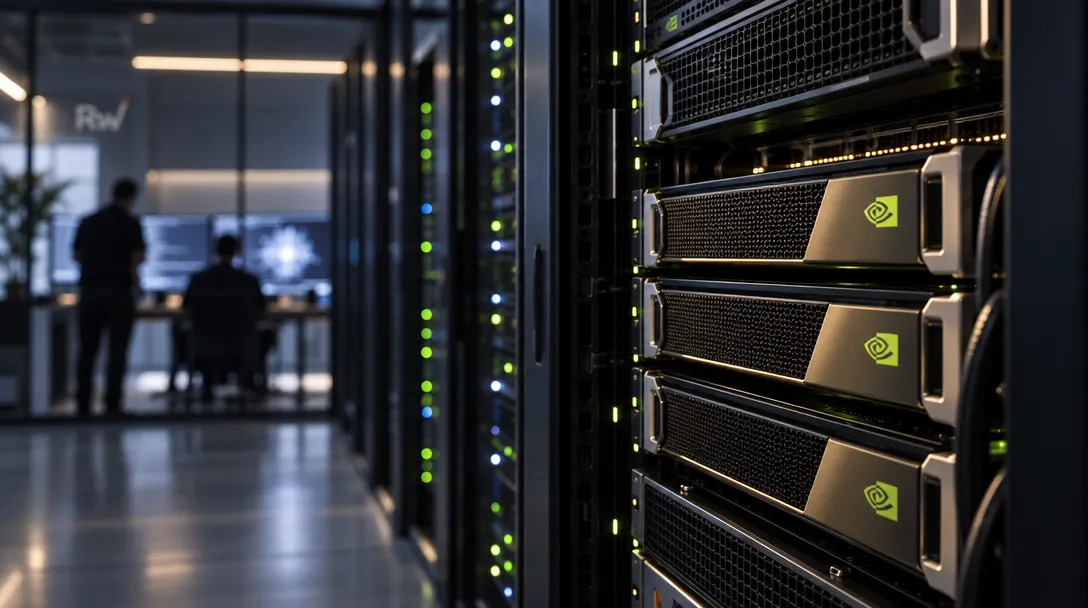
Reflection AI is preparing to release its first public open-weight model, a long-awaited test of CEO Misha Laskin (@MishaLaskin)'s plan to sell companies control over how they build and run AI. Axios reported on October 4th that the model is expected soon, with capabilities initially below the most advanced U.S. systems but competitive with leading Chinese open-weight models.
Laskin came to Reflection from Google DeepMind, where he worked on Gemini and was interested in how reinforcement learning could expand language and multimodal models. He has a Ph.D. in physics from the University of Chicago, completed postdoctoral research at UC Berkeley and previously founded a Y Combinator-backed startup. His co-founder, president and CTO Ioannis Alexandros Antonoglou was a founding engineer at DeepMind. Their shared bet is that research experience at a frontier lab can produce an open model capable enough to anchor a commercial product, even if it does not lead the benchmark race on day one.
The model is one part of the product
Reflection's stated destination is an "AI factory": a package of models, software, computing capacity and engineering that lets a government or business build an AI system around its own data and deployment requirements. A hedge fund, for example, could keep sensitive information on its own infrastructure while adapting a general model to internal research or trading workflows. Reflection says it plans to release model weights, research papers and software for customization on its website.
Open weights let users download and adapt a model without relying solely on a provider's hosted service. They also shift more of the work to the customer: choosing infrastructure, integrating private data and maintaining the resulting system. Axios reported, citing people familiar with the model, that a model trailing the frontier could still be useful for a narrower task. That expectation has not been established by a published benchmark or customer result.
Reflection signed a SpaceX compute agreement in June, with Axios reporting payments of $150 million a month starting July 1st, 2026, through 2029. It signed a Nebius deal worth more than $1 billion in July. Both provide access to Nvidia AI servers. The agreements document compute commitments; they do not establish customer revenue or model demand. Their scale shows how much capacity Reflection is assembling before its first public model can be evaluated.
The customer-facing version of the factory has a precedent, too. On March 16th, Reflection and South Korean retailer Shinsegae Group announced plans for a 250-megawatt sovereign AI data center. Shinsegae's announcement described Nvidia GPUs as part of the project. The facility's delivery schedule and eventual utilization remain unknown.
A bet on openness, with Nvidia in the supply chain
The proposition serves two interests at once. Enterprises and governments that want more control over data and deployment get an alternative to closed AI services. Nvidia, Reflection's backer, supplies the chips underpinning the model-training and deployment capacity described in the company's deals. If Reflection can win institutional deployments, it would help broaden the market for Nvidia-powered open models as well as for Reflection's own services.
The commercial hurdle remains substantial. Open-weight systems have gained use on platforms that aggregate models, Axios reported, while accounting for a small share of enterprise AI use, according to executives and analysts cited in its report. Corporate buyers must weigh the lower-cost, adaptable model against the engineering and infrastructure needed to operate it. Reflection's factory concept is meant to make that work a product, leaving less assembly for each customer.
Laskin has acknowledged the time required to reach the highest capability levels. In an interview with CNBC, he compared models to rocket ships: "To build a big rocket ship, it takes time." The phrase fits a research program; enterprise buyers will also want a date, a license, pricing and proof that the system performs on their workloads. The October 4th report gives no release date, and the model has not yet been publicly released.
The timing puts Laskin's team in a more demanding position than another open-model announcement. The model has to demonstrate why customers should build around Reflection rather than adapt another open model or pay for a closed service. The upcoming release is the first public test of whether the AI factory can move from an infrastructure plan to a product companies can actually use.