Pony.ai and Uber plan London tests in push for 2,000 European robotaxis
Founder James Peng is taking Pony.ai's Gen-7 beyond China through Uber's marketplace, after the partners began European operations in Zagreb.
By RuntimeWire Staff · Published
Primary source: TechCrunch
Why it matters
Pony.ai's London tests will show whether the company can deploy its autonomous-driving system through Uber's marketplace and a local operating model. Uber already offers supervised rides with Wayve in London, but the companies have not announced a public Pony.ai service or described how its tests will be supervised.
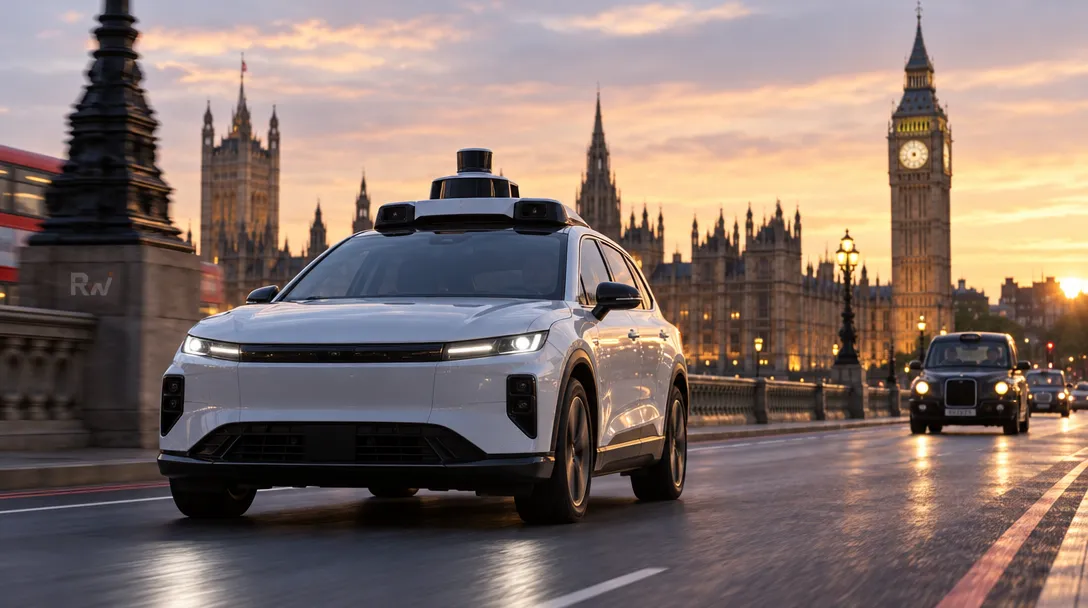
Uber and Pony.ai plan to begin testing Pony.ai's Gen-7 robotaxis in London in the coming weeks, extending the companies' European rollout beyond Zagreb. The announcement, reported by TechCrunch, puts founder and CEO James Peng at the center of a strategy to export Pony.ai's driving technology through Uber's customer network and locally run fleets.
The London plan pairs Pony.ai's technical system with partners that can operate and sell rides in each market. Uber brings app-based booking, payments and rider access; in Zagreb, Croatian mobility company Verne owns and operates the fleet. The companies have described London as a testing effort, rather than announcing a public passenger service.
The founder's safety thesis meets a new market
Peng co-founded Pony.ai in 2016 after working at Google and leading autonomous-driving development at Baidu. He holds degrees from Tsinghua University and Stanford University, according to Pony.ai's management profile. His stated reason for starting Pony.ai was safety: in a company interview, Peng pointed to human error as a major cause of road accidents and argued that autonomous systems could help address it.
Pony.ai will have to demonstrate its system on unfamiliar roads, under a different regulatory system and alongside a local operating partner. Its August partnership announcement set a target of more than 2,000 Pony.ai robotaxis across Europe, with Zagreb and four additional cities in the plan. London is a new city in that expansion, but the announcement does not establish how many vehicles will be tested or when riders might be able to book them.
The Zagreb deployment offers the clearest precedent. Pony.ai supplies the autonomous-driving system and vehicles; Verne handles the fleet; Uber provides access to its ride-hailing network. In the London announcement, the companies have not yet set out an equivalent operating arrangement. The local deployment question is separate from the technical one: a robotaxi system can travel across borders more easily than the licensing, fleet management and customer operations needed to turn it into a service.
Uber is building a marketplace of autonomy partners
Pony.ai is one of many autonomous-vehicle companies Uber is working with. TechCrunch reported that Uber has made deals with more than 30 such companies and expects to offer autonomous-vehicle trips in as many as 15 cities worldwide by the end of 2026. The strategy lets Uber seek a place in robotaxi markets without relying on a single vehicle maker or autonomy system.
London already shows what that looks like. Uber and British self-driving startup Wayve began offering supervised autonomous rides there on September 3rd, using electric Ford Mustang Mach-Es with a trained driver aboard. Uber has also invested in Wayve. Pony.ai's planned tests will take place in a city where Uber is already putting another partner's technology in front of riders, while the Pony.ai deployment remains at the testing stage. Uber's announcement of the Wayve rides describes the initial rides as supervised.
Wayve's initial London rides were supervised; Pony.ai and Uber have not described the safety-driver or remote-supervision setup for the planned tests. They have not announced a timetable for public rides either. The UK opened applications for small-scale automated passenger service pilots ahead of full implementation of the Automated Vehicles Act permitting regime, expected in the second half of 2027, creating a near-term window for testing and limited deployments.
From one-off launches to repeatable operations
Pony.ai and Uber first announced their partnership in May 2025, initially focusing on international markets including the Middle East. Their European plan has since grown from the Zagreb launch to a stated target of more than 2,000 vehicles. Pony.ai's investor materials report a fleet of roughly 2,000 robotaxis as of June 30th, 2026, though that figure covers Pony.ai's overall fleet, not the European allocation.
For Peng, the commercial test is whether Pony.ai can make its technology work as part of a repeatable local package: vehicles and autonomy from Pony.ai, distribution through Uber, and on-the-ground operations adapted to each city. Uber's broader autonomous-vehicle strategy also aims to give multiple technology providers access to its marketplace.
RuntimeWire previously reported on the partners' European target and Zagreb operating model. London's planned tests add a city to the expansion. The next milestone is whether Pony.ai and Uber move from testing to an operating arrangement that local regulators and riders can use.