Vinci raises $250M to expand physics simulation beyond chip heat
Vinci's $250 million Series B values the Palo Alto physics-simulation startup at $1.5 billion. CEO Hardik Kabaria told Reuters the money will fund computing, hiring and new products.
By RuntimeWire Staff · Published
Primary source: Reuters via WSAU
Why it matters
Vinci's round funds a founder-led attempt to make physics simulation a more routine part of chip and hardware design. Its next test is converting claimed speed and early deployments into repeatable production use.
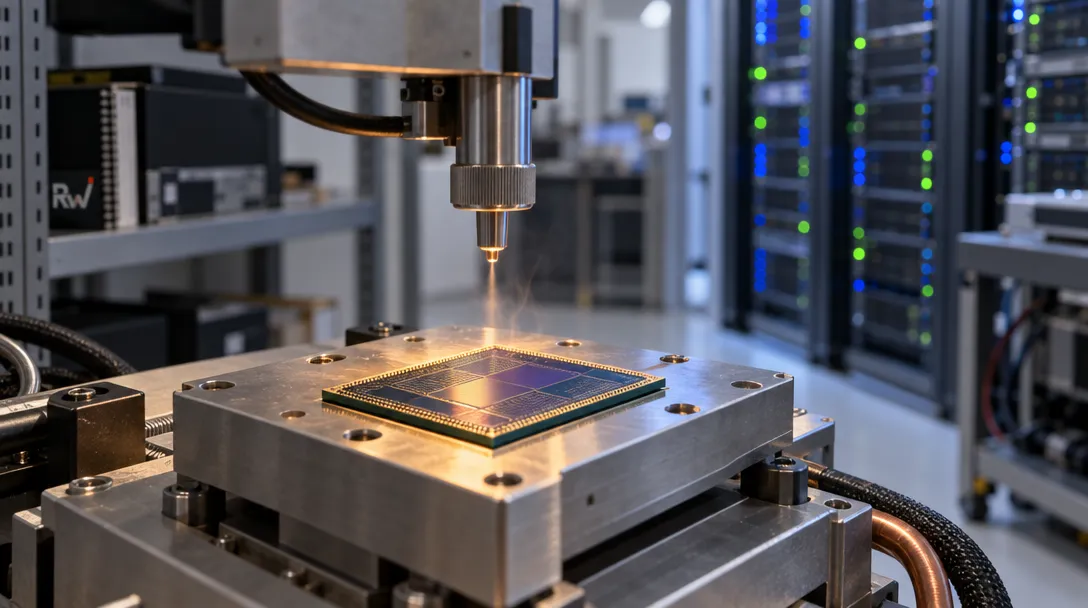
Vinci raised $250 million at a $1.5 billion valuation on October 6th, giving CEO Hardik Kabaria capital to expand software that simulates how chips and other hardware behave under real physical conditions. The Palo Alto startup plans to spend the proceeds on computing costs, hiring and new products, Kabaria told Reuters.
The financing backs a specific engineering bet: make detailed physics simulation fast and accessible enough to run more often during hardware design. Vinci began with thermal analysis for chips, where rising computing demands make heat a design constraint, and intends to add vibration testing and electromagnetics. The expansion puts Vinci alongside established chip-design software vendors Cadence and Synopsys, which Reuters identified as offering competing AI-based simulation products.
Advent, Temasek and Xora Innovation led the Series B, with Eclipse, Khosla Ventures and Madrona participating, according to Reuters. Vinci had announced $46 million in seed and Series A financing when it emerged from stealth in December 2025, bringing its publicly announced funding to roughly $296 million after this round. Xora led that earlier Series A, while Eclipse led the seed round, according to Vinci's launch announcement.
A founder's simulation problem
Kabaria's route to the company runs through a technical bottleneck Vinci now says it can remove. His doctoral work at Stanford focused on automating high-fidelity mesh generation for complex geometries, a demanding step in conventional engineering simulation. Before co-founding Vinci in 2023, he led software work at Carbon, the 3D-printing company, according to Vinci's launch announcement. The connection is practical: his research tackled how to represent complicated shapes for computation, while Vinci is selling software intended to simulate those shapes without the manual preparation that can slow conventional workflows.
Co-founder and CTO Sarah Osentoski brings a different route into the problem. Before Vinci, she worked in robotics research at Bosch and became COO of Mayfield Robotics, where she helped build and bring the Kuri home robot toward market, according to a University of Massachusetts profile. Her experience spans machine learning, robotics and the operational demands of turning research into a physical product. Vinci's combination of engineering simulation and AI reflects both founders' histories in systems where software has to account for the behavior of real objects.
Vinci says its system combines AI with physics-based simulation and can run simulations up to 1,000 times faster than conventional tools. That performance figure remains the company's claim; the publicly available materials cited here do not establish how it performs across independent production workloads. Its 2025 launch announcement said the software had been deployed at three semiconductor manufacturers and benchmarked by more than 10 companies. In the October 6th Reuters interview, Kabaria described the task ahead as growing from "two pilot deployments" to 20. Those descriptions use different terms and do not make the size or stage of Vinci's customer base directly comparable.
From pilots to a broader product line
The Series B is intended to pay for the compute required to expand simulation products and for more staff, Reuters reported. That makes the round a bet on execution as much as model development: Vinci has to make its tools work within engineers' established design processes and turn early deployments into broader use. Kabaria told Reuters the company wants to scale operations and add whole-system simulation, including vibration and electromagnetics.
That expansion would place Vinci against software already embedded in chip-design workflows. Cadence and Synopsys sell simulation products alongside broader design tools, while Vinci is pitching a focused physics-AI platform. The commercial test is whether faster simulation can earn a place in production design cycles, where teams need results they can trust and can use alongside existing tools. A speed claim on its own does not establish that fit.
Vinci's earlier financing included $36 million for its Series A, according to a 2025 report by the Business Times. The new round, nearly seven times that Series A amount, gives Kabaria and Osentoski resources to pursue a wider simulation portfolio while their initial chip-thermal focus is still scaling. Vinci has not published revenue or pricing figures in the materials reviewed here, so the disclosed valuation measures investor backing for that expansion rather than evidence of commercial scale.
Kabaria has described the next phase in operational terms: moving from a small number of pilots to 20 deployments. For Vinci, the useful proof will be whether its physics model can keep delivering dependable results as customers apply it to more designs and additional kinds of physical behavior. The funding gives the founders room to attempt that move; it does not settle the engineering or sales question.