Zeroset raises $5.2M to give AI agents a memory of company workflows
Zeroset co-founders Akshat Kannan and William Zhang are building Nebula to track how work changes across enterprise software; the product remains in a closed research preview.
By RuntimeWire Staff · Published
Primary source: Business Insider
Why it matters
Zeroset is trying to make company-specific workflow history usable by long-running AI agents. The $5.2M round funds that infrastructure bet, while Nebula remains in a closed preview and its performance claims are company-produced.
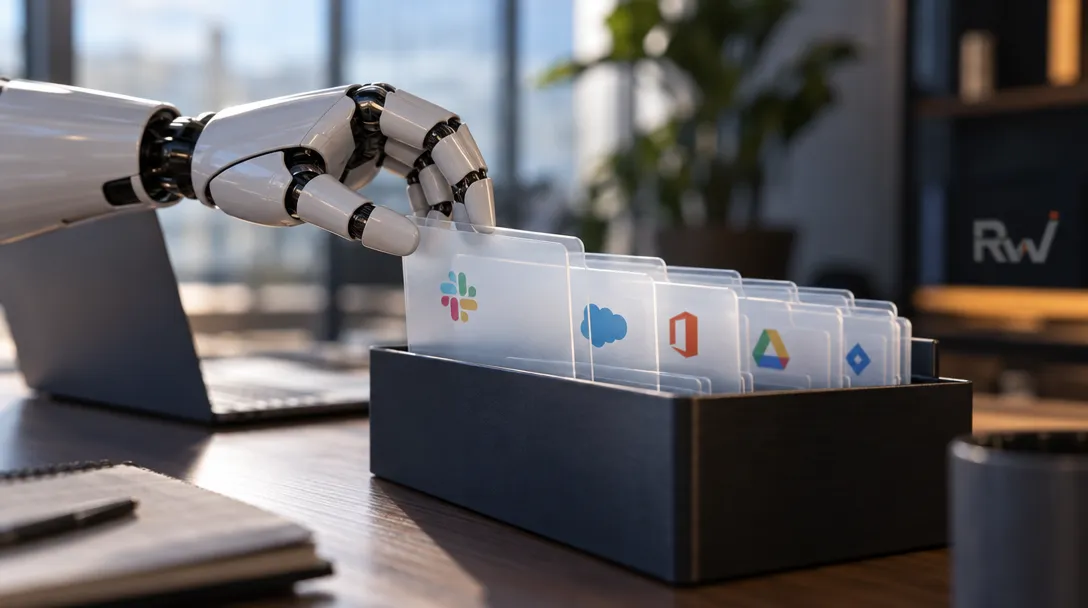
Zeroset raised $5.2 million in pre-seed funding to build Nebula, software designed to give AI agents a running picture of how a company gets work done. Co-founders Akshat Kannan and William Zhang are betting that enterprise agents need a record of changing workflows and decisions to work beyond searching company documents.
The round was co-led by Gradient and 2048 Ventures, with participation from Leblon Capital, according to Business Insider. Zeroset said it plans to use the money to hire researchers and systems engineers, pay for model training, and support early enterprise deployments. Zeroset had five employees at the time of the announcement. Kannan told Business Insider that one peak training run cost about $100,000 over two weeks.
The funding comes with a deliberately limited product rollout. Nebula is in a closed research preview, and Zeroset plans to expand access gradually rather than open it to everyone at once. Zeroset has described a pricing plan combining a license fee with usage charges tied to data volume and agent activity, but has not yet put a public price on the product.

Zeroset's thesis starts with context
Nebula connects to tools including Microsoft 365, SharePoint, Outlook, Teams, GitHub and workplace messaging systems, according to Business Insider. Zeroset says it tracks changes in activity and information across those systems so an agent can use the history and sequence behind a workflow. Nebula is designed to represent what has changed, what decision followed, and how similar cases were handled, rather than simply retrieve a few relevant passages from a large document store.
Kannan has put the problem in plain terms: "Models off the shelf have no understanding of the dynamics of how an enterprise actually works." In his view, the relevant knowledge is scattered among business software and internal records, while general-purpose models lack access to a particular company's operating habits. Nebula's goal is to collect and update that context as work unfolds.

That thesis predates the funding announcement. In a January research paper, Zeroset argued that memory should be maintained as a persistent, updateable state, with retrieval serving as a way to present part of that state to a model. The paper describes operations for adding, merging, superseding and deprecating beliefs while retaining provenance. Those are Zeroset's own design claims; they do not establish that Nebula already handles complex business workflows reliably in production.
Zhang's route to the problem came through earlier work on AI systems. On his LinkedIn profile, he describes working on document-intelligence software at Fynopsis and pharmacy-transcription agents during an Amazon internship, as well as his experience with retrieval-augmented generation. Business Insider reports that he left the University of Texas in 2025 to work on Zeroset. Kannan left Stanford in 2026, according to the same report. Their founder story is tied to a specific engineering complaint: systems that can retrieve information still struggle to preserve a dependable account of what happened over time.
From agent memory to enterprise infrastructure
Zeroset's immediate competition includes Mem0 and Zep, which Business Insider describes as building infrastructure for AI-agent memory. Zeroset's stated distinction is its focus on broader company operations and workflow history. If agents are to run for long periods inside businesses, a durable account of decisions, exceptions and changing procedures could become part of the software stack they depend on.
But that remains a bet to prove. Zeroset's own Atlas benchmark compares Nebula with Mem0, Supermemory and basic retrieval-augmented generation on tests Zeroset designed. The benchmark reports better results for Nebula on its test sets, while acknowledging its framework reflects the company's current understanding of agent memory. These are Zeroset-produced results, not independent evidence that Nebula improves live enterprise work.
The test will be whether customers trust Nebula to maintain useful, current context across the systems where their work happens, and whether agents can act on that context without introducing new errors. Zeroset's stated initial targets are enterprises and AI-native companies running long-lived agents in areas such as manufacturing, supply-chain operations and financial research. The financing gives Kannan and Zhang room to build toward those deployments; the closed preview means the product has not yet had to demonstrate its case at broad scale.