Head to head: Kling Image vs Krea 3 Edit
Kling Image vs Krea 3 Edit
By Ryan Merket · Published

A head-to-head on image-prompt fidelity, from rainy street scenes to exact counts and tightly constrained layouts. The key question: which model follows the brief without sacrificing a convincing image?
Krea 3 Edit takes this matchup decisively: it won seven tasks, tied one, and lost none, with the evaluation reporting limited confidence. Its edge was not just polish; it repeatedly got more of the requested details and relationships into the frame. That showed up in the laundromat scene, where Krea included the named signs, storefront, taxi streak, pedestrian signal, puddle, trash can, and cracked mirror. It also handled the steep street’s depth and scale more clearly, and placed the alley kiosk scene’s people and objects closer to their specified positions. For the ukiyo-e and restricted-palette prompts, it stayed closer to the requested visual language and color limits. Kling still had moments of stronger atmosphere and finish, including layered reflections in the laundromat scene. But its recurring weakness was letting composition or visual flourishes outrank the brief. Even on exact counting, where Kling showed espresso in seven cups, Krea’s seven matching, clearly separated cups were easier to verify—though Krea left them empty. The one tie was the reading nook: both avoided the forbidden elements, with Krea arranging the objects more purposefully and Kling making the scene cozier. **Final call: Krea 3 Edit wins on dependable prompt execution. Kling can deliver the more atmospheric image, but across these tasks Krea was more reliable about what the image was actually asked to show.**
Rainy tram-stop realism
Photorealistic 16:9 evening street scene after a light rain on Vesper Lane in Brinlock: a tired violin teacher in a mustard wool coat stands under a tram-stop canopy, one hand on a brushed aluminum ticket kiosk and the other holding a damp black umbrella; beside her is a varnished walnut bench with beads of water, a teenager in a faded denim jacket sits tuning a scratched cherry-red violin case, and a delivery cyclist in a lime waterproof shell blurs past in the background. Mixed lighting from a cold blue pharmacy sign, a warm sodium streetlamp, and the soft interior glow of tram route 7A should create believable shadows, wet asphalt reflections, skin tones, fabric weave, wood grain, and convincing metal, plastic, and glass materials throughout.
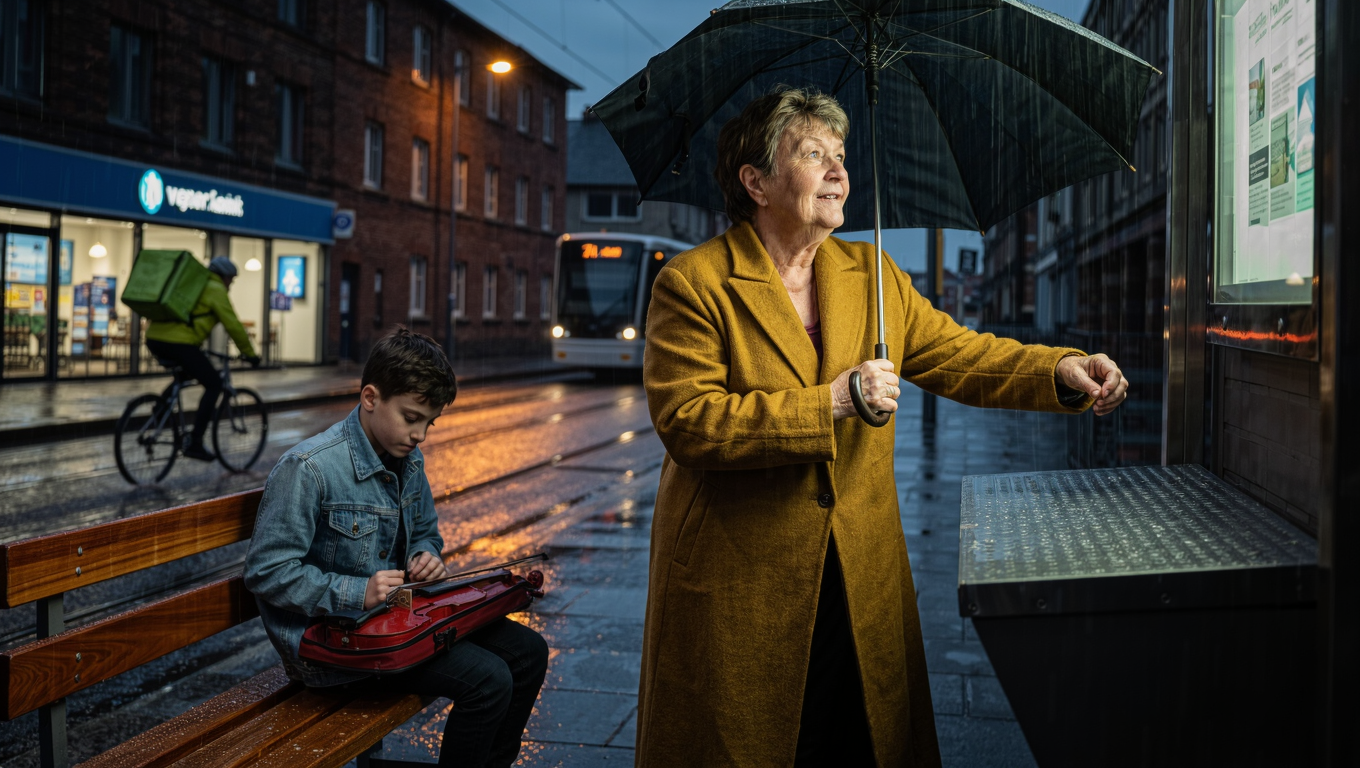
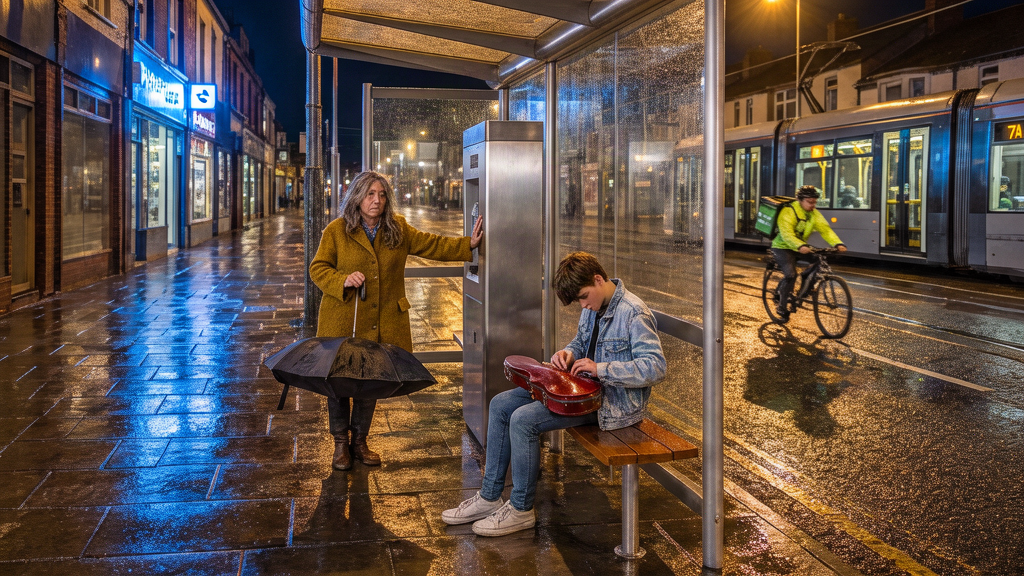
OpenAI: GPT-6 Luna: Model A more convincingly captures the umbrella held overhead, the cyclist’s motion blur, and the tactile wet bench and street, with a strong focal composition. Model B shows the tram-stop canopy and route 7A more clearly, but its umbrella resting near the ground and its flatter sense of motion make it a little less faithful overall. (Second judge pass, order swapped — scores are the average of both: Model B includes the tram-stop canopy, a clearly marked route 7A tram, the kiosk, and the full c | Anthropic: Claude Fable 5.1: Model B captures nearly every prompt element —…
Midnight laundromat reflections
Photorealistic nighttime urban storefront, 16:9: outside the 'Nimbus Suds' laundromat on Oriole Passage, viewed from the sidewalk at a slight angle, a floor-to-ceiling front window reveals rows of stainless-steel washers and a woman in a violet hoodie folding towels inside under bright fluorescent light. The glass must show accurate transparency and reflections at once: the neon ramen shop across the street, a passing taxi’s headlight streak, a red pedestrian signal, and the silhouette of a bus shelter reflected at the correct angle, while still clearly showing the interior. Add a rain puddle near the curb mirroring the window and signage, a chrome trash can reflecting distorted street colors, and a cracked side mirror on a parked hatchback catching a small fragment of the scene with physically convincing reflection and refraction behavior.
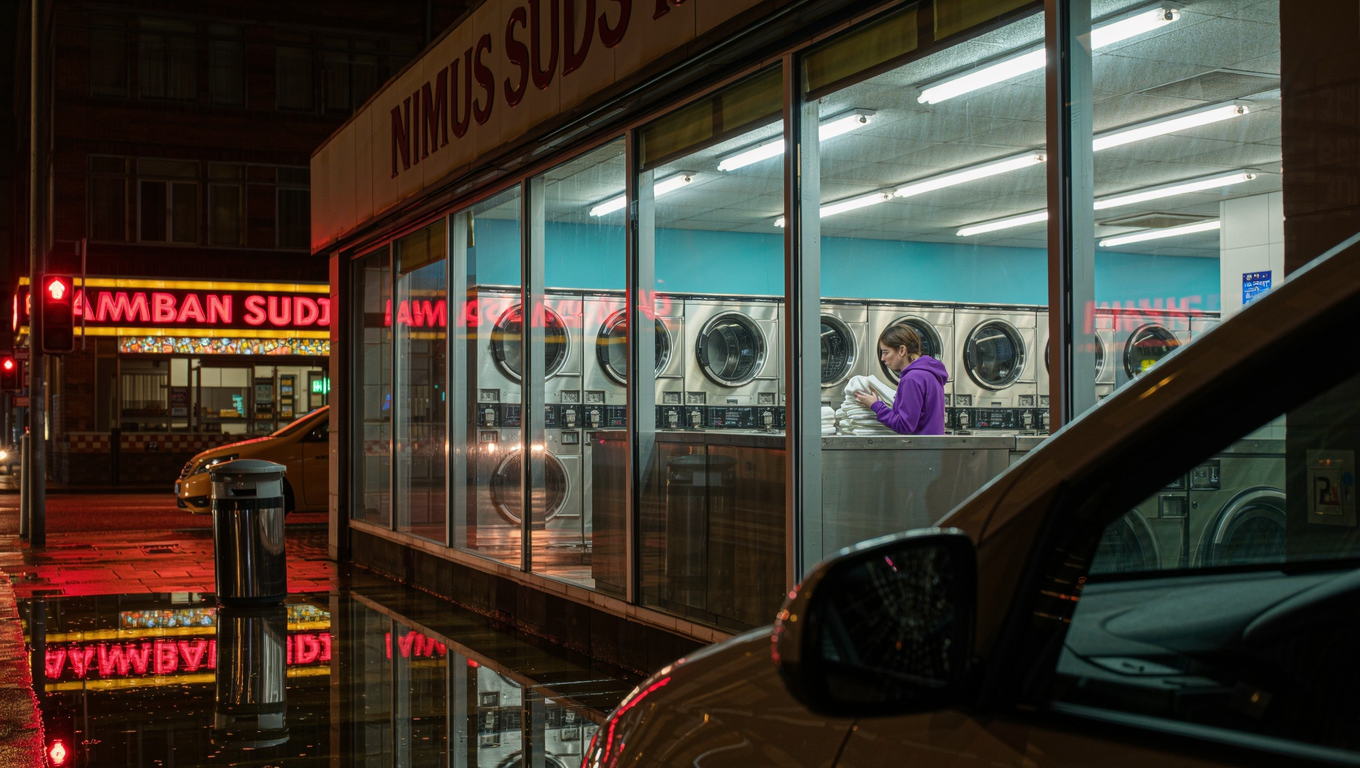
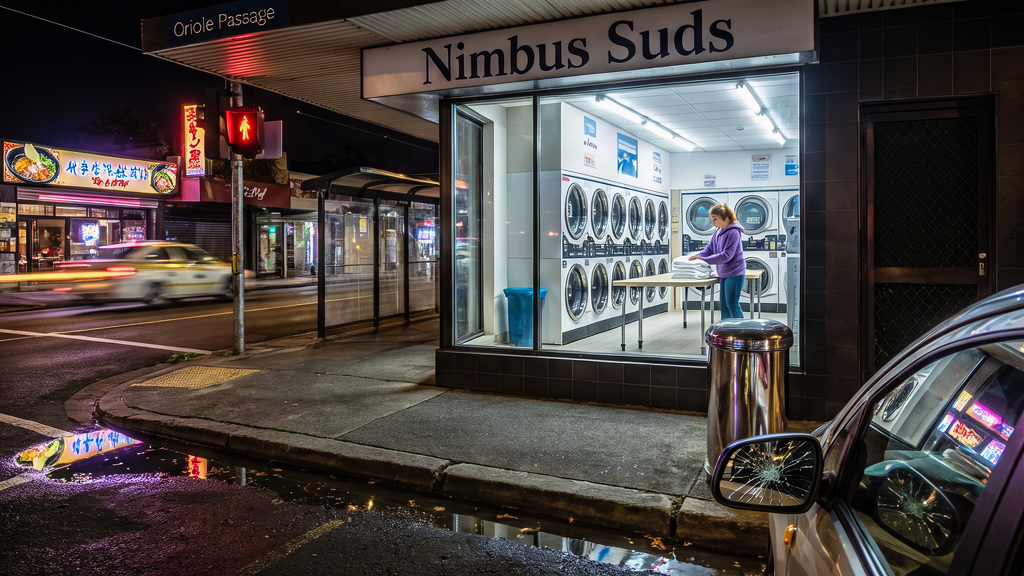
OpenAI: GPT-6 Luna: Model B includes more of the requested specifics, notably the readable Oriole Passage and Nimbus Suds signs, ramen storefront, taxi streak, red pedestrian signal, puddle, chrome trash can, and visibly cracked mirror. Model A has stronger layered window reflections and a more atmospheric composition, but omits several distinct details and its across-street signage is garbled. (Second judge pass, order swapped — scores are the average of both: Model B includes more of the requested details, with l | Anthropic: Claude Fable 5.1: Model A delivers the most convincing layered gl…
Exact counting
A clean overhead flat lay on white marble of EXACTLY seven identical espresso cups arranged in a single straight row, each clearly separate and individually countable, even soft lighting, 16:9.


OpenAI: GPT-6 Luna: Model A shows espresso in seven cups, but the end cups are cropped and the cups vary in appearance. Model B presents exactly seven clearly separated, matching cups in a straight overhead row, though they are empty. (Second judge pass, order swapped — scores are the average of both: Model B shows exactly seven clearly separated, matching espresso cups in a straight row on white marble. Model A also appears to show seven cups, but the end cups are cropped and the cups vary in handle color and espr | Anthropic: Claude Fable 5.1: Model A shows seven cups but the two end cups a…
Restricted palette
A flat-vector illustration of a mountain campsite at dusk using ONLY four colors — cream, burnt orange, teal, and charcoal — with no gradients and no stray off-palette colors, balanced composition, 16:9.


OpenAI: GPT-6 Luna: Model B more closely follows the restricted flat-vector palette and presents a balanced campsite scene, while Model A uses conspicuous shading and many color variations that conflict with the no-gradients, four-color requirement. Both are attractive and clearly depict a mountain campsite at dusk, but Model B has the stronger overall prompt adherence and technical consistency. (Second judge pass, order swapped — scores are the average of both: Model B follows the four-color palette more closely a | Anthropic: Claude Fable 5.1: Model A drifts far off the restricted palette w…
Named art style
A ukiyo-e woodblock print of a fishing boat riding a large cresting wave at dawn, faithful to the flat color planes, bold outlines, and stylized foam of the tradition, muted indigo and cream palette.
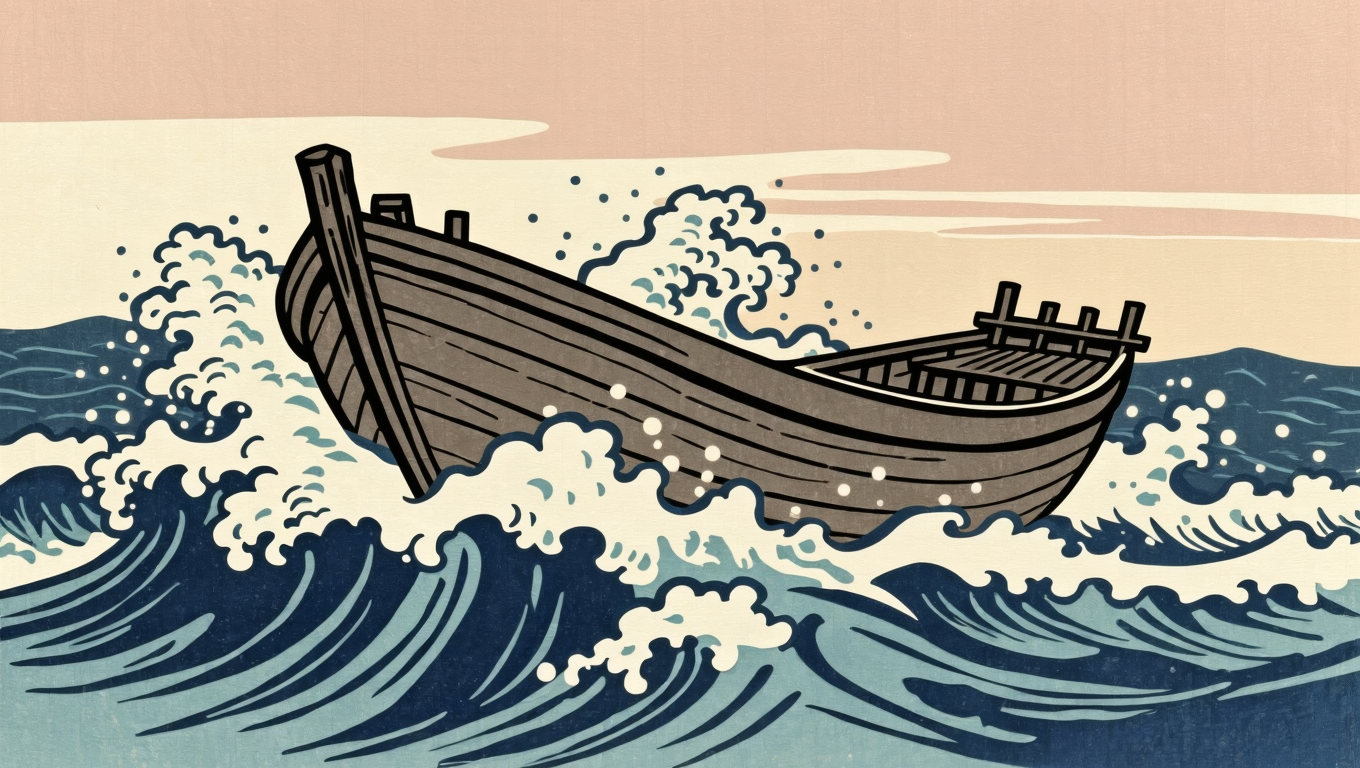
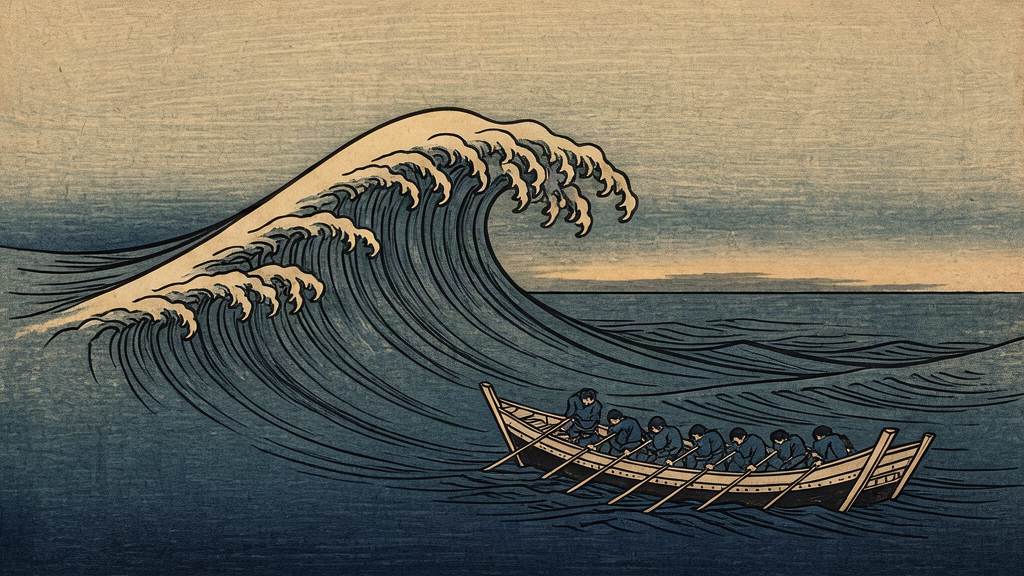
OpenAI: GPT-6 Luna: Model B more convincingly evokes traditional ukiyo-e, with a dramatic cresting wave, stylized foam, and a dawn horizon. Model A has clear bold outlines and a fitting indigo-and-cream palette, but its oversized empty boat dominates the scene and the wave feels less imposing. (Second judge pass, order swapped — scores are the average of both: Model B more strongly evokes traditional ukiyo-e through its dramatic cresting wave, stylized foam, muted indigo-and-cream palette, and small crewed fishing | Anthropic: Claude Fable 5.1: Model B reads as a genuine ukiyo-e print with a…
Steep street scale check
A realistic 16:9 view down the steep hill of Calder Mews at sunrise, seen from eye level near the top intersection: cobblestones, row houses, parked cars, and overhead tram wires all recede to a single consistent vanishing point; in the foreground a compact orange street sweeper occupies the right lane, farther downhill a city bus appears correctly much smaller, and at the bottom of the hill a tiny flower stall under a striped awning anchors the distance. Include pedestrians at three depths—one close crossing with a large shadow, two mid-distance figures by a lamppost, and several tiny figures near the stall—so the relative scale feels precise and physically plausible, with no warped buildings or oversized background objects.
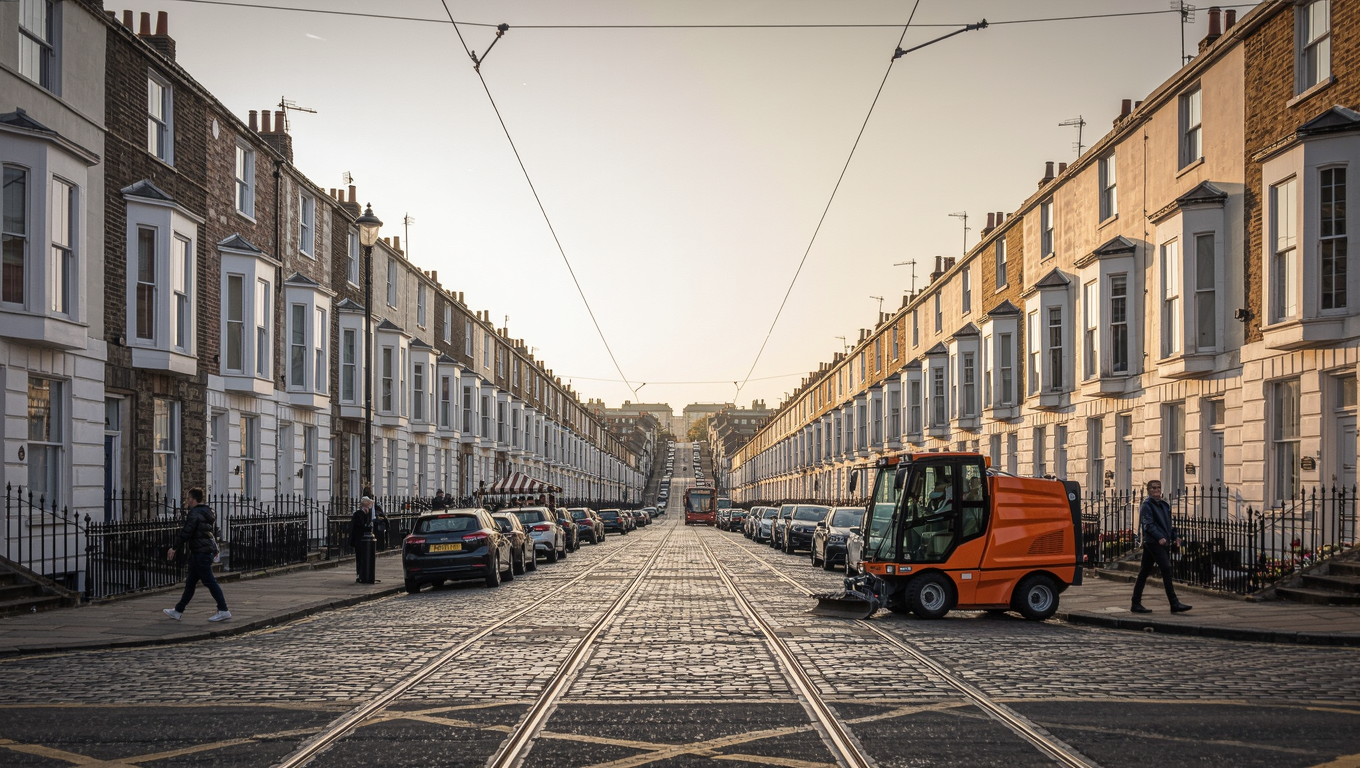
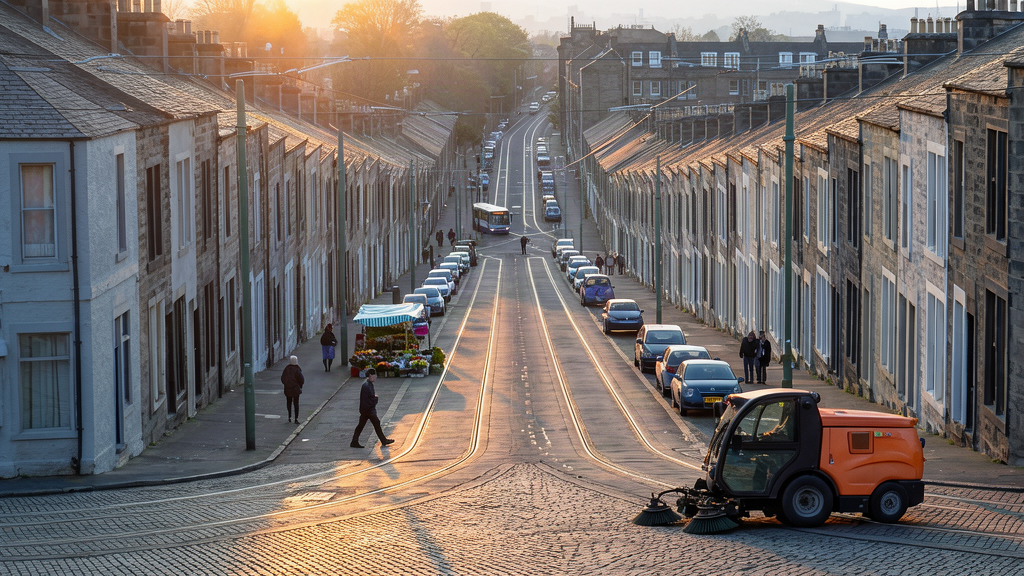
OpenAI: GPT-6 Luna: Model B makes the steep descent and foreground-to-background scale changes clearer, with a small distant bus, prominent sweeper, sunrise lighting, and a crossing pedestrian casting a long shadow. Model A is polished and has strong converging lines, but the hill reads less steep and the requested depth arrangement of pedestrians and flower stall is less distinct. (Second judge pass, order swapped — scores are the average of both: Model B more clearly conveys a steep descent and the requested scal | Anthropic: Claude Fable 5.1: Model B actually depicts the requested steep do…
Negation
A cozy reading nook with an armchair, a stack of books, and a mug of tea by a window — with absolutely NO plants, NO lamps, and NO artwork or picture frames anywhere in the frame. Warm afternoon light, 16:9.

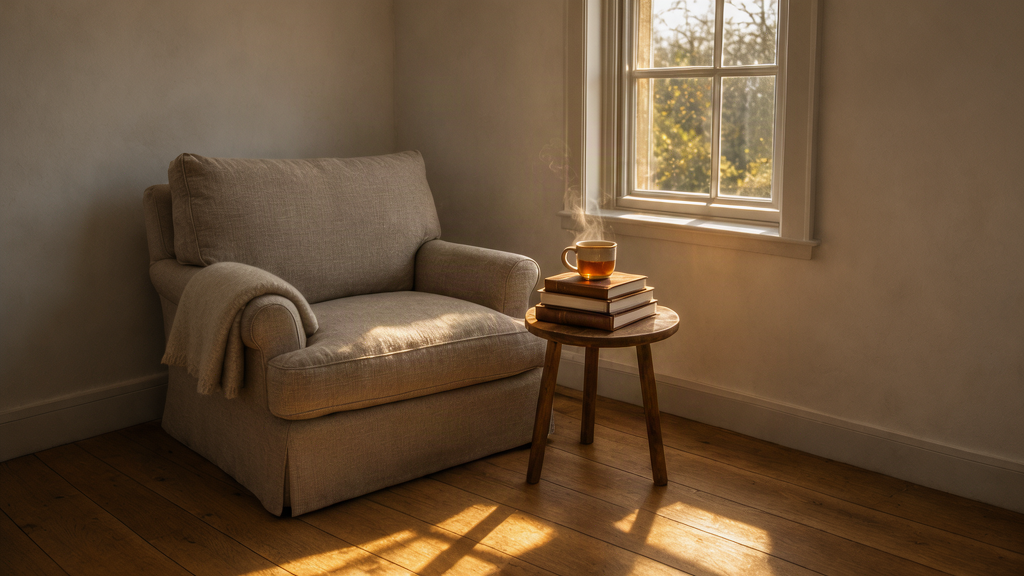
OpenAI: GPT-6 Luna: Model B creates a more complete, purposeful reading nook, with the books and steaming tea neatly arranged beside the armchair and warm window light. Model A is especially cozy and visually striking, but placing the books and mug on the chair seat makes the setup feel less practical. (Second judge pass, order swapped — scores are the average of both: Model B clearly presents the armchair, stacked books, tea, and window in a balanced reading nook, with warm afternoon light and none of the forbidde | Anthropic: Claude Fable 5.1: Model A satisfies all three negations cleanly (…
Precise alley kiosk layout
A crisp editorial illustration of a narrow urban side street at noon, 16:9: a green newspaper kiosk stands exactly in the center; a stack of four orange traffic cones is to the left of the kiosk; a silver scooter is to the right of the kiosk; a small black dog sits directly in front of the kiosk; a red bicycle leans behind the kiosk against a brick wall; a woman in a white raincoat stands on top of the curb between the scooter and the kiosk; a yellow parcel box is on the ground between the dog and the scooter; two blue recycling bins are side by side behind the dog and in front of the bicycle; and a hanging sign reading 'Marlow Keys Cutters' is above the kiosk. Every object must be clearly visible and placed exactly as described.
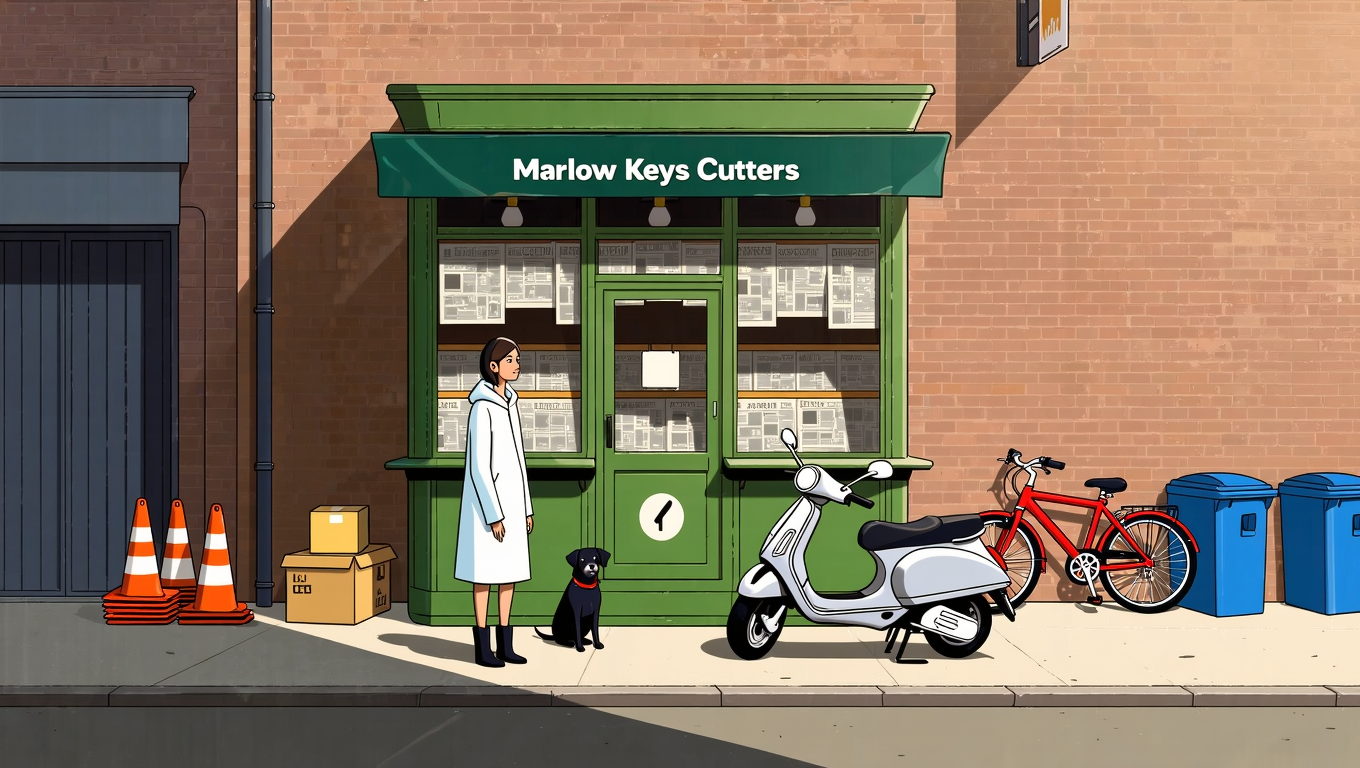
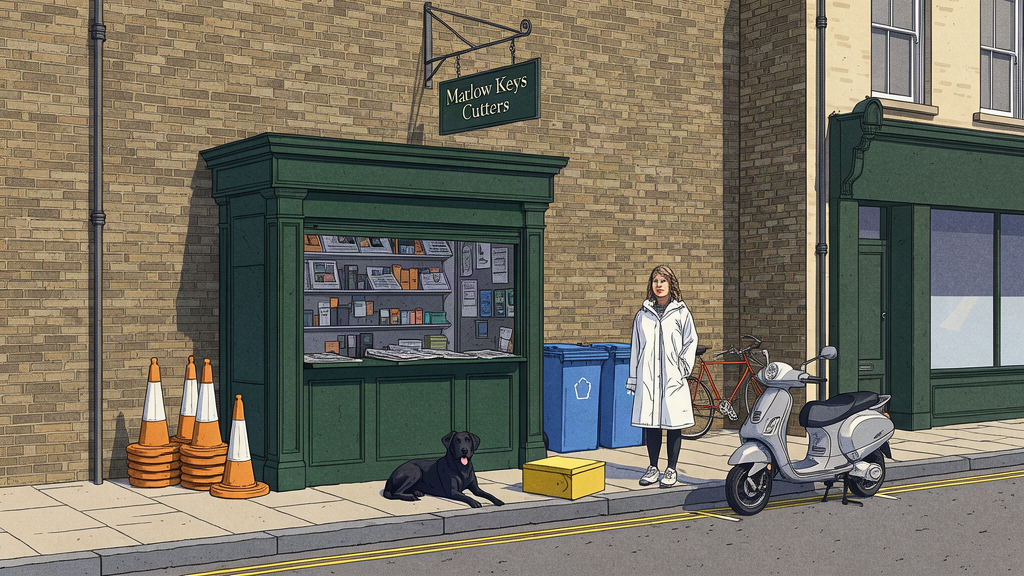
OpenAI: GPT-6 Luna: Model B places the woman, parcel, bins, scooter, and hanging sign in much closer accordance with the requested relationships, though its kiosk is left of center. Model A is more centered and polished, but several key objects are misplaced and the sign is not hanging above the kiosk. (Second judge pass, order swapped — scores are the average of both: Model B places nearly all requested objects in their specified relationships, including the woman, parcel, bins, bicycle, and hanging sign; Model A | Anthropic: Claude Fable 5.1: Model B satisfies most of the spatial constraint…
Matchup powered by OpenRouter.