GlobalFoundries will make TSMC's AI interposers under a $2B deal
The five-year manufacturing agreement adds capacity at GlobalFoundries' Malta, New York, site, with production expected to ramp in the first half of 2028.
By Ryan Merket · Published
Primary source: Reuters
Why it matters
The deal puts GlobalFoundries inside TSMC's AI packaging supply chain, but its $2B value spans five years and production is not expected to ramp until 2028. Output, pricing and investment terms will determine its real contribution.
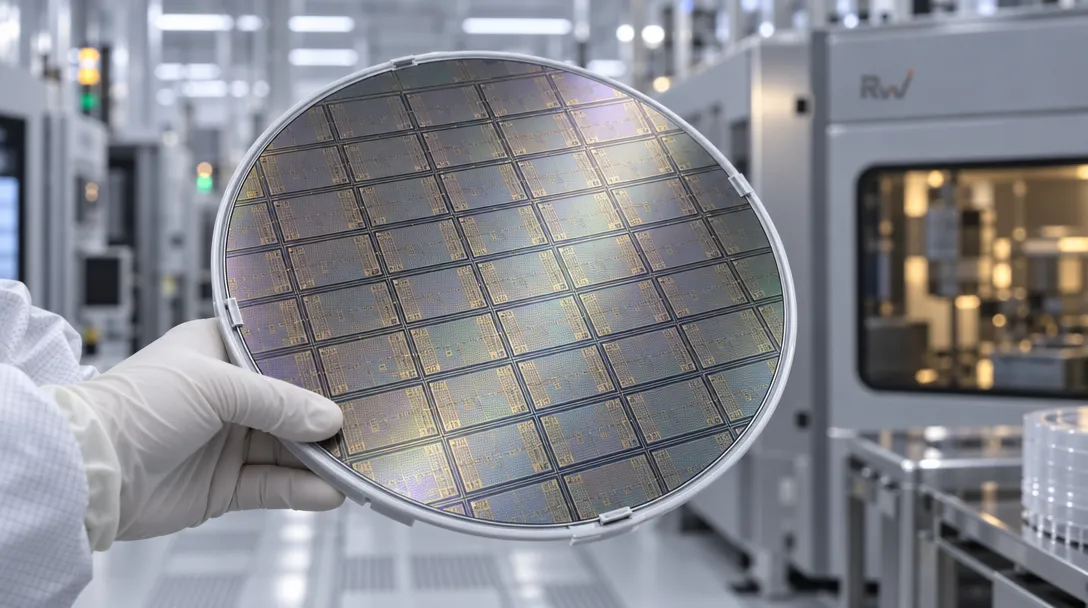
GlobalFoundries has agreed to make silicon interposers for TSMC in a five-year deal valued at $2 billion, placing the New York chipmaker inside a critical part of TSMC's AI packaging supply chain. Production at GlobalFoundries' Malta, New York, facility is expected to begin ramping in the first half of 2028, according to the company and Reuters.
The agreement gives GlobalFoundries a supplier role in TSMC's CoWoS advanced-packaging ecosystem. It does not make GlobalFoundries a second source for TSMC's full chipmaking or packaging service: GlobalFoundries will manufacture one component used in the package, while TSMC remains the customer and the company whose system integrates it.
An operator's bet on the packaging bottleneck
CEO Tim Breen joined GlobalFoundries in 2018 and held operational and strategic roles before becoming CEO in 2025. He oversaw manufacturing, quality and supply chain as chief operating officer. Before GlobalFoundries, he worked in the senior leadership team at Mubadala Investment Company, the company's founding shareholder, and was a McKinsey partner in Abu Dhabi.
The commercial opportunity depends on adding manufacturing capacity, coordinating with a major customer and delivering to a production schedule years out. The deal puts GlobalFoundries' manufacturing footprint to work on a pinch point for AI systems rather than asking GlobalFoundries to displace TSMC in leading-edge logic production.
A silicon interposer sits beneath processors and memory chips in an advanced package and provides the connections that let them communicate at high speeds. As AI accelerators combine more compute with high-bandwidth memory, the package becomes part of the performance equation. Reuters reported that advanced-packaging capacity has become a constraint on AI chip output as demand outstrips available manufacturing capacity.

GlobalFoundries says its Malta expansion is expected to create the first U.S.-based source of silicon interposers for advanced packaging, including components with embedded deep-trench capacitors. That first-in-the-U.S. description is the company's claim. The manufacturing agreement is specifically for TSMC's CoWoS ecosystem, and the release describes a framework for adding capacity as customer demand grows.
The $2 billion headline needs a production schedule
GlobalFoundries and TSMC have attached a $2 billion value to the five-year agreement. The figure is not a disclosed annual revenue forecast or a stated capital-spending budget. The announcements do not allocate the sum between manufacturing investment and purchases, or specify output volumes, pricing or how much of the capacity TSMC plans to use.

The production ramp is not expected until the first half of 2028. GlobalFoundries must expand the Malta site and bring the line into volume production before the agreement can relieve any current packaging shortage. The five-year term provides a customer relationship around which to build capacity; the ramp date shows how long the supply-chain response takes.
GlobalFoundries reported $6.791 billion in revenue for fiscal 2025. The $2 billion agreement is a multi-year figure, so it should not be read as comparable to a year's sales or as a near-term addition to revenue. Its financial impact will depend on the actual delivery schedule, utilization and investment required to bring the new capacity online.
TSMC gains a U.S. manufacturing source for an important packaging component, and GlobalFoundries gains a place in the supply chain for AI systems without competing against TSMC's complete CoWoS offering. Whether the agreement will provide meaningful near-term capacity depends on execution at Malta and on demand when the line is ready. The public terms establish the customer, component, site, duration and broad timing; they leave the operating scale and economics open.