Google's orbiting TPU answered its first prompt with a haiku
Google said October 30th its Suncatcher prototype ran Gemma 4 on a TPU in orbit, on a 1kW budget that allows one chip at a time for about 20 minutes.
By Ryan Merket · Published
Primary source: blog.google
Why it matters
The haiku proves the basic loop of orbital inference works, but the prototype runs one TPU for about 20 minutes on a 1kW budget. Thermal control, radiation, and the 2027 twin-satellite optical-link test will decide whether space-based AI compute is an infrastructure business or a research experiment.
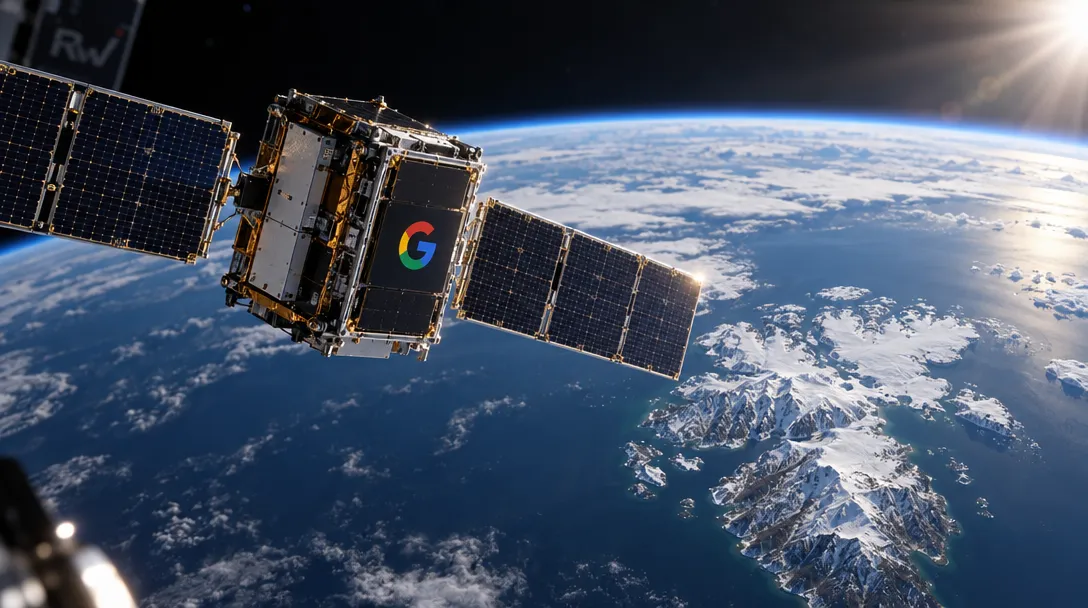
Google said on October 30th that its Project Suncatcher prototype satellite returned its first AI response from orbit, a haiku generated by Gemma 4 running on a data-center-class Tensor Processing Unit. Google described the result as "the first-ever AI response from a data center class TPU in orbit".
When you purchase through links in our articles, we may earn a small commission. This doesn’t affect our editorial independence.