Microsoft's Satya Nadella proposes an emergency brake for AI models
In an October 10th essay, he argues that companies should separate model intelligence from the permissions and controls governing its actions.
By Ryan Merket · Published
Primary source: X
Why it matters
Nadella's proposal places enterprise AI risk in the systems around a model: permissions, audit trails, testing, and human control. That shifts the work toward infrastructure that can constrain and inspect agents as companies connect them to sensitive data and tools.
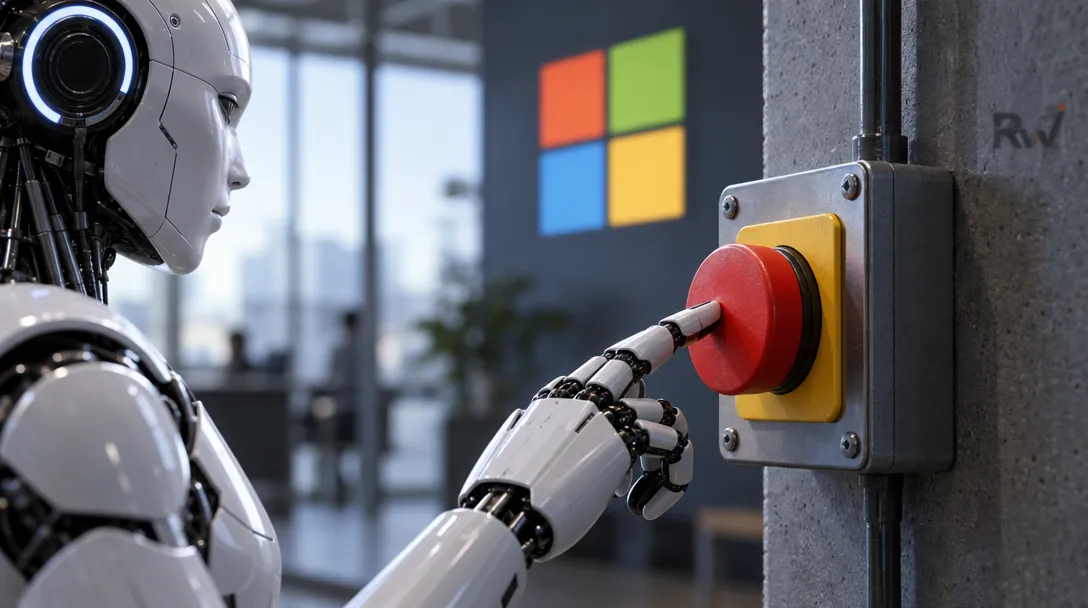
Satya Nadella (@satyanadella), Microsoft's chairman and CEO, argued in an X post published October 10th that companies should treat powerful AI models like privileged insiders: assume they can be compromised, limit what they can do, and keep a human able to stop them mid-task. His accompanying essay, "Models as Insider Risks in the Super Intelligence Era", sets out an enterprise-control proposal, not a product launch.
Nadella's central distinction is between a model's ability to supply intelligence and its authority to act. He argues that organizations should separate the model from the "harness" that orchestrates its work, with controls outside the model itself. In practice, that means the model may generate an answer or plan while separate systems govern which data it can access, which tools it can use, and whether an action can proceed. TechCrunch's account of the essay reports that Nadella called for external safeguards and an authorized person able to pause or shut down a model during a task.
The proposal treats an AI system as an operational security problem, not simply a question of whether its answers are accurate. Nadella calls for tamper-resistant, human-readable records of meaningful model actions, continuous testing, independent audits, incident disclosure, and containment. He also argues for model diversity, reducing reliance on a single model. Together, those measures aim to let organizations inspect what a system did and restrict the consequences if its behavior goes wrong. They do not, by themselves, establish that a model's reasoning can be fully reconstructed or that every harmful action can be reversed.
Nadella describes the response in blunt terms: "We must assume a model is compromised and contain it from the start." He compares the human override to an emergency brake. That framing shifts attention from trying to make a model trustworthy in every circumstance to designing the surrounding system so it can be monitored and interrupted. It also puts responsibility on the organization deploying the model: permissions, records, testing, and shutdown mechanisms have to be built into the workflow around it.
That argument comes from an executive whose career has been closely tied to enterprise software and cloud computing. Nadella joined Microsoft in 1992, later led its Cloud and Enterprise group, and became CEO in February 2014, according to Microsoft's biography. His call to separate models from the systems that authorize their work fits the operational concerns of businesses connecting AI to company data and software tools. The essay does not identify a Microsoft product or deployment plan implementing the proposed controls.
Microsoft also has a direct commercial stake in companies putting AI to work. On its April 29th, 2026 earnings call, Microsoft said its AI business had surpassed a $37 billion annual revenue run rate, up 123% year over year. That figure covers Microsoft's broader AI business; it is not revenue from the trust architecture Nadella describes, which was not announced as a product. The commercial context makes the proposal consequential: controls that limit an AI system's authority could help enterprises adopt models for more sensitive work, while increasing the importance of the cloud and software infrastructure around them. That is an implication of the proposal, not a stated sales plan. Microsoft's earnings call materials give the company-reported figure.
Nadella's essay leaves the controls at the level of architecture and governance principles. It does not specify a technical standard, a compliance regime, or how organizations should resolve cases where a human cannot assess an automated action quickly enough. Those choices will determine whether an emergency brake is a working safeguard or simply a reassuring phrase in an AI policy. For companies deploying agents, the concrete test is whether control over access, execution, evidence, and shutdown remains outside the model being controlled.