Sunbird relaunches iMessage on Android after 2023 security shutdown
Danny Mizrahi's open beta asks users to trust a rebuilt relay system with their Apple IDs and private conversations.
By Ryan Merket · Published
Primary source: 9to5Google
Why it matters
Sunbird is testing whether convenience and blue bubbles can overcome a documented trust failure. Its larger unified-inbox business depends on proving the rebuilt relay can protect Apple IDs, messages and media.
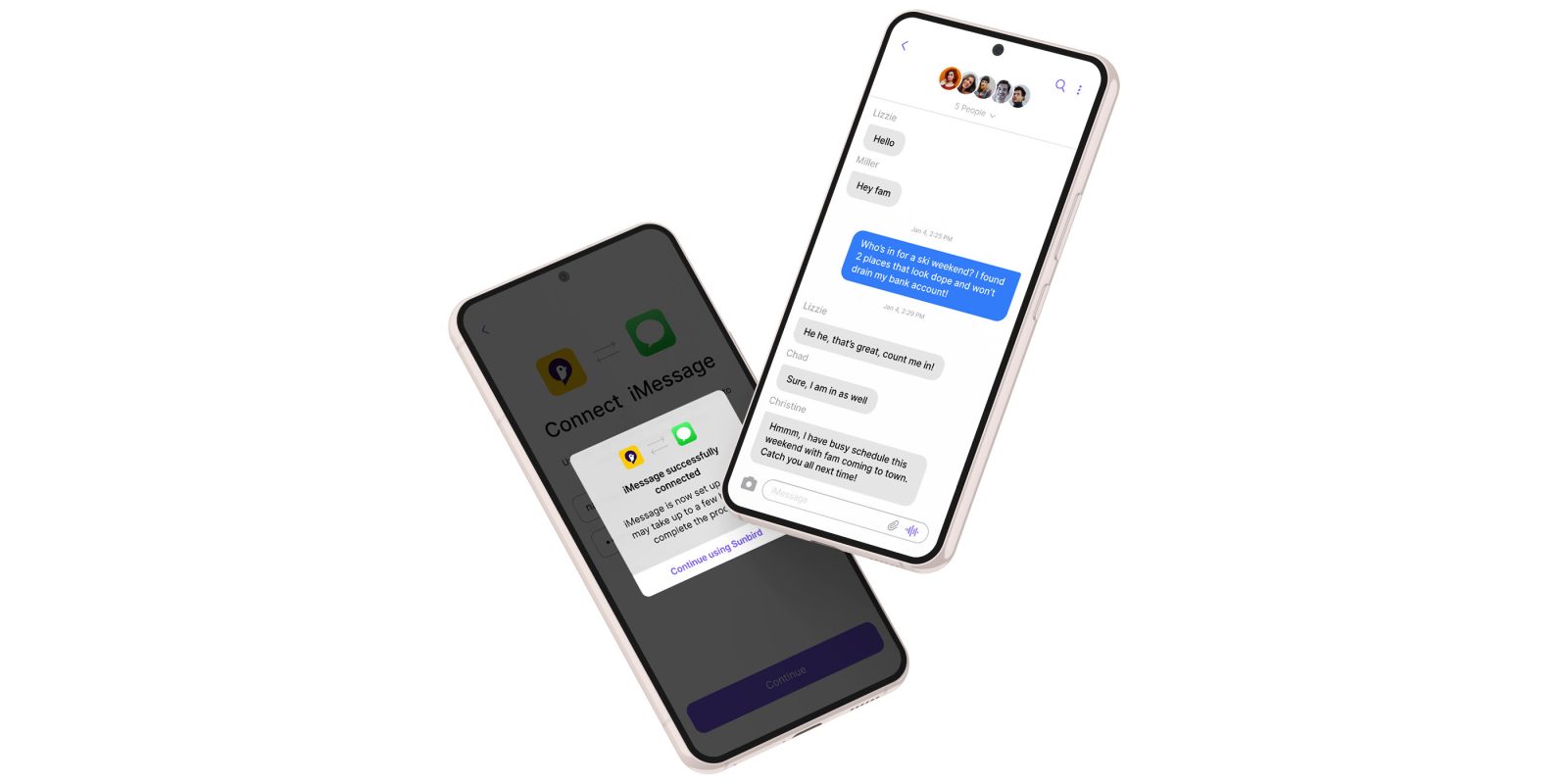
Danny Mizrahi opened Sunbird to every Android user on August 5th, putting his iMessage bridge back into public circulation nearly three years after a security failure forced him to shut it down. The app remains in open beta and is available through Google Play, according to Sunbird's launch announcement and 9to5Google's report.
The launch revives a stubborn founder bet. Mizrahi, who previously built IT services provider Contango, started Sunbird with longtime friend Garin Toren, an entrepreneur whose earlier work included speech-to-text messaging company ping. The pair came up with Sunbird after talking about the frustrations Android users face in social groups built around iMessage, according to a 2023 Fast Company profile.
Sunbird moves the Mac relay that competing tools often ask users to run at home into infrastructure operated by Sunbird. An Android owner connects an Apple ID, and Sunbird routes messages through its relay system without requiring that person to own a Mac or iPhone. The result is an Android app that can send blue-bubble iMessages, participate in iMessage group chats and combine those conversations with RCS, SMS and MMS.
That convenience also puts Sunbird directly between users and some of their most sensitive communications. Mizrahi's task is to prove that the rebuilt system deserves access that users would ordinarily reserve for Apple hardware.
A relaunch built around the last failure
Sunbird suspended service in November 2023 after researchers found serious weaknesses in the infrastructure supporting Nothing Chats, a messaging product built with Sunbird's technology. 9to5Google's investigation found that over 630,000 files were accessible through the vulnerability. Researchers also reported that messages and attachments were being sent or stored without the encryption users had been promised. Sunbird shut down its app on November 21st while it investigated the problems.
Sunbird says the new architecture no longer uses Firebase, one component implicated in the earlier exposure. Its security page says Sunbird does not retain Apple ID passwords or authentication tokens, isolates each user's iMessage connection in a private environment and tears that environment down when the account is disconnected.
Messages are encrypted on the Android device, in transit and at rest on the phone, according to Sunbird. The final connection to an iPhone uses Apple's iMessage encryption. These are Sunbird's descriptions of its rebuilt system, and the relaunch gives security researchers a chance to test whether the implementation matches those claims.
One part of Sunbird's disclosure needs sharper wording. Sunbird says it does not store messages, while the same security page says photos and videos are deleted from its systems within 48 hours in typical cases and within 72 hours at the latest. That means media can remain inside Sunbird's infrastructure after transmission, even if the retention is temporary. Users deciding whether to connect an Apple ID need that distinction stated plainly.
The product returns to a changed market
Cross-platform messaging has improved since Mizrahi first pitched Sunbird. Apple added RCS support to the iPhone in 2024, improving image quality, typing indicators and other features in conversations with Android phones. On May 11th, 2026, Apple and Google began rolling out end-to-end encrypted RCS in beta for supported iPhones, carriers and Android devices.
That work narrows the security and feature gap between iMessage and standard cross-platform texting, while RCS conversations remain visually distinct from iMessage. Sunbird currently advertises blue-bubble conversations and entry into blue-bubble group chats from Android without requiring Apple hardware. Sunbird is betting that those differences still produce enough social and practical friction to support a subscription.
In its August 5th launch announcement, Sunbird listed an offer of $2.99 per month or $24.99 per year after a 14-day trial. Its current homepage does not publish monthly or annual pricing. The same launch announcement says more than 181,000 people registered for early access, about 33% of installs began a trial and about 8% converted to paid subscriptions during testing. Those figures are Sunbird-reported and do not disclose the total number of current subscribers.
Public database reporting places Sunbird's funding at approximately $2.9 million across pre-seed and seed financing, with RTP Global, Gaingels, Polaris Capital, Michael Savino and Solomon Choi named as investors. The underlying database record attributes $2.5 million to a 2022 seed round and $400,000 to pre-seed financing. Sunbird has not announced a valuation with the relaunch.
Blue bubbles are the entry point
The app Mizrahi released includes a Priority Inbox that separates known contacts and groups from verification codes and unfamiliar senders. Sunbird plans to add WhatsApp and Facebook Messenger connections during the third quarter of 2026, expanding the product from an iMessage bridge into the unified inbox Mizrahi originally set out to build.
Sunbird also plans to release on-device AI features under the name Sunbird Intelligence. A "Catch Me Up" tool is designed to summarize missed conversations, while an agent is supposed to archive chats, move conversations between inboxes and draft or send replies. Those features are planned for the third quarter and are not part of the current launch.
The expansion explains why Mizrahi has stayed with the product through a long private testing period. Blue bubbles provide a focused reason to download Sunbird. Sunbird's broader business depends on turning that demand into a paid home for several messaging networks, with AI handling the resulting volume.
Security will determine whether that strategy gets a fair test. Sunbird's appeal comes from removing the Mac, server setup and technical work required by self-hosted alternatives such as BlueBubbles. Removing that work asks users to place greater trust in Mizrahi's infrastructure. The open beta puts his rebuilt system, and his second attempt at earning that trust, in public hands.