Tesla says 300 Cybercabs serve Austin as its driverless fleet scales eightfold
The October 10th claim comes as Texas records list 319 Cybercabs statewide, while federal regulators examine the vehicle's safety certification.
By Ryan Merket · Published
Primary source: X - Tesla Robotaxi
Why it matters
Tesla is turning its autonomy strategy into a public ride service, but the 300-plus claim measures vehicles, not rides or utilization. The gap between fleet growth and cars actually carrying passengers will determine whether the rollout represents a functioning network or mainly a larger deployment count.
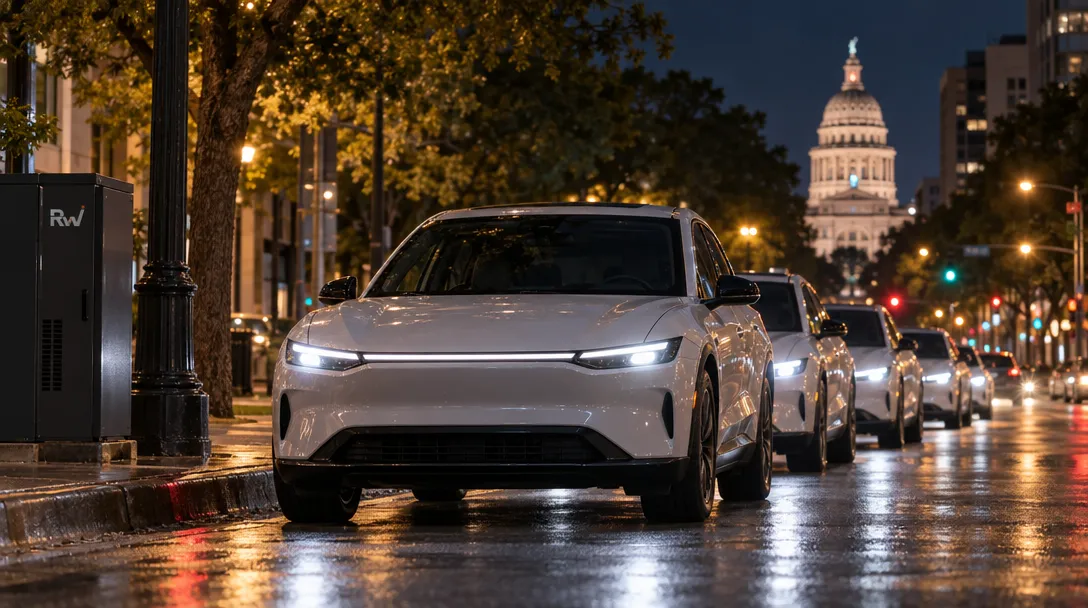
Tesla says more than 300 Cybercabs are serving Austin, an eightfold increase in 30 days, putting a number on the first month of public rides in Elon Musk's purpose-built driverless taxi. The claim appeared October 10th on Tesla's official Robotaxi account, a month after the company opened Cybercab rides to the public in Austin.
https://x.com/robotaxi/status/2108981691436224816
The announcement is a fleet count, not a measure of rides delivered. It does not specify whether "serving Austin" means vehicles registered for the service, available to accept fares, or actually carrying passengers. Nor does it give trip volume, utilization, or rider wait times. Those distinctions matter for a service business: a car on a roster does not establish how often it earns fares.
A Texas Department of Motor Vehicles listing showed 319 Cybercabs authorized statewide by October 9th, up from 169 earlier that month, according to TeslaNorth's review of the state registry. The registry lists vehicles under Tesla Robotaxi, LLC but does not break them down by city or show how many are active. It is consistent with Tesla's 300-plus figure, but cannot independently confirm that all those vehicles are serving Austin.
The gap between vehicle counts and cars carrying riders has already surfaced in earlier fleet tracking. On September 22nd, Electrek reported that a community tracker had observed eight unique Tesla robotaxis carrying passengers in Austin during the prior seven days, after observed activity had exceeded 100 around the Cybercab launch. That snapshot predates the latest registration surge and does not establish today's operating count. It does show why registrations, deployment claims, and passenger service should not be treated as interchangeable measures.
Musk has led Tesla as CEO since 2008, and Tesla says he leads product design, engineering, and manufacturing. The Cybercab turns his long-running autonomy pitch into a vehicle and service that have to work together in public. Tesla's latest quarterly report called the Cybercab the intended "workhorse" of its Robotaxi fleet and said the company had started production at Gigafactory Texas. The fleet ramp is the operational test of that plan: cars have to be built, cleared for service, and dispatched often enough to make a ride network useful.
The vehicle differs from Tesla's converted Model Y robotaxis. Tesla describes the Cybercab as a two-seat vehicle with no steering wheel or pedals, designed for autonomous operation. Riders request trips through the Robotaxi app; Tesla says the app shows an estimated fare and wait time before a ride is confirmed. Its current support page says the vehicle assigned depends on availability and the number of riders, so customers cannot count on booking a Cybercab specifically.
That distinction also limits what the headline fleet figure says about the customer experience. Tesla's support material describes Robotaxi service as operating in limited areas, and the Cybercab's two-seat layout serves a narrower set of trips than the Model Y. A larger fleet may improve availability, but the announcement supplies no ride or wait-time data to show whether it has.
The rollout is also under federal scrutiny. On September 4th, the National Highway Traffic Safety Administration opened an audit query into Tesla's certification that the Cybercab meets federal motor vehicle safety standards, following its commercial deployment in Austin. The agency's notice describes an investigation into certification, not a finding that the vehicle violates those standards.
Tesla's post frames the month as an eightfold expansion. If the start and end counts use the same definition, that ratio implies a starting fleet of fewer than 40 vehicles. The comparison is useful as a measure of how quickly Tesla says it added Cybercabs; without a definition of "serving" or operating data, it does not yet establish how much paid service the expansion has produced.