AirTrunk takes a $1B green loan to cool AI workloads in Japan
Founder Robin Khuda is adapting the 300-plus-megawatt TOK1 campus for AI, with the first liquid-cooled capacity expected in January 2028.
By RuntimeWire Staff · Published
Primary source: Reuters
Why it matters
The loan finances liquid-cooling work at TOK1, where the first capacity is expected in January 2028. AirTrunk has not named the customers or disclosed how much of the loan is allocated to cooling.
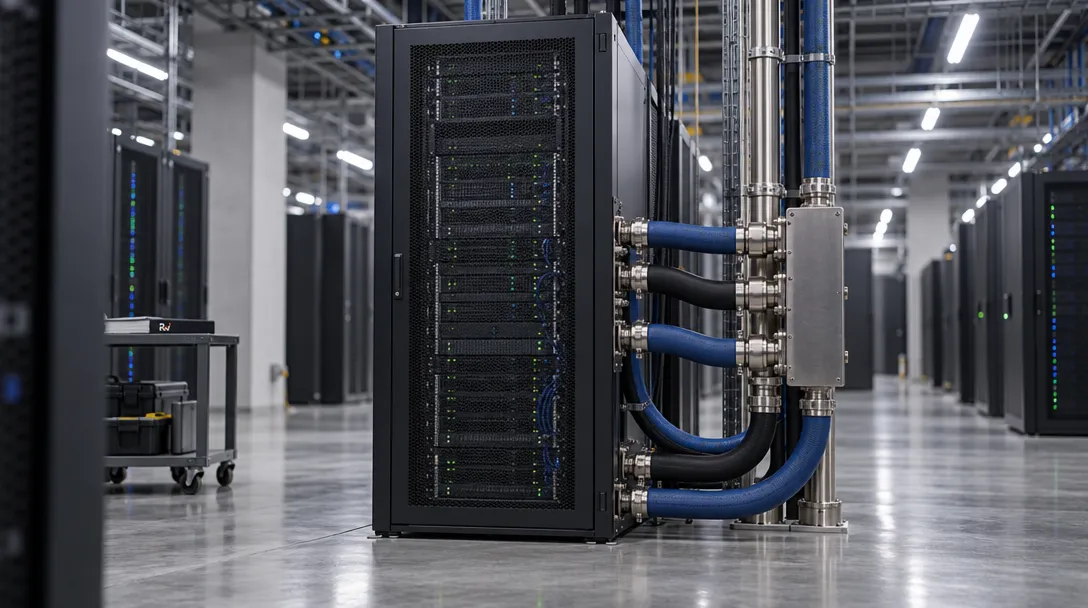
AirTrunk founder and CEO Robin Khuda is adapting the company's cloud-campus strategy for higher-density computing. On October 7th, AirTrunk secured a $1 billion green loan tied to deploying liquid cooling at TOK1, its hyperscale campus in Inzai, Japan. Reuters reported the financing; the first liquid-cooled capacity is expected to go live in January 2028, according to Capital Brief.
The headline number describes debt, not a disclosed $1 billion construction bill. Capital Brief reported the loan is worth about A$1.43 billion and that AirTrunk plans to deploy the cooling technology for multiple customers. Neither the financing report nor the available project details identify those customers. The loan is tied to work at an existing campus as AirTrunk prepares infrastructure for customers whose AI requirements have not been named.
Khuda has spent his career building around changes in computing demand before they become routine. He moved from Bangladesh to Australia at 18 and studied accounting at the University of Technology Sydney, according to the Business Council of Australia. Before founding AirTrunk in 2015, he worked in telecommunications and cloud roles at Singtel, Optus and Fujitsu, then held senior roles at PIPE Networks and data-centre operator NEXTDC. His founding thesis, as described by the council, was that cloud providers would need independent, large-scale data-centre capacity in the Asia-Pacific region.
TOK1 was an early expression of that thesis. AirTrunk opened the Inzai campus in 2021, describing it as scalable beyond 300 megawatts and built to serve Tokyo's cloud region. Its initial phases offered more than 60MW for anchor customers, and the site included dedicated substations and access to utility power, according to AirTrunk's opening announcement. The campus was designed for cloud demand; the new financing is aimed at changing what it can support as AI workloads place greater demands on server cooling.
TOK1's liquid-cooling deployment
AirTrunk's AI conversion at TOK1 builds on earlier liquid-cooling work. The company said in 2024 that it had deployed 20MW of liquid-cooled capacity in Malaysia after five years of research and development. That experience gives Khuda's team a reference for introducing the technology in another market. AirTrunk says the TOK1 deployment will also inform future installations across Japan and the wider Asia-Pacific region.
The capital commitment follows another large financing for the same campus. In March 2026, AirTrunk announced a US$1.24 billion green loan to refinance existing facilities and fund further TOK1 development. The March loan covered refinancing and development; the October financing is tied to deploying liquid cooling. Capital Brief reported that AirTrunk's total investment commitment across existing and planned Japanese projects is now $9 billion. That figure covers AirTrunk's Japan projects overall.
The funding also follows a major change in AirTrunk's ownership. In 2024, a Blackstone-led consortium that included Canada Pension Plan Investment Board acquired the business in a transaction valued at A$24 billion, with Khuda investing alongside the buyers, according to the Business Council. AirTrunk's current expansion sits within an infrastructure platform backed by large institutional capital, but the October loan report does not name its lenders or say whether Blackstone or CPP Investments funded the project directly.
The delivery test
For Khuda, the challenge has shifted from proving that cloud providers need hyperscale campuses to equipping existing sites for another class of computing demand. The first TOK1 phases used power infrastructure and a location serving the Tokyo region; liquid cooling is the next technical step in making the campus suitable for higher-density AI workloads. AirTrunk has not disclosed the resulting AI capacity, the deployment schedule beyond the January 2028 target, or which customers will use it.
AirTrunk must install and bring the cooling capacity online while managing power and campus construction, before forecast demand is fully visible. The October loan is tied to deploying the cooling capacity, but AirTrunk has not disclosed how much is allocated to cooling versus other campus costs. The January 2028 target gives the project a measurable deadline. TOK1 now has to accommodate AI growth within a campus Khuda originally built for cloud demand.