Mecka raises $60M to teach robots what the internet never recorded
Josh Gao's startup is building human-motion data and deployment tools as robotics labs spend heavily to train machines outside the lab.
By RuntimeWire Staff · Published
Primary source: Financial Times
Why it matters
The physical-AI race is creating a market for the equipment, labor and software needed to capture real-world movement. Mecka's human-data strategy is a bet that this infrastructure can serve robotics companies even as some build their own collection systems.
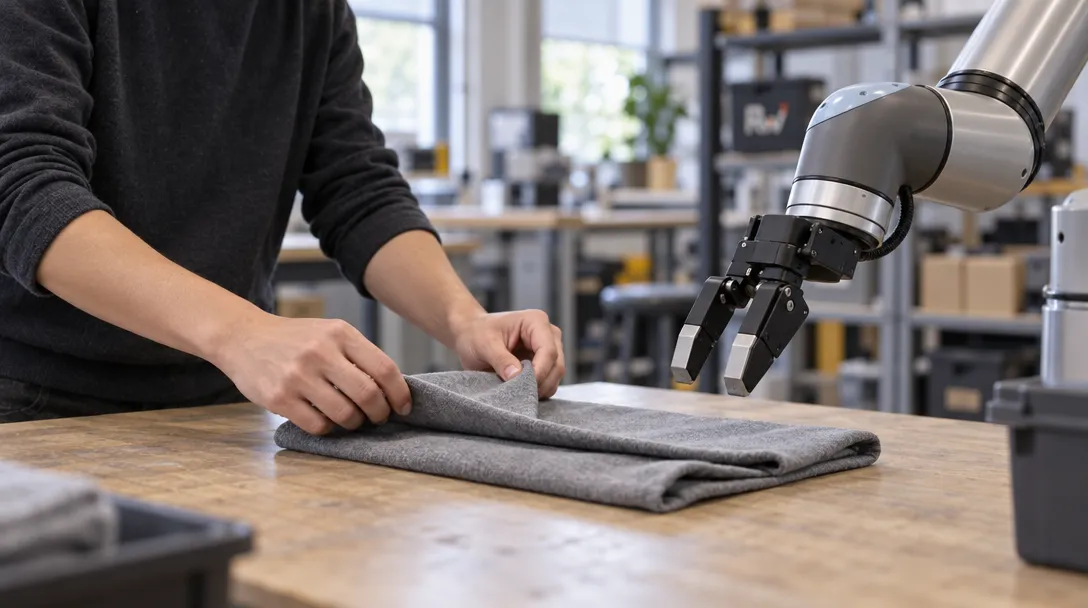
Mecka raised a $60 million Series B on October 7th, backing Josh Gao's bet that robots need to learn from recorded human activity, not just from people operating robots by remote control. The round, led by Sequoia Capital with NVIDIA, Microsoft's M12, Qualcomm Ventures and Samsung among the investors, lands as robotics companies build dedicated facilities and recording operations to fill a gap that web-scraping never could.
The Financial Times reported on October 10th that robotics labs are gathering data in so-called robot gyms, where workers use robotic arms to perform tasks, and sending recording equipment into homes, offices and factories to film people doing everyday work. The aim is to capture movement, contact and force in settings that robots will eventually have to handle themselves.
Gao and his co-founders came to that problem from outside the usual robotics-lab pipeline. Fortune reported that Gao and Mogen Cheng sold a restaurant-payments startup in 2023, while Jason Chong sold a previous startup to Coinbase; Duy Nguyen had built a business reselling sneakers. After studying robotics research and visiting labs, the group settled on a different source for training examples: people performing tasks, rather than people teleoperating robots.
The data problem is physical
Text and images can be collected from the web at enormous scale. A robot learning to fold a shirt or manipulate a tool needs information about how a hand moves, how much force it applies, and when it releases. Those signals are largely absent from online material. Joe Fox Jr., Scale AI's director of robotics operations, told the FT, "There is no internet for us to download from. There is no large corpus for model developers to work with."
That constraint is pushing the market toward a costly kind of data production. The FT, citing PitchBook, reported that robotics companies and physical-AI labs raised nearly $48 billion year-to-date in 2026, with a large share expected to go toward equipment and tools for generating training data. The total covers the broader field, not just data providers, and the article did not break out how much of that capital is earmarked for collection.
Mecka says it built its own capture hardware, reconstruction models and quality systems, and runs recording operations in homes and commercial settings. Its October announcement says the company surpassed $100 million in run-rate revenue in June and projects a $300 million run rate by year-end. Those are company-reported figures, not audited results; Mecka did not name the customers behind them. The valuation for the new round was also not disclosed.
The distinction between a data supplier and a robotics company is already blurring. Mecka says its staff also help customers integrate systems, collect data on-site and improve models after deployment. That turns each customer installation into a possible source of new training material, while putting the startup in the position of selling both the data and the work required to use it.
Who owns the training ground?
The model developers and robot makers are building their own routes to the same resource. The FT describes companies including Generalist, Physical Intelligence, NEURA Robotics and Skild AI using outside providers while also developing internal data operations. Figure, for example, pays people to record tasks at home and work through its Index program, according to the FT.
Scale AI is also pairing data software with production hardware. In March, Scale and Universal Robots said they would combine Scale's Physical AI Data Engine with Universal Robots' UR AI Trainer to collect vision and force-feedback data on industrial robots. Their partnership announcement frames the system around data gathered directly on production equipment, rather than research-only setups.
That leaves an open business question for Mecka: whether independent providers can become a durable infrastructure layer while the best-funded robotics companies build proprietary collections of their own. Mecka's human-first approach may provide a broader range of tasks and environments than a single robot fleet can produce. The harder work is converting recordings into reliable training data, securing access to homes and workplaces, and showing that the resulting models perform better on actual machines.
Gao's bet is specific: human motion can give robots useful experience at a scale that teleoperation alone cannot supply. Sequoia and the other investors are financing the infrastructure to test it. The funding announcement establishes the size of that bet; the disclosed numbers do not yet reveal which customers depend on Mecka's data or how much of its reported run rate comes from data sales versus deployment work.