Oxide Computer raises $445M to buy hardware before delivery
The October 9th Series D, led by Eclipse, gives co-founders Steve Tuck and Bryan Cantrill capital to fund components and manufacturing as the company works through a large backlog.
By Ryan Merket · Published
Primary source: Oxide Computer
Why it matters
Oxide's round puts a founder-led hardware strategy in focus: reported profitability and a large backlog still leave a cash gap between orders and delivered systems. The amount raised reflects the working capital required to scale physical infrastructure.
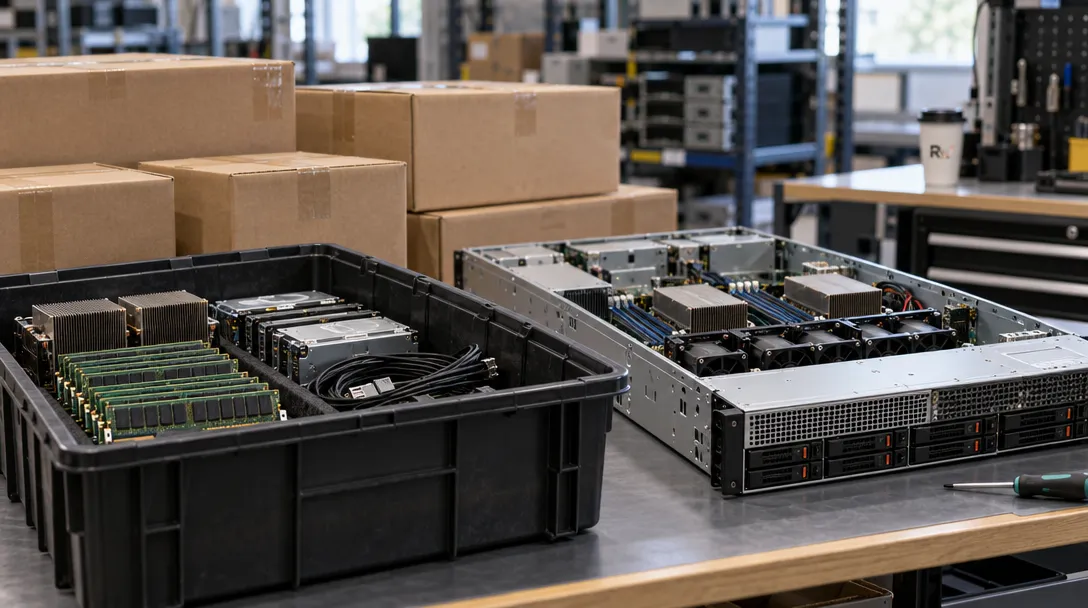
Oxide Computer said on October 9th it raised a $445 million Series D to finance the costly stretch between taking orders for its rack-scale computers and delivering them. A SEC Form D filing records $444,999,052 sold in the equity offering and lists July 20th, 2026, as the first sale date. Co-founders Steve Tuck and Bryan Cantrill said in the October 9th announcement that ordinary operations generated taxable income in the spring, while a large order backlog still required substantial cash for components and manufacturing.
That combination is the operating problem behind the round. Oxide says it can meet its current backlog with cash from operations, prior financing and debt facilities, but would have had to exercise real caution in accepting additional demand to avoid putting the business at risk from supply disruptions or economic shocks. The Series D is intended to let it fill existing orders, keep accepting new ones, expand manufacturing capacity and invest for the long term.
The need reflects the business Tuck and Cantrill chose to build. Oxide sells an integrated computer system for customers that want cloud-style management of computing resources on hardware they own. That means Oxide has to pay for physical components and manufacturing before it can turn a customer order into delivered equipment and cash collected. A backlog can indicate demand; it also creates a cash requirement. Oxide did not disclose the backlog's value, revenue, order volume, or how much cash the round will allocate to inventory and manufacturing.
A hardware bet built from operating experience
Tuck and Cantrill came to Oxide from different sides of the infrastructure business. Tuck spent about a decade at Dell before joining Joyent, where he rose to president and chief operating officer. Cantrill spent 14 years at Sun Microsystems, then nine years at Joyent, where he became CTO; he is now Oxide's co-founder and CTO, according to his biography. The two worked together at Joyent, where they described the operational limits of assembling cloud services from conventional systems in a podcast interview.
Cantrill described the founding thesis in a 2019 post: hardware and software should be designed with each other in mind. He wrote that he had been haunted by the difficulty of building a cloud with PC-era systems, and argued that the rack-level designs used by hyperscalers should be available to a wider market. Oxide's approach puts that conviction into a product: compute, storage, networking and management software designed as one system for a customer's own data center or colocation facility.
That is a harder business to finance than a software product with low delivery costs. Oxide's founders say the hardware has to be bought and built well ahead of delivery, even as demand grows. In practical terms, the new capital buys Oxide room to take more orders without asking component suppliers, customers or existing cash flows to absorb all of the timing risk.
A large round, with the valuation still private
Eclipse led the round. Oxide says existing investors US Innovative Technology Fund, Riot Ventures and Jane Street took substantial portions, with Friends and Family Capital and Counterpart also participating. New investors included Atreides Management and AMD, which Oxide characterized as a strategic investor. Oxide says AMD had previously supported software work to enable its platform, and Oxide's system uses AMD EPYC processors.
The SEC filing lists 15 investors and records an equity offering of $444,999,052, all of it sold. Its first-sale date of July 20th, 2026, places the start of the financing before Oxide's October 9th announcement. The filing does not identify the purchasers, so the investor names come from Oxide's announcement. Neither Oxide nor the filing disclosed a valuation.
The new raise follows Oxide's $100 million Series B and $200 million Series C. In announcing the Series C, the founders said the financing was meant to reduce capital risk and protect Oxide's independence. The Series D adds capacity for the next phase of the same plan: building and delivering its own hardware rather than relying on customers to assemble separate infrastructure products and software.
The founders' profitability claim is notable, but it does not answer how much profit Oxide generated or what its unit economics look like. Paying income tax from ordinary operations indicates that income exceeded deductible costs for the relevant period; it does not establish the size or durability of that profit. Oxide also has not quantified the order backlog or disclosed how many systems it has shipped. Those figures would show how quickly the business can convert the demand it describes into completed deliveries and cash.
For Tuck and Cantrill, the financing extends a bet that companies will pay to own infrastructure while getting the programmability associated with cloud services. The round provides capital for the physical work that bet requires: buying parts, increasing manufacturing capacity and delivering systems. Its test will be whether Oxide can turn its reported backlog into shipped computers without allowing growth to outrun the cash and supply needed to build them.