Parallel Systems raises $100M to scale Matt Soule's autonomous freight railcars
Former SpaceX avionics leader Matt Soule will use the Series C to ramp up Panther production as Parallel moves from an FRA-supervised Georgia pilot toward commercial service.
By RuntimeWire Staff · Published
Primary source: PR Newswire
Why it matters
Parallel's Series C finances the hardest transition in its freight-rail thesis: turning a supervised Georgia pilot and company-reported orders into vehicles produced and operated at commercial scale.
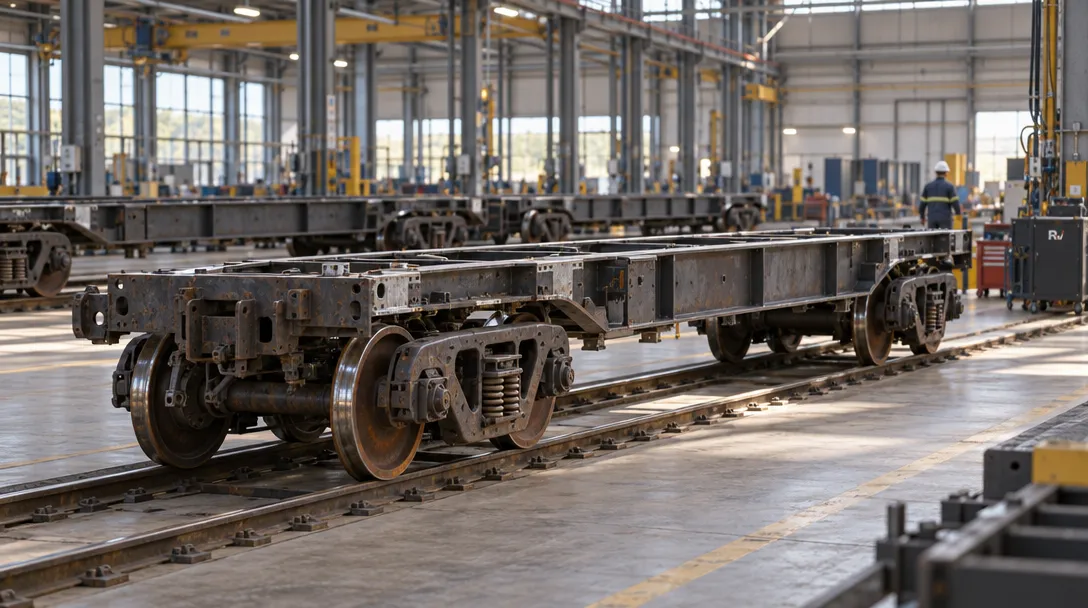
Parallel Systems raised $100 million in a Series C on October 7th, giving founder and CEO Matt Soule capital to scale production of Parallel's third-generation Panther rail vehicle and pursue international markets. AVP led the round; new investors Hillspire, Agility Global and Cobalt Capital joined existing backers Anthos Capital, Congruent Ventures, Riot Capital and Collaborative Fund, according to the announcement.
Soule is carrying an aerospace engineering career into an industry where equipment has to work within a tightly regulated, decades-old network. Before founding Parallel in 2020, he spent 13 years at SpaceX, where public profiles identify him as a former head of avionics. He holds electrical engineering degrees from Northwestern University and the University of Southern California, according to an executive profile. His bet is that autonomous systems can make freight rail flexible enough to compete for routes that conventional rail has often left to trucks.
From pilot to production
Parallel's vehicles are designed to propel freight without a conventional locomotive pulling a long train. Parallel's model uses self-propelled, battery-electric railcars that can move in smaller groups, with software coordinating their movements. Soule described the approach in a June interview as a way to replace infrequent, rigid train service with smaller freight movements on demand.

The model addresses a constraint in rail's economics: long trains work best when operators can gather enough freight to fill them, while truck service can handle smaller loads and more flexible schedules. Parallel says its vehicles are intended to extend rail service to lower-density routes, including shorter hauls under 500 miles. Parallel puts those routes at 60% of the surface-freight market, but that is its estimate, not an independently verified measure of demand for its system.
The current proof point is a Georgia pilot with short-line railroad operator Genesee & Wyoming, running under Federal Railroad Administration supervision. Parallel describes the test as approved by the FRA. The authorization is limited to testing in the pilot setting; it does not establish unrestricted operation across the national rail network.
Parallel says several major railroads are under contract to deploy the system for commercial freight, but the funding announcement does not name them or disclose contract values. Soule said in June that Parallel had a backlog of more than 300 ordered railcars. Parallel's reported backlog figure does not establish how many vehicles have been delivered, when they will enter service or what revenue the orders represent.
The Series C funds a move from proving the technology in a supervised corridor to manufacturing vehicles and serving customers at scale. Its stated uses - Panther production, commercialization and international expansion - put manufacturing throughput and operating reliability ahead of another prototype milestone.
An international route into the business
The international plan was already taking shape before the financing. On September 28th, Agility announced an agreement with Parallel to develop and deploy the platform in the Gulf Cooperation Council and wider Europe, Middle East and Africa markets. The Series C announcement names Agility Global as a new investor, putting the commercial partnership and the financing close together in time. Parallel and Agility have not announced a deployment schedule in the materials cited here.
Parallel's earlier financing also shows a longer shift in what investors are backing. In April 2025, the company closed a $38 million Series B led by Anthos Capital, with Collaborative Fund and Congruent Ventures among the participating investors. At the time, Collaborative Fund described the core thesis as making rail service less rigid so it could compete for freight that moves by truck. The Series C now funds the costly next step: building enough vehicles to test whether that operating proposition can work beyond pilot conditions.
The announcement says Parallel has raised more than $200 million in total. It does not disclose a valuation. Soule's June interview and the funding release give evidence of customer interest and testing activity, but neither supplies revenue, vehicle pricing or production volume. Those measures will determine whether the order backlog becomes a manufacturing plan and whether the system's operating economics hold up outside the pilot.
Soule's aerospace experience gives Parallel a founder with a background in complex hardware and safety-critical systems. Rail presents a different test: vehicles must fit within existing railroad practices and infrastructure while earning approval for the specific operations they perform. The Georgia work with Genesee & Wyoming is one step into that operating environment. The Series C is a bet that Soule's engineering-led approach can carry through to a repeatable commercial service.
Why it matters: Parallel's Series C finances the hardest transition in its freight-rail thesis: turning a supervised Georgia pilot and company-reported orders into vehicles produced and operated at commercial scale.