ChatGPT puts Dropbox, Box and SharePoint files directly inside Library
The web rollout lets paid users browse cloud files, attach them by @mention and work across folders in both Chat and Work.
By Ryan Merket · Published
Primary source: X - @ChatGPT
Why it matters
OpenAI is making ChatGPT a front end for workplace storage, reducing the manual steps between finding company context and asking an agent to produce finished work.
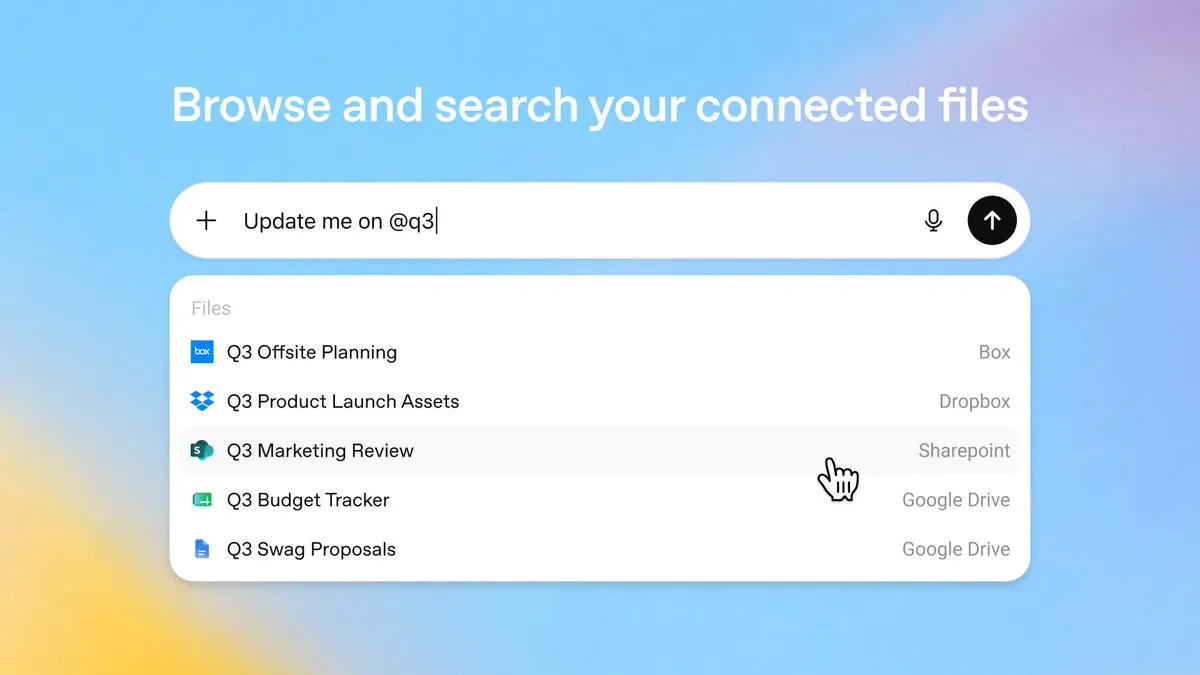
OpenAI is adding Dropbox, Box and Microsoft SharePoint to ChatGPT Library, giving paid users a single interface for browsing cloud files and bringing them into Chat or ChatGPT Work without downloading and uploading each document.
OpenAI said in a September 10th post on X that the integrations started rolling out Thursday and would reach paid users over the course of the week. The more detailed ChatGPT release notes list Go, Plus, Pro, Business, Enterprise, Edu and Healthcare accounts, with availability on the web in both Chat and Work. Mobile support is due later.
Once a service is connected, users can browse and search the files and folders their account is already permitted to access. A document can be added to a conversation through the Library picker or an @mention, without creating a separate uploaded copy. Supported files can remain open beside the conversation while ChatGPT summarizes, compares or analyzes them.
Folder access expands the scope beyond one-document prompts. A user can select a project folder and ask ChatGPT to work across its contents, then follow ChatGPT's citations back to the original files. The source documents remain connected to Dropbox, Box or SharePoint rather than becoming detached ChatGPT uploads.
OpenAI is turning Library into the file layer for ChatGPT
Thursday's release follows Google's arrival in Library on August 13th. Google Drive users can already browse connected files, attach them through @mentions and keep Docs, Sheets or Slides open beside a conversation. Adding three competing storage systems makes Library less dependent on whichever cloud suite a customer chose years ago.
The move also sharpens the role of ChatGPT Library. OpenAI initially presented Library as the place where users could find files uploaded to or generated inside ChatGPT. Connected storage turns it into a broader index of work that still lives elsewhere.
ChatGPT already had access to these services through earlier connectors and apps. SharePoint and Dropbox connectors reached deep research users in May 2025, while Box, Dropbox, SharePoint and other sources joined a broader connector beta the following month. OpenAI updated its Box and Dropbox apps again on March 27th, 2026, adding actions including write capabilities where supported.
The September 10th change moves that access into a persistent, browsable part of the ChatGPT interface. Users no longer have to begin with the app directory or remember to invoke a connector before finding a file. That reduction in friction matters for ChatGPT Work, which OpenAI is positioning as an agent for producing documents, presentations, spreadsheets and other finished deliverables from a user's existing context.
Permissions remain with the storage provider
Library does not give ChatGPT broader access to an organization's files. OpenAI says the integrations follow existing Dropbox, Box and SharePoint permissions, along with ChatGPT workspace controls. If an account cannot open a file in the source service, connecting that account does not make the file available through ChatGPT.
Administrators can also determine which connected apps are available and what actions they can perform. OpenAI's workspace administration guidance separates app access, read and write actions, provider authorization and approval requirements. Enabling an integration does not automatically approve every action supported by the underlying service.
Those controls will carry more weight as Library becomes the default doorway into company documents. A conversational assistant that can browse a project folder is more useful than one waiting for manual attachments. It also places ChatGPT closer to the permissions, retention policies and document structures that companies already manage in their storage platforms.
OpenAI has now placed four of the largest workplace file repositories inside the same ChatGPT surface. The product bet is straightforward: once users can reach their working documents without leaving ChatGPT, OpenAI gets a stronger claim on the interface where those documents are read, analyzed and turned into the next piece of work.