Google opens Dreambeans' AI story feed to all US adults
The Labs app turns connected Gmail, Calendar, Photos, YouTube, Search and Gemini data into illustrated daily recommendations.
By Ryan Merket · Published
Primary source: The Verge
Why it matters
Dreambeans is Google's clearest test of an ambient consumer assistant: it acts without a prompt by combining personal data across services. Broad access will test whether that convenience outweighs the permissions it requires.
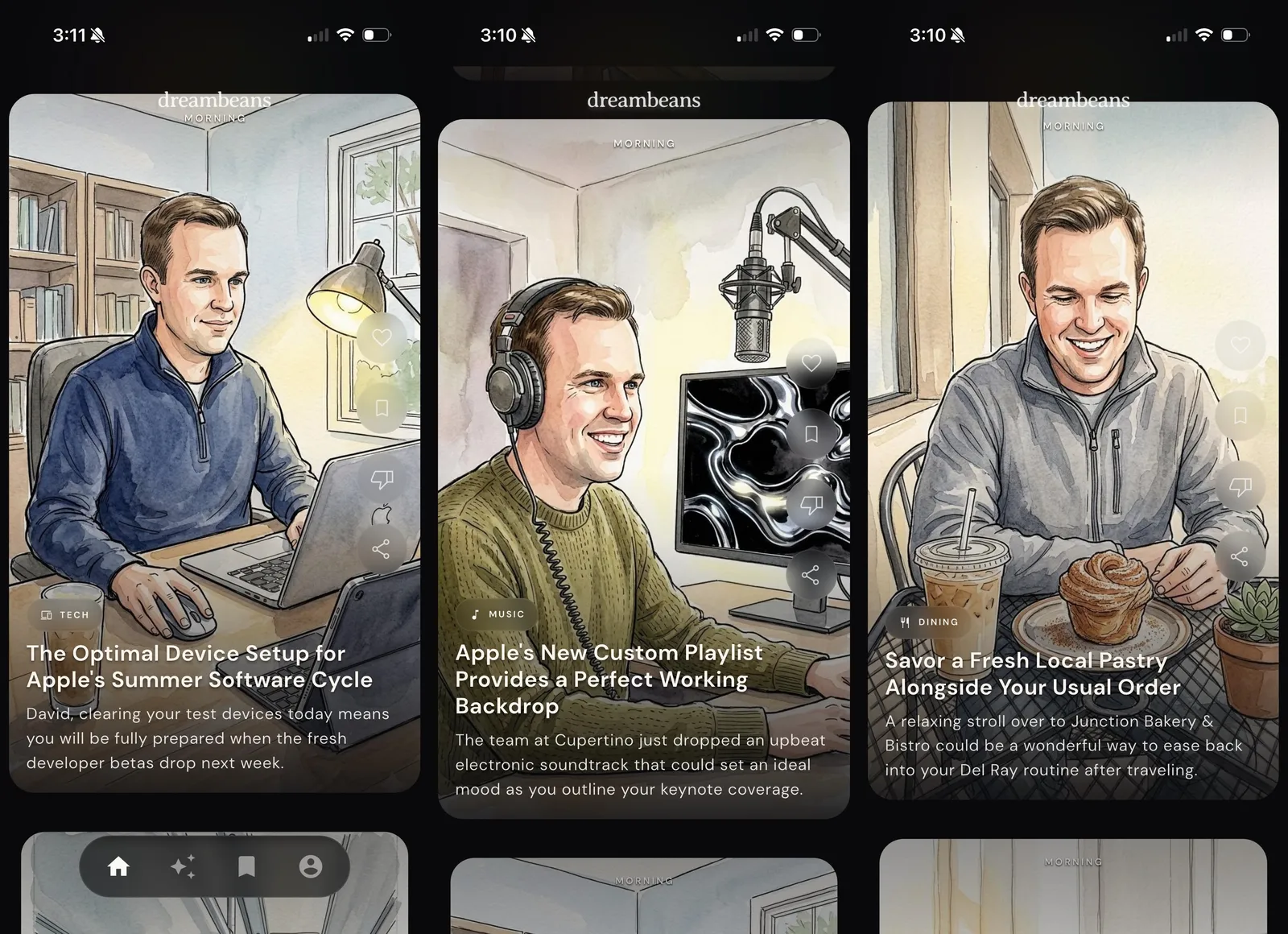
Google opened Dreambeans, its experimental AI-generated story feed, to all users aged 18 and older in the US on Thursday, removing the subscription gate that limited the app's June debut. The Verge reported the expanded rollout on September 10th, and Google's product page now lists the app as available to all eligible US users.
Dreambeans assembles a finite collection of illustrated stories each day using information from the Google services a user chooses to connect. Those sources can include Gemini, Gmail, Calendar, Google Photos, YouTube and Search history. The results can range from shopping and travel recommendations to event reminders and suggestions tied to a user's hobbies.
The app is available through Google Play and Apple's App Store. Users need a personal Google account and must connect at least one supported service before Dreambeans will work.
From paid test to broad rollout
Google Labs product manager Gozde Oznur introduced Dreambeans in a June 3rd launch post, initially limiting access to eligible Google AI Ultra subscribers in the US. That made the app a small component of Google's highest AI subscription tier rather than a broadly available consumer product.
The subscription requirement began disappearing before Thursday's wider announcement. Dreambeans' iOS release notes said on August 25th that the app was available without a subscription, followed by an August 27th update that explicitly removed the Google One requirement. Google's Dreambeans landing page now says the app is available to all US users aged 18 and older.
That sequence shows Google widening the test in stages before updating the official eligibility language. Dreambeans remains labeled an experiment, and its broader release gives Google a larger audience for testing an AI assistant that acts without waiting for a prompt.
Once a user selects connected services, Dreambeans can take up to a day to prepare the first collection. New stories then arrive daily. Users can save stories, follow links to take actions such as viewing a ticket or watching a trailer, and tell the app when a recommendation is irrelevant or incorrect. Corrections are processed for future collections rather than rewriting the current day's stories.
Dreambeans uses Google's Personal Intelligence system to combine signals from the connected services. Gmail and Calendar can supply information about purchases, travel and upcoming events. YouTube and Search history can identify interests, while Google Photos gives the app visual context about people and places.
Google says Nano Banana 2 generates the storybook-style artwork accompanying each item. When a story depicts the user or someone they know, Dreambeans can draw from Google Photos rather than using a generic character. Google Photos face grouping must be enabled before the app can feature the user and their contacts in those images.
The price of proactive AI
Dreambeans makes Google's personal-assistant strategy unusually explicit. The app can produce recommendations without the user deciding what question to ask, because it already has access to the inbox, schedule, photos, viewing activity and searches the user permits it to read.
Google says users can choose services individually, change those permissions, review their feedback history and delete Dreambeans data from the app. The company also says Dreambeans permissions are separate from the settings used by Gemini Apps and AI Mode.
The breadth of the requested context remains central to the product. Useful recommendations require enough personal information for Dreambeans to connect a receipt with an upcoming trip, a calendar entry with a restaurant suggestion, or a search pattern with a new activity. Connecting only one service is permitted, although Google says the product works best when more sources are enabled.
Google also warns that Dreambeans can generate irrelevant stories and inaccurate visuals. The tuning system lets users reject a subject, correct a detail or mark a recommendation as unwanted. Those controls double as feedback for the experiment as Google tests whether a finite, highly personalized feed can become a daily habit without copying the endless-scroll design used by conventional social and discovery apps.